View methods side by side.
Choose up to four methods. Add them using the search and share the comparison by copying its link.
| Criterion |  Knowledge Modeling IBIS |  Decision Making Pre-Mortem | 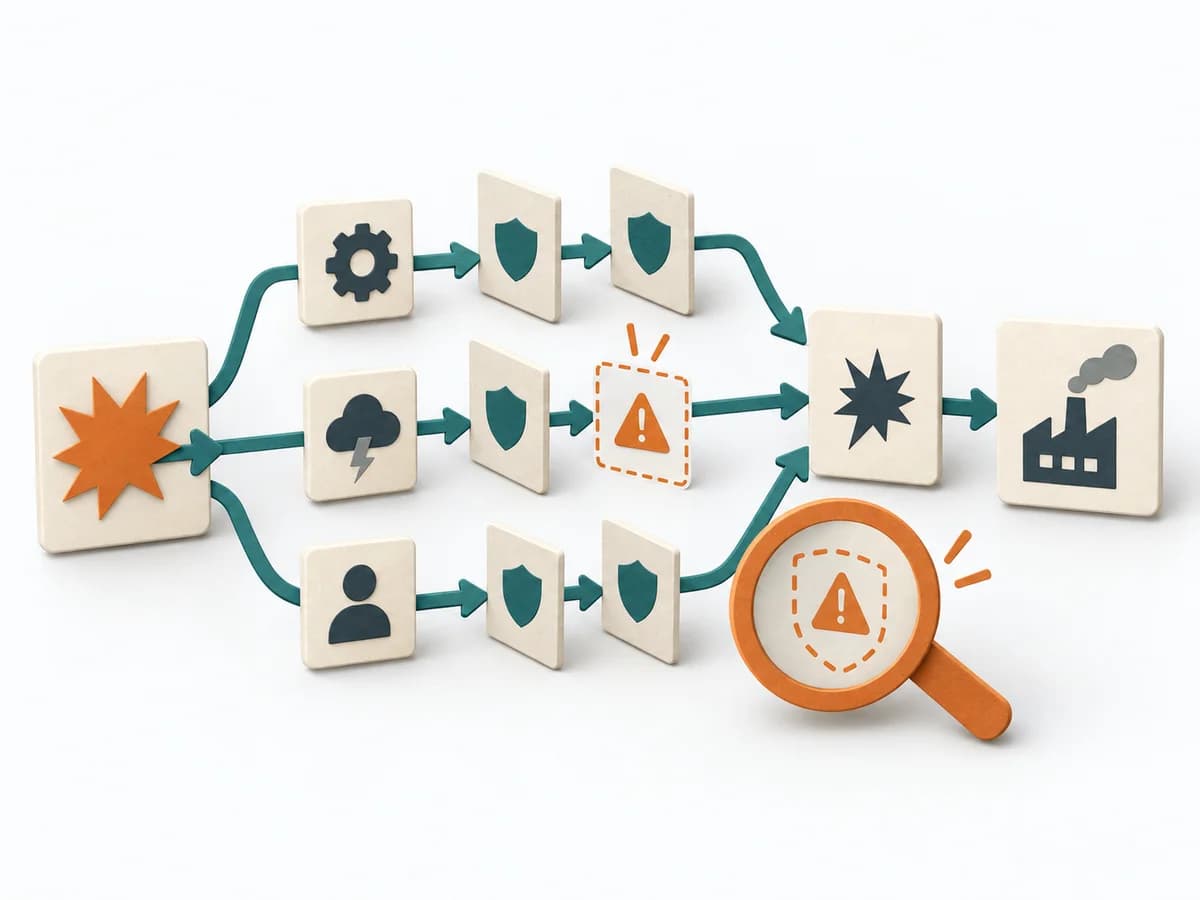 Engineering Failure Scenario Analysis |  Decision Making Constraint Analysis |
|---|---|---|---|---|
Purposedifferent | IBIS structures thinking about complex questions as a sequence of issues, ideas, and arguments. The method keeps discussions open without forcing them into premature consensus. | In early initiatives with many uncertainties, planning quickly turns too optimistic. A pre-mortem makes the expected failure visible in advance and sharpens the view of causes, gaps, and countermeasures. | In critical processes, it is not enough to plan only for the normal case. Failure Scenario Analysis looks at the path into failure and shows which failures, chains, and control gaps cause the most damage. | When an initiative stalls, the limit often lies not in the idea but in hard or soft boundary conditions. Constraint Analysis separates these limits and shows which of them can actually be shaped. |
Complexitydifferent | Medium | Low | Medium | Low |
Timedifferent | 1-3 h | 20–45 min | 1-3 h | 30-90 min |
Participantsdifferent | 2-8 | Small cross-functional group | 3-8 | 2-8 |
Formatdifferent | Workshop + async | Workshop | Workshop | Workshop + async |
Outputdifferent | Issue Map, Positions, Argument Notes | Risk list, Mitigation plan, Assumption log | Failure Scenarios, Risk Notes, Control Gaps, Test and Response Actions | Constraint List, Hard/Soft Classification, Option Impact Notes, Decision Boundaries |
Tagsno overlap | RationaleKnowledgeDecision | RiskDecisionFailurePlanning | FailureResilienceRisk | ConstraintsDecisionPlanningOptions |