View methods side by side.
Choose up to four methods. Add them using the search and share the comparison by copying its link.
| Criterion |  Knowledge Modeling IBIS | 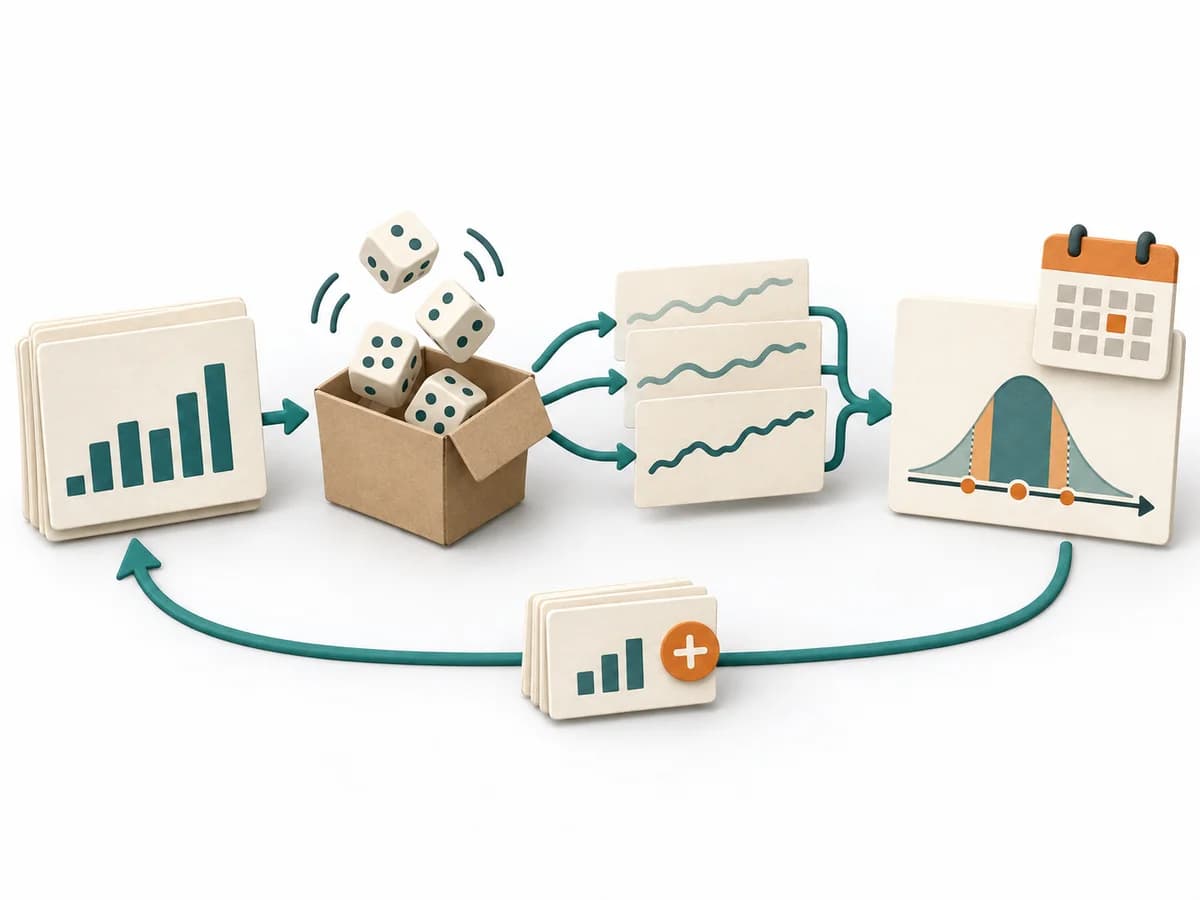 Delivery Monte Carlo Forecasting |  Decision Making Force Field Analysis |  Decision Making Argument Mapping |
|---|---|---|---|---|
Purposedifferent | IBIS structures thinking about complex questions as a sequence of issues, ideas, and arguments. The method keeps discussions open without forcing them into premature consensus. | Helps clarify scope, sequence, and delivery flow in concrete terms. It makes work, boundaries, and order steerable. The result is captured as Forecast Percentiles, Throughput Dataset, and Risk Communication. | In change initiatives, supporting and restraining forces sit at the table at the same time. Force Field Analysis makes these tensions explicit and shows where change can be pushed forward by strengthening or relieving. | When statements, evidence, and counterarguments get mixed up, a debate quickly loses its structure. Argument Mapping breaks a thesis down into its reasoning and makes visible what it really rests on. |
Complexitydifferent | Medium | High | Low | Medium |
Timedifferent | 1-3 h | 30-90 min Setup, danach laufend | 45-90 min | 1-3 h |
Participantsdifferent | 2-8 | 1-8 | 3-12 | 1-8 |
Formatdifferent | Workshop + async | Workshop + async | Workshop | Workshop + async |
Outputdifferent | Issue Map, Positions, Argument Notes | Forecast Percentiles, Throughput Dataset, Risk Communication | Force Field Map, Change Levers, Risk Notes | Argument Map, Evidence Gaps, Decision Rationale |
Tagsno overlap | RationaleKnowledgeDecision | ForecastingFlowDelivery | ChangeDecisionStrategy | SensemakingDecisionRationale |