View methods side by side.
Choose up to four methods. Add them using the search and share the comparison by copying its link.
| Criterion |  Engineering Hypothesis-Driven Troubleshooting | 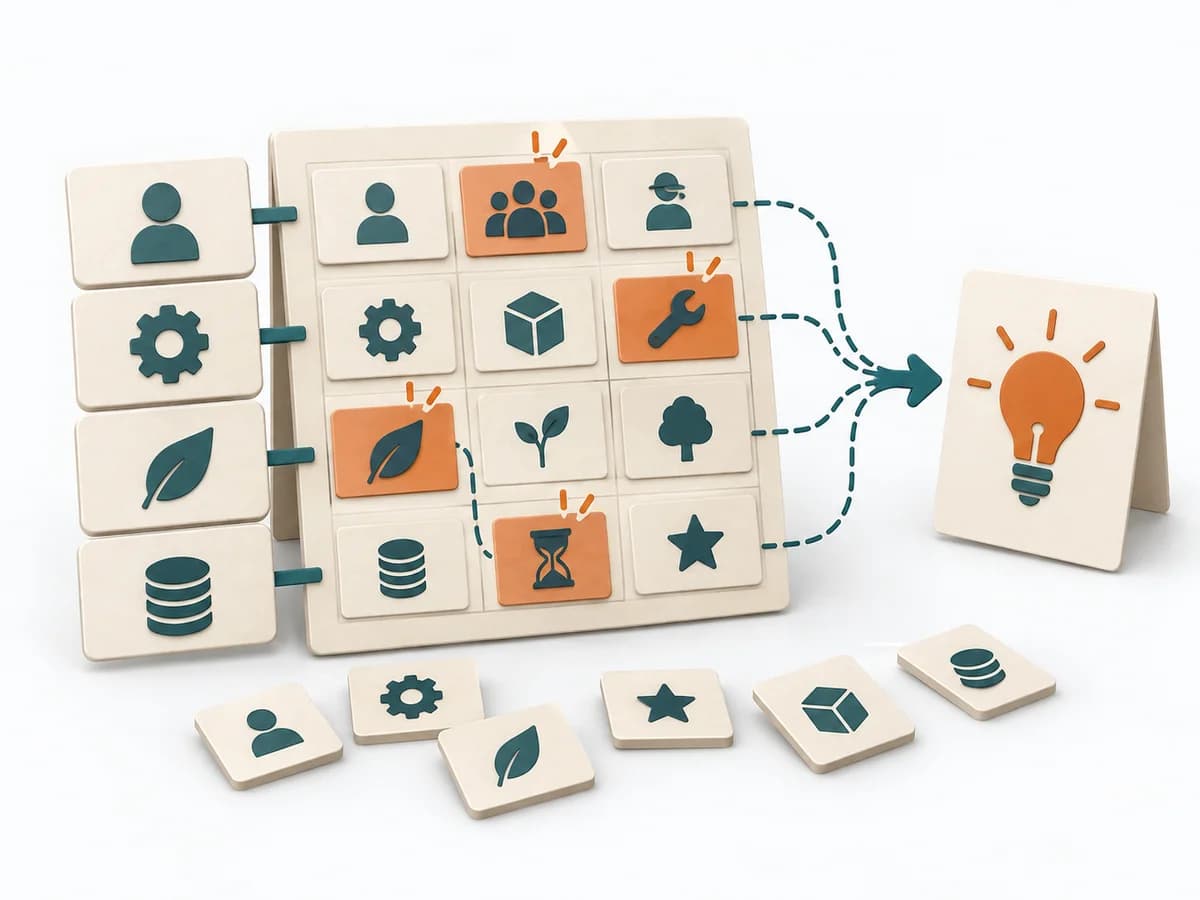 Innovation Morphological Analysis | 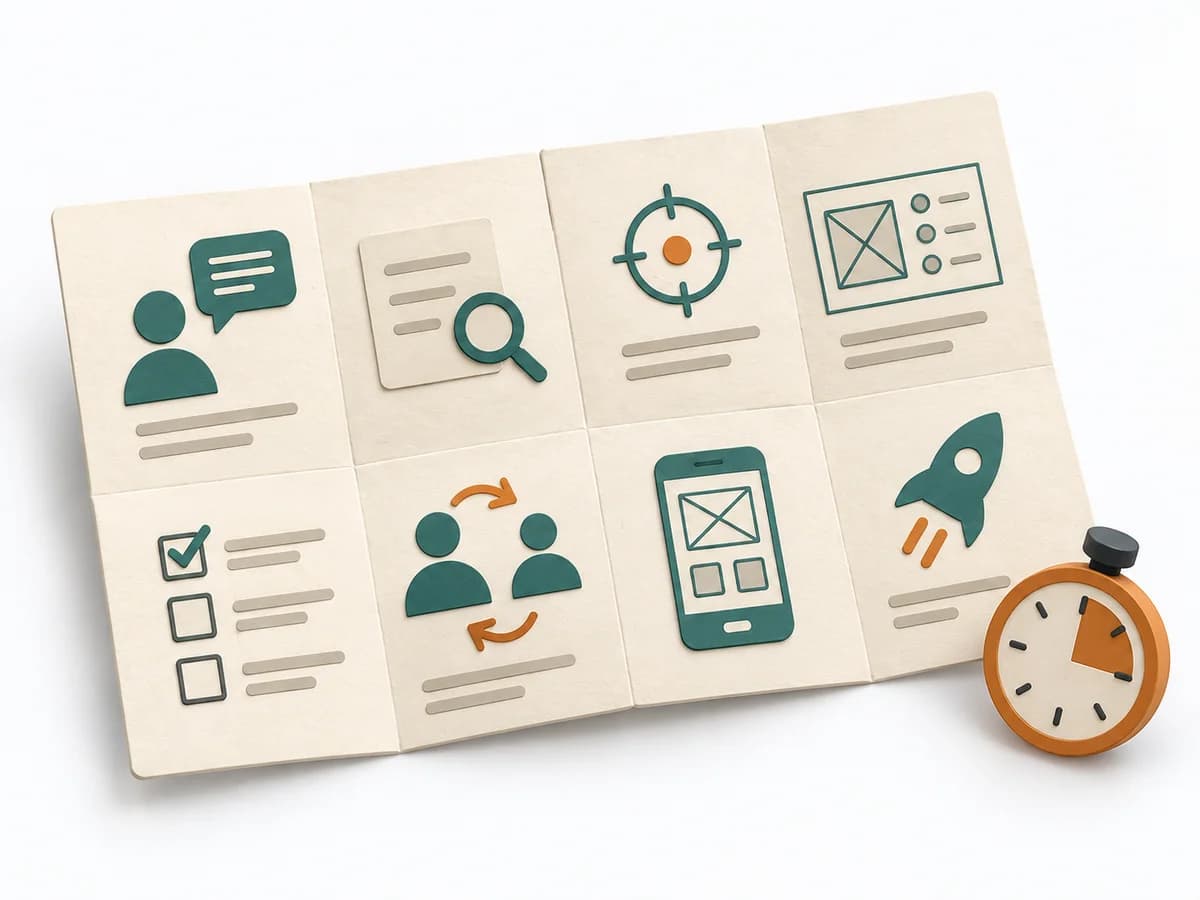 Innovation Crazy 8s |  Innovation Brainstorming |
|---|---|---|---|---|
Purposedifferent | When systems fail unexpectedly, spontaneous attempts often produce more noise than insight. Hypothesis-driven Troubleshooting translates symptoms into testable assumptions and makes troubleshooting learnable. | For a search for solutions with many degrees of freedom, a grid emerges for systematic combinations. The method separates features, variants, and exclusion criteria, so the space gets explored deliberately. | With only a few minutes available and a still-fuzzy solution search, the method forces a wide range of variants. It produces fast sketches before the first idea can settle in, making different directions directly comparable and open to further development. | When a team faces an open question with many obvious directions, the method first creates breadth instead of premature commitment. It separates idea flow from evaluation and makes lines of thought visible, creating a pool for selection and further development. |
Complexitydifferent | Medium | Medium | Low | Low |
Timedifferent | 30-240 min | 1-3 h | 8-15 min | 30-60 min |
Participantsdifferent | 1-6 | 2-8 | 1-10 | 4-12 |
Formatdifferent | Workshop + async | Workshop + async | Workshop | Workshop |
Outputdifferent | Hypothesis Log, Test Plan, Evidence Notes, Diagnosis Summary | Morphological Box, Concept Combinations, Idea Shortlist | Sketch Set, Idea Shortlist, Direction Options | Idea pool, Theme clusters, Shortlist |
Tagsno overlap | TroubleshootingProblem solvingDiagnosis | IdeationInnovationCreativity | BrainstormingSketchingSpeedDivergenceDesign sprint | BrainstormingIdeationCreativityWorkshopDivergence |