View methods side by side.
Choose up to four methods. Add them using the search and share the comparison by copying its link.
| Criterion |  Engineering Hypothesis-Driven Troubleshooting |  Facilitation Mind Mapping | 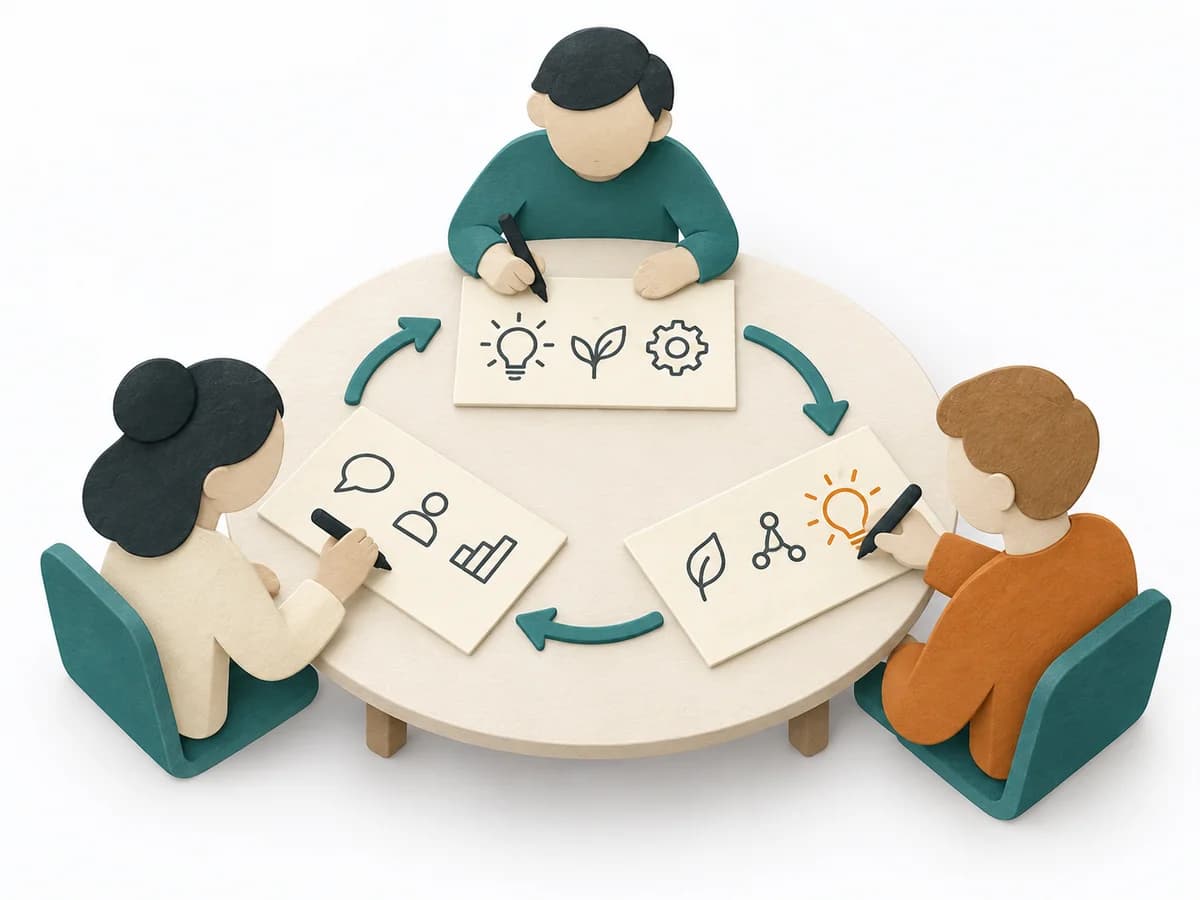 Innovation Brainwriting | 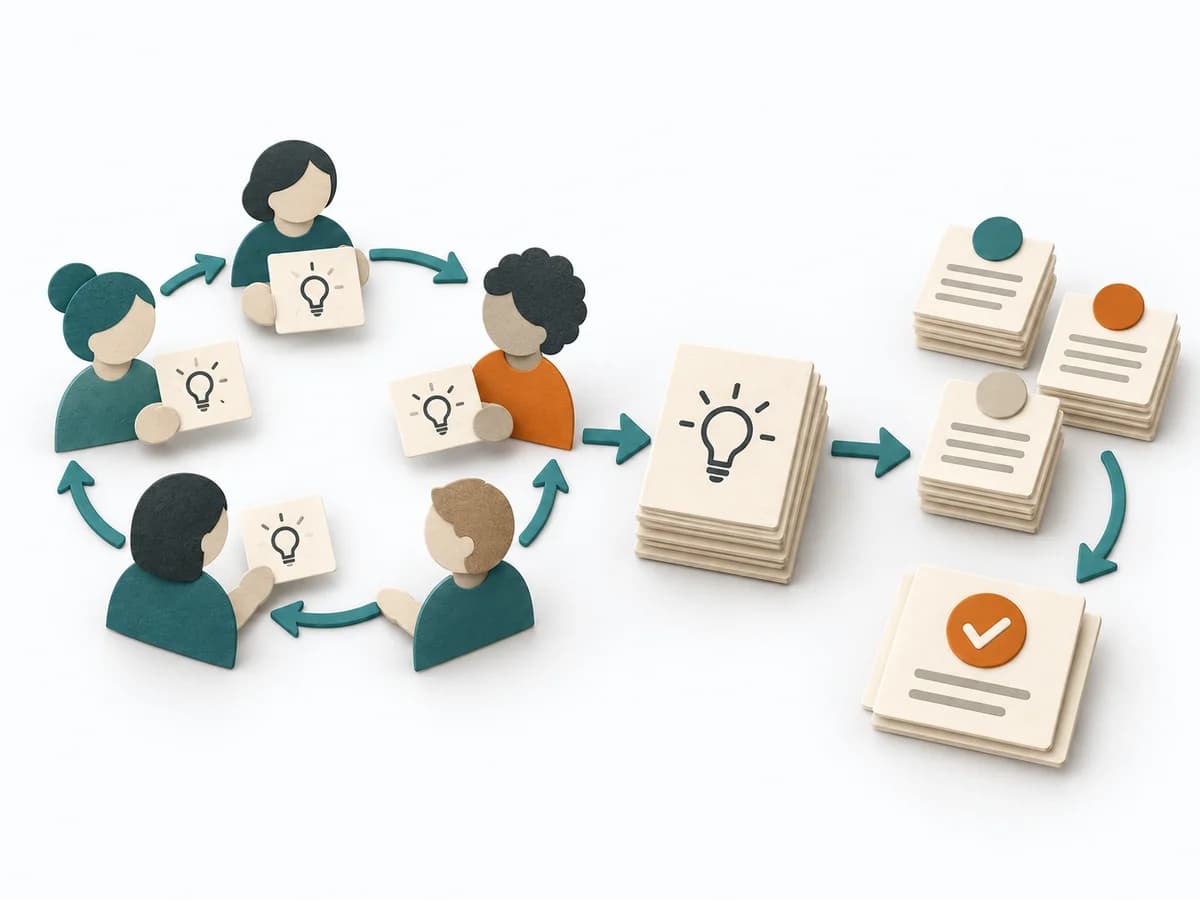 Innovation Round Robin Brainstorming |
|---|---|---|---|---|
Purposedifferent | When systems fail unexpectedly, spontaneous attempts often produce more noise than insight. Hypothesis-driven Troubleshooting translates symptoms into testable assumptions and makes troubleshooting learnable. | When a topic is still unclear and too many thoughts surface at once, Mind Mapping creates an open surface for ordering them. It makes connections, subtopics, and starting points visible without fixing them too early. | When loud voices or hierarchy distort the idea search, the method creates a quiet entry into joint development. It gives everyone thinking space and gathers contributions without social brakes, making diversity more visible and easier to build on. | With unevenly distributed speaking time, the method brings every person into the contribution one after another. It prevents early voices from setting the direction while still producing a shared idea space. This makes participation plannable and the team's diversity visible. |
Complexitydifferent | Medium | Low | Low | Low |
Timedifferent | 30-240 min | 15-45 min | 15-30 min | 20-45 min |
Participantsdifferent | 1-6 | 1-10 | 3-12 | 4-10 |
Formatdifferent | Workshop + async | Workshop + async | Workshop + async | Workshop |
Outputdifferent | Hypothesis Log, Test Plan, Evidence Notes, Diagnosis Summary | Mind Map, Topic Clusters, Open Questions | Idea sheets, Expanded concepts, Prioritized list | Idea List, Cluster, Shortlist |
Tagsno overlap | TroubleshootingProblem solvingDiagnosis | BrainstormingIdeasMappingStructureFacilitation | BrainstormingCollaborationInclusionIdeas | BrainstormingIdeationFacilitationInclusionCreativity |