View methods side by side.
Choose up to four methods. Add them using the search and share the comparison by copying its link.
| Criterion |  Engineering Hypothesis-Driven Troubleshooting |  Operations 5 Whys | 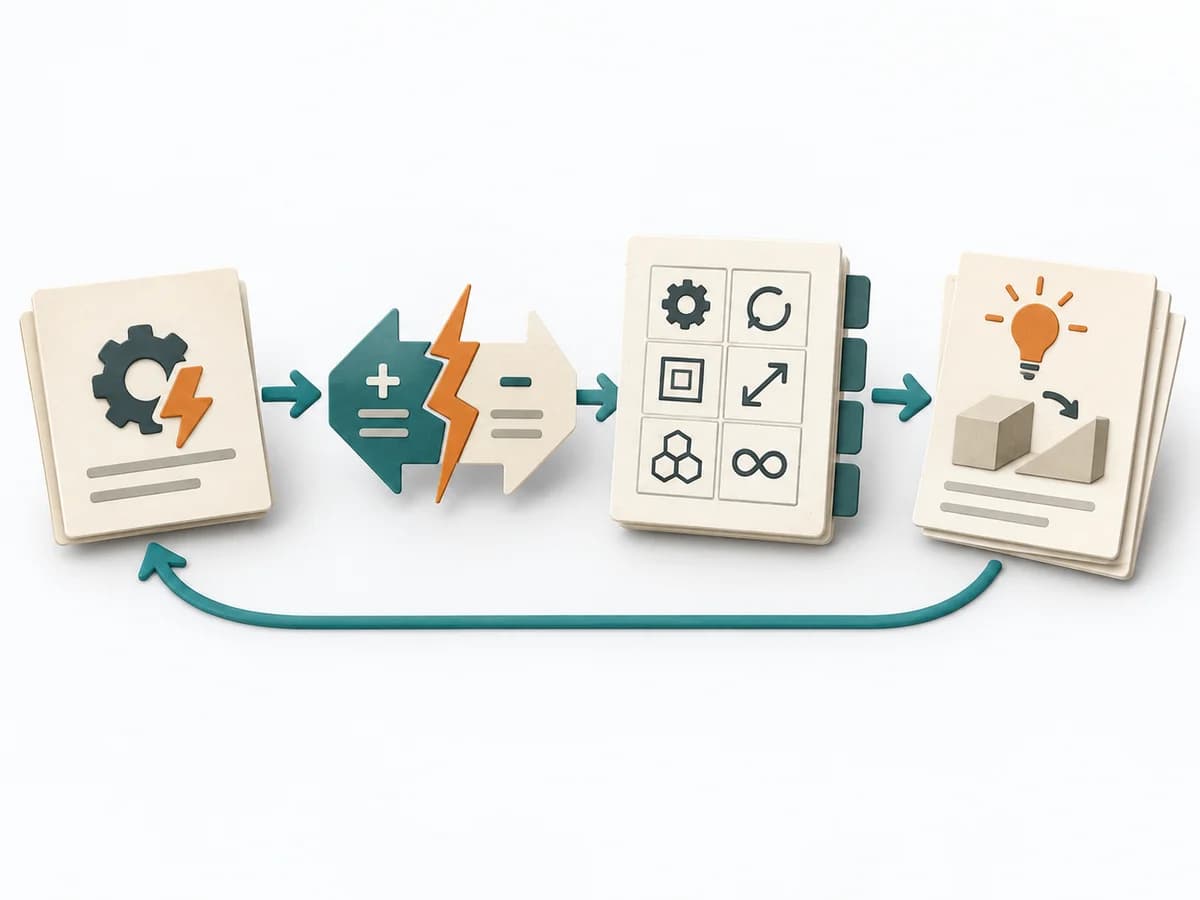 Innovation TRIZ |  Operations Root Cause Analysis |
|---|---|---|---|---|
Purposedifferent | When systems fail unexpectedly, spontaneous attempts often produce more noise than insight. Hypothesis-driven Troubleshooting translates symptoms into testable assumptions and makes troubleshooting learnable. | For a single, hard-to-explain deviation, the method exposes the causal chain behind the visible symptom. It keeps the cause open until a controllable condition emerges instead of a mere description. | For technical contradictions or trade-offs, the method looks for solutions that resolve opposing requirements at the same time. It translates limits into an explicit picture of conflict that becomes workable. This produces not just compromises but more elegant principles. | When a problem keeps recurring and the cause stays unclear, the method exposes the underlying mechanism. It separates symptom, guess, and robust explanation from one another. |
Complexitydifferent | Medium | Low | High | Medium |
Timedifferent | 30-240 min | 15-30 min | 1-4 h | 1-4 h |
Participantsdifferent | 1-6 | 2-6 | 2-8 | 3-8 |
Formatdifferent | Workshop + async | Workshop | Workshop + async | Workshop + async |
Outputdifferent | Hypothesis Log, Test Plan, Evidence Notes, Diagnosis Summary | Root cause notes, Countermeasures | Contradiction Statement, Inventive Principles, Solution Concepts | Problem Statement, Cause Hypotheses, Confirmed Causes, Action Plan |
Tags1 shared | TroubleshootingProblem solvingDiagnosis | Root causeIncidentLeanProblem solving | InnovationProblem solvingContradictionsCreativity | Root causeProblem solvingQualityIncident |