View methods side by side.
Choose up to four methods. Add them using the search and share the comparison by copying its link.
| Criterion | 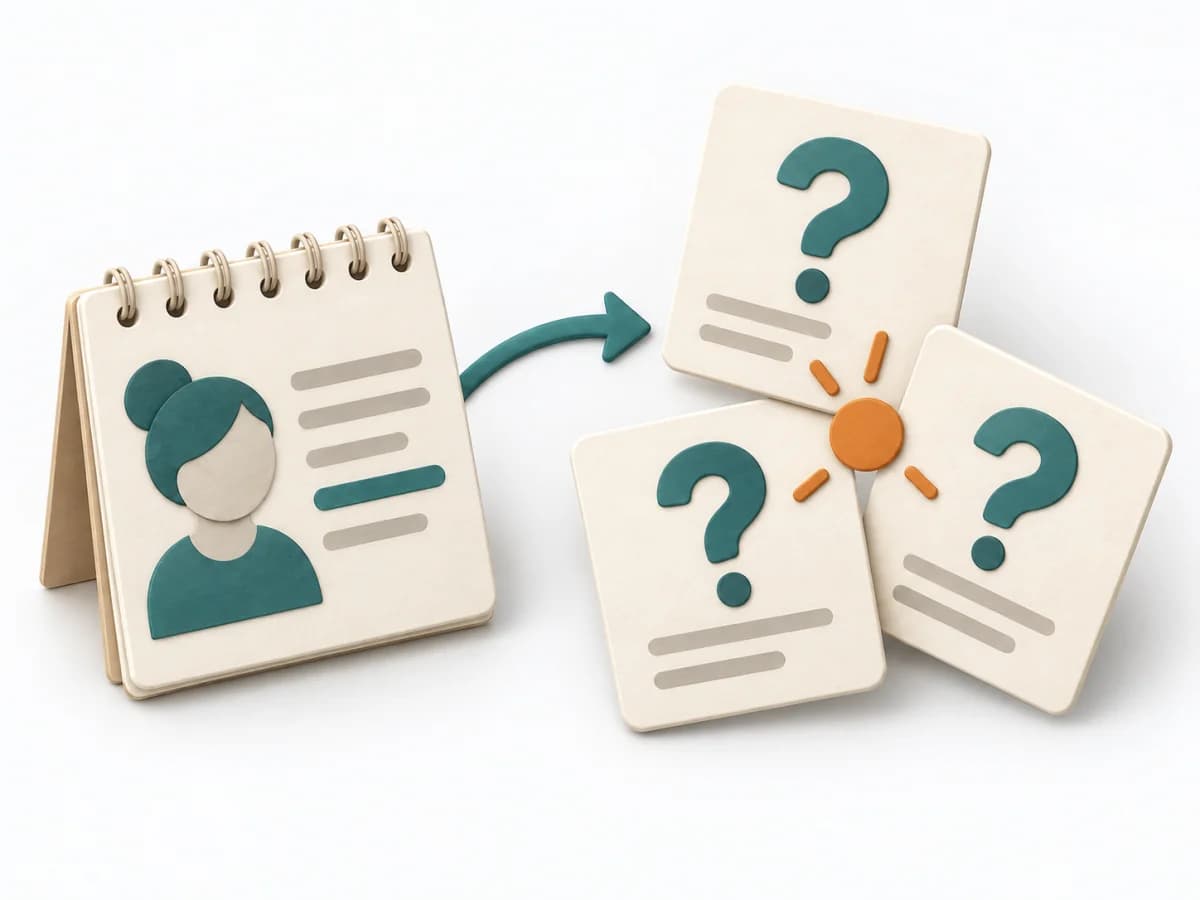 Innovation How Might We | 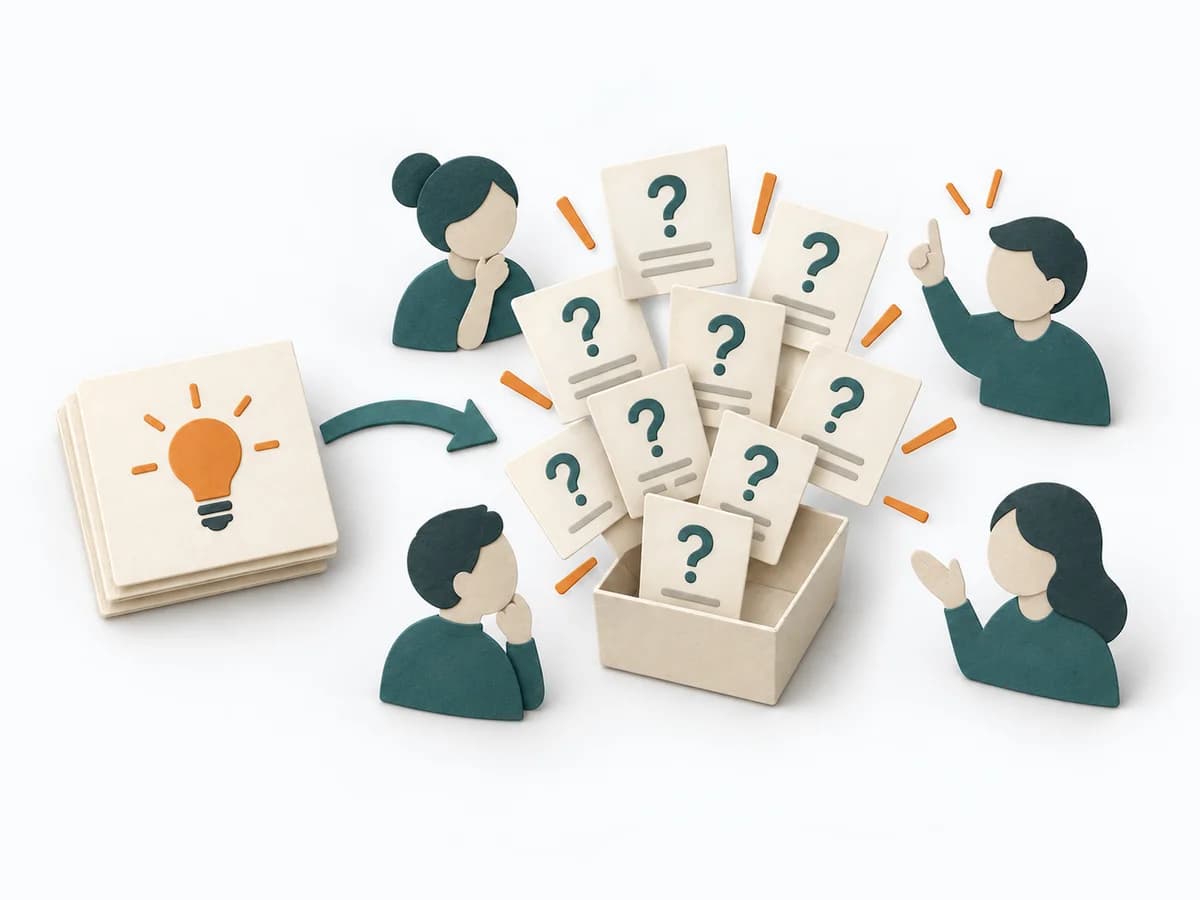 Facilitation Question Burst | 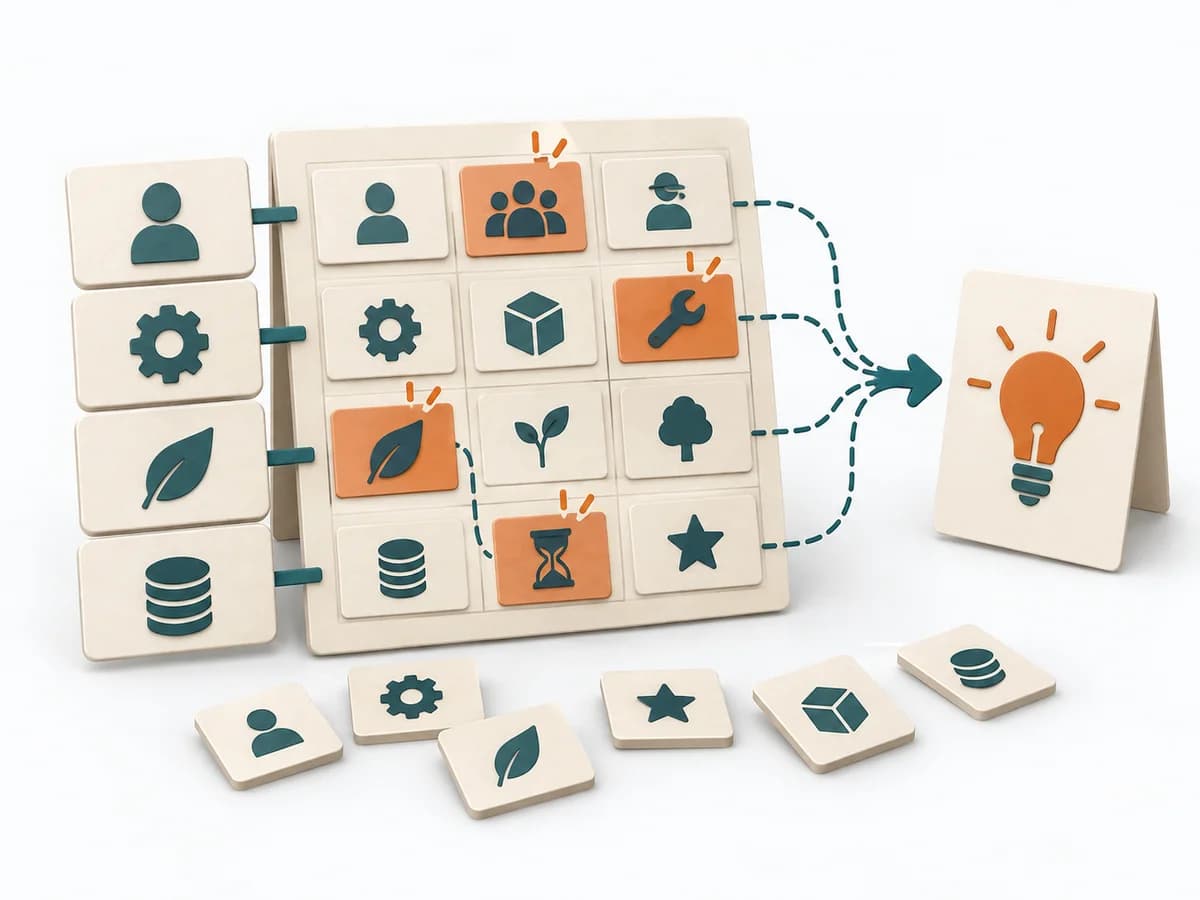 Innovation Morphological Analysis | 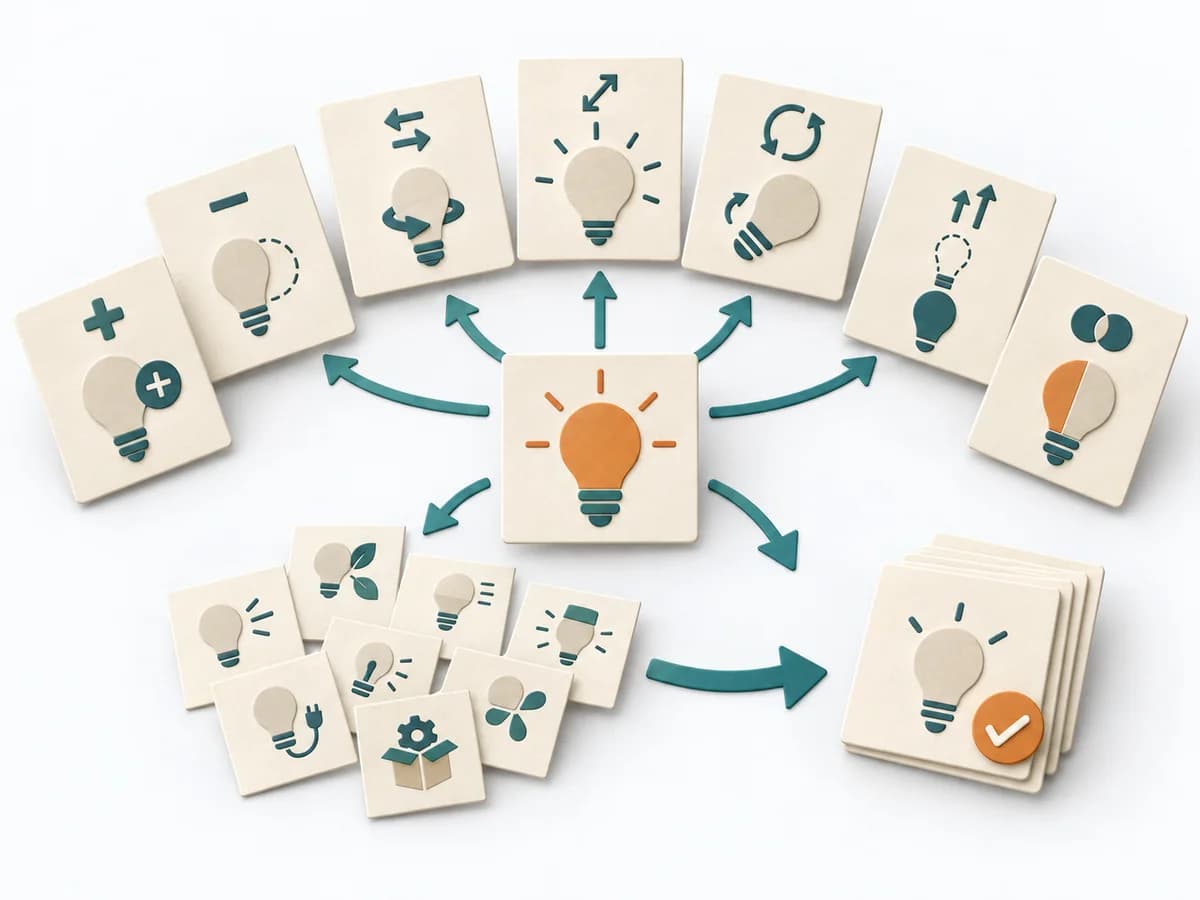 Innovation SCAMPER |
|---|---|---|---|---|
Purposedifferent | With a stuck problem carrying many implicit assumptions, the method translates observations into open, workable questions. It sharpens the problem frame without pre-thinking the solution, turning frustration or fuzziness into a search space with clear direction. | When a problem gets covered up too quickly with answers, Question Burst puts the better question at the center. The format opens the thinking space before the group commits to an interpretation. | For a search for solutions with many degrees of freedom, a grid emerges for systematic combinations. The method separates features, variants, and exclusion criteria, so the space gets explored deliberately. | For an existing solution under pressure to change, the method deliberately opens space for systematic variants. It directs attention to rebuilding, combining, and repurposing rather than only new basic ideas. This produces concrete evolution paths for products, offerings, or workflows. |
Complexitydifferent | Low | Low | Medium | Low |
Timedifferent | 30–45 min | 15-30 min | 1-3 h | 30-60 min |
Participantsdifferent | 1-10 | 2-8 | 2-8 | 2-10 |
Formatdifferent | Workshop + async | Workshop | Workshop + async | Workshop |
Outputdifferent | HMW Questions, Challenge Framing, Idea Prompts | Question List, Reframed Challenge, Learning Prompts | Morphological Box, Concept Combinations, Idea Shortlist | SCAMPER Idea List, Concept Shortlist, Variation Notes |
Tagsno overlap | FramingOpportunityIdeationQuestions | QuestionsReframingFacilitationSensemaking | IdeationInnovationCreativity | BrainstormingIdeationCreativityReframingInnovation |