View methods side by side.
Choose up to four methods. Add them using the search and share the comparison by copying its link.
| Criterion | 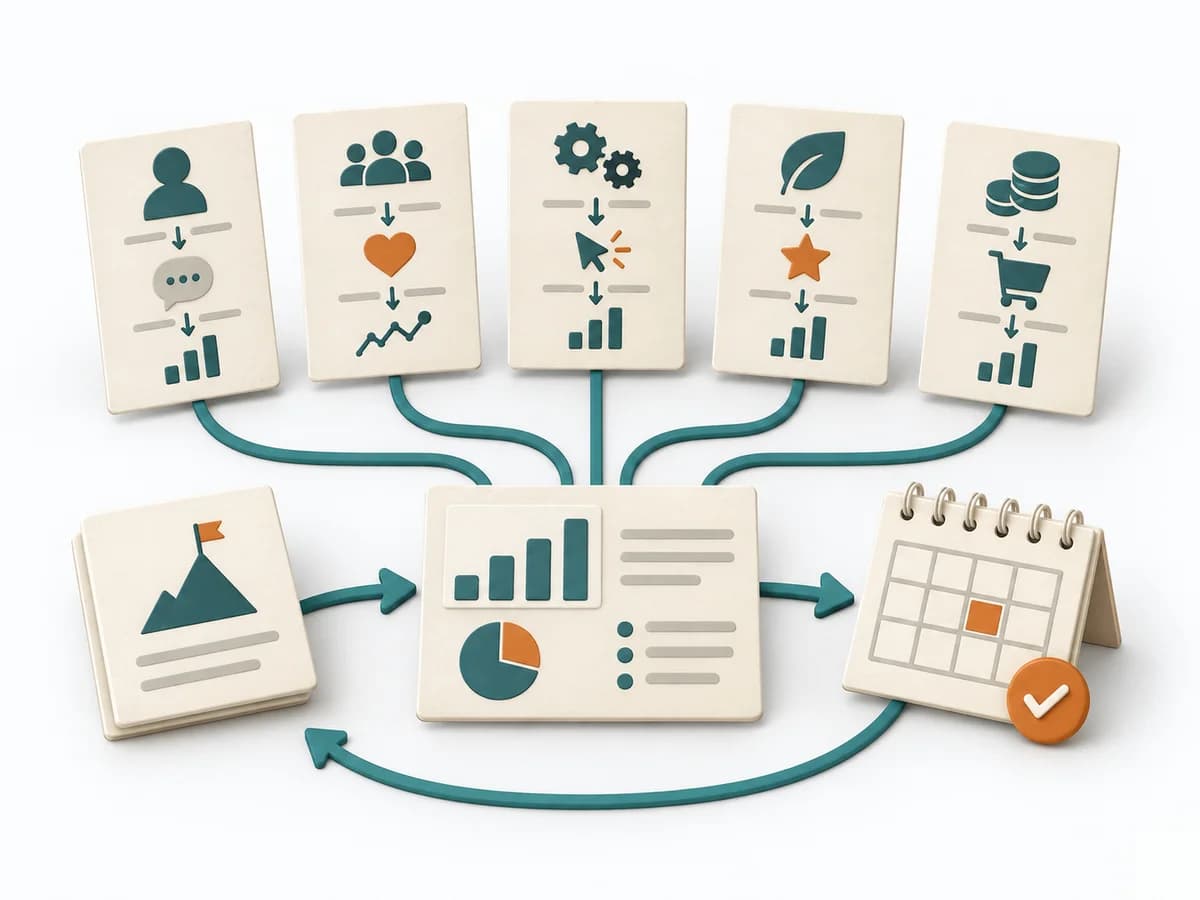 UX Research HEART Framework |  Architecture Architecture Decision Record |  Facilitation Stakeholder Salience Model | 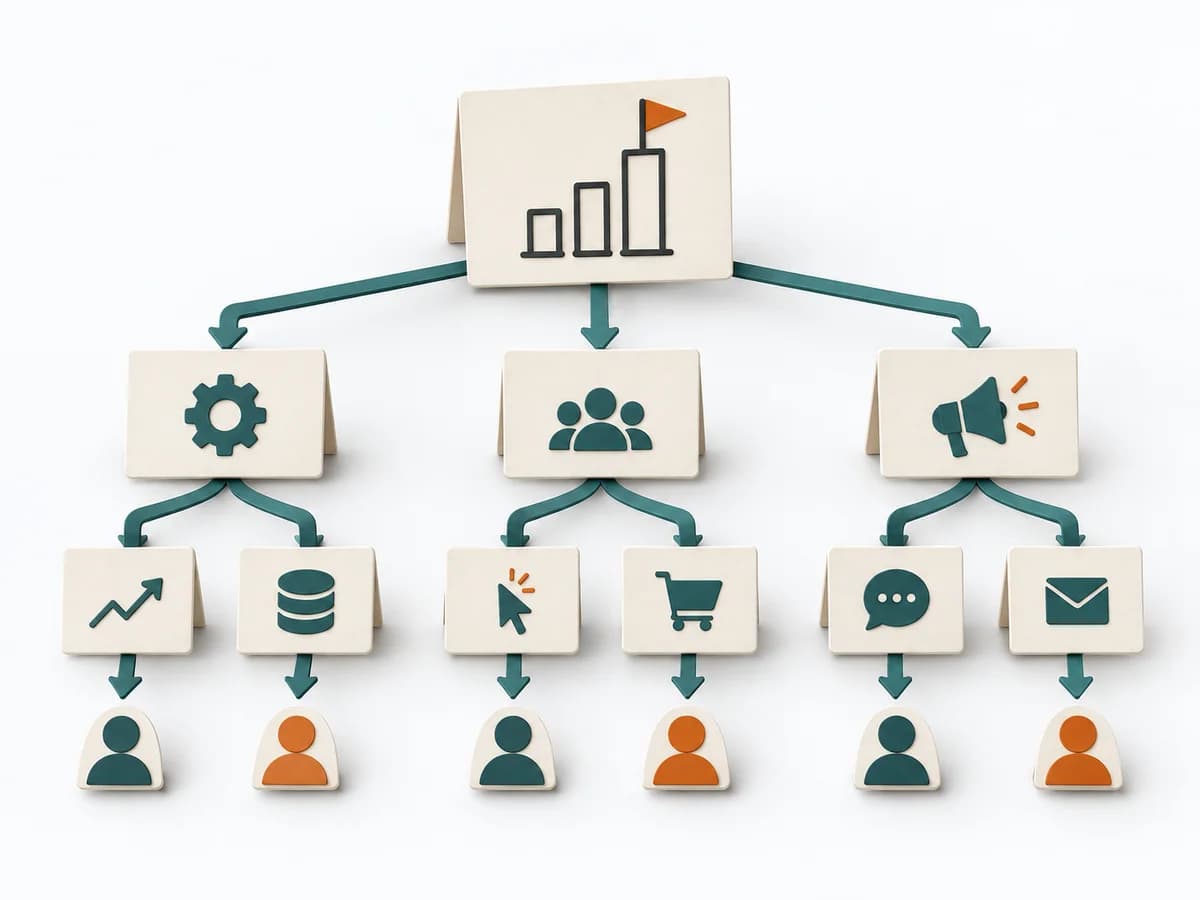 Product Strategy KPI Tree |
|---|---|---|---|---|
Purposedifferent | Helps clarify observations, needs, and patterns in concrete terms. It groups observations into patterns, questions, and decisions. The result is captured as a HEART-GSM table and dashboard. | An ADR permanently records an architecture decision with context, trade-offs, and consequence. It creates continuity for later changes because the decision path stays traceable. | When stakeholders appear to matter very differently, the Stakeholder Salience Model rates their actual priority through power, legitimacy, and urgency. It turns individual contributions into a visible selection. The result is captured as a Salience diagram and a class-based strategy. | When metrics across the organization drift apart, it arranges drivers and effects under one shared logic. It connects customer value, product logic, and decision priorities. The result is captured as a KPI tree and owner list. |
Complexitydifferent | Medium | Low | Medium | Medium |
Timedifferent | 120 min initial, dann laufend | 15-45 min | 60-90 min | 90-180 min initial, dann laufend |
Participantsdifferent | 3-6 | 1-3 | 3-6 | 3-8 |
Formatdifferent | Workshop + async | Async | Workshop | Workshop + async |
Outputdifferent | HEART-GSM Table, Dashboard | ADR File, Decision Log, Rationale | Salience Diagram, Strategy per Class | KPI Tree, Owner List |
Tagsno overlap | MetricsUX researchMeasurementSatisfaction | ArchitectureRationaleDocumentationGovernance | StakeholdersFacilitationAlignmentGovernance | MetricsStrategyAlignmentMeasurement |