View methods side by side.
Choose up to four methods. Add them using the search and share the comparison by copying its link.
| Criterion | 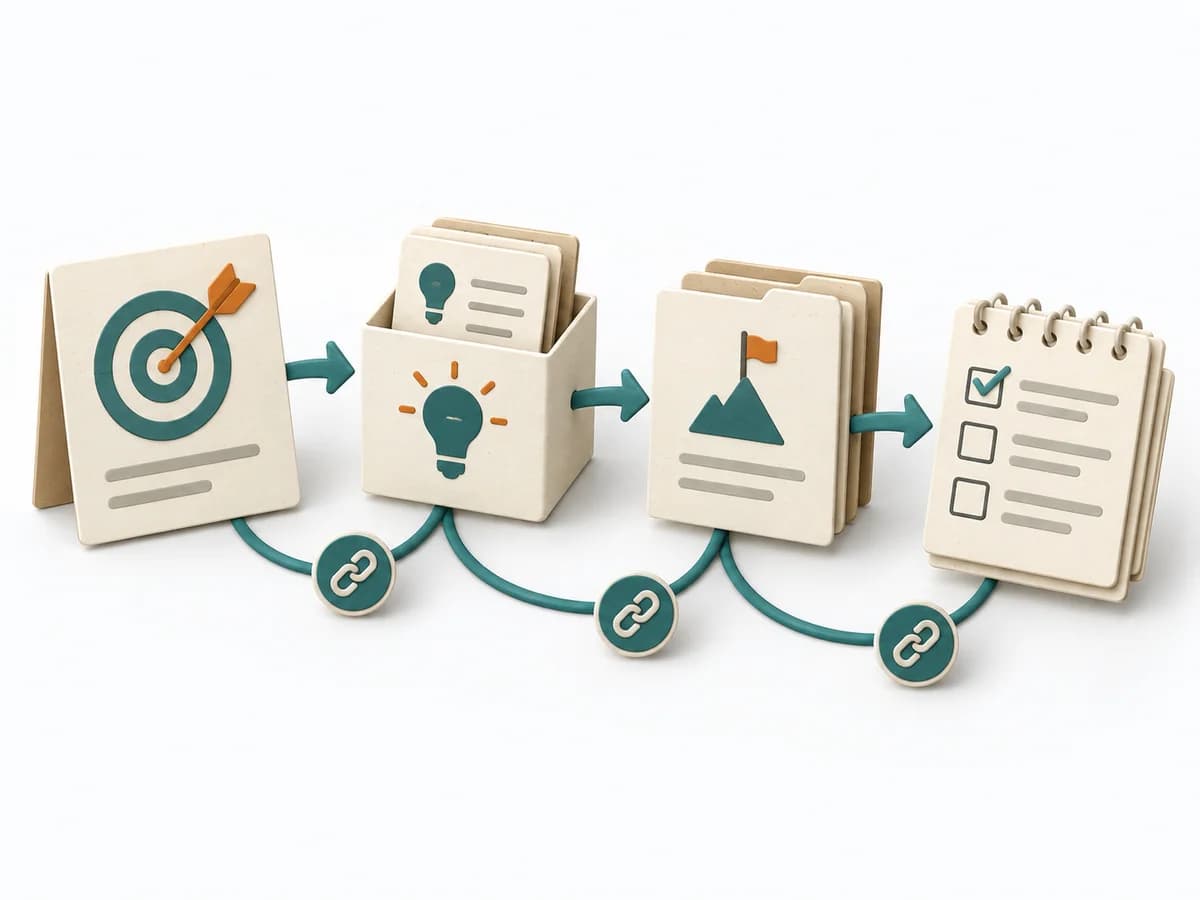 Product Strategy GIST Planning | 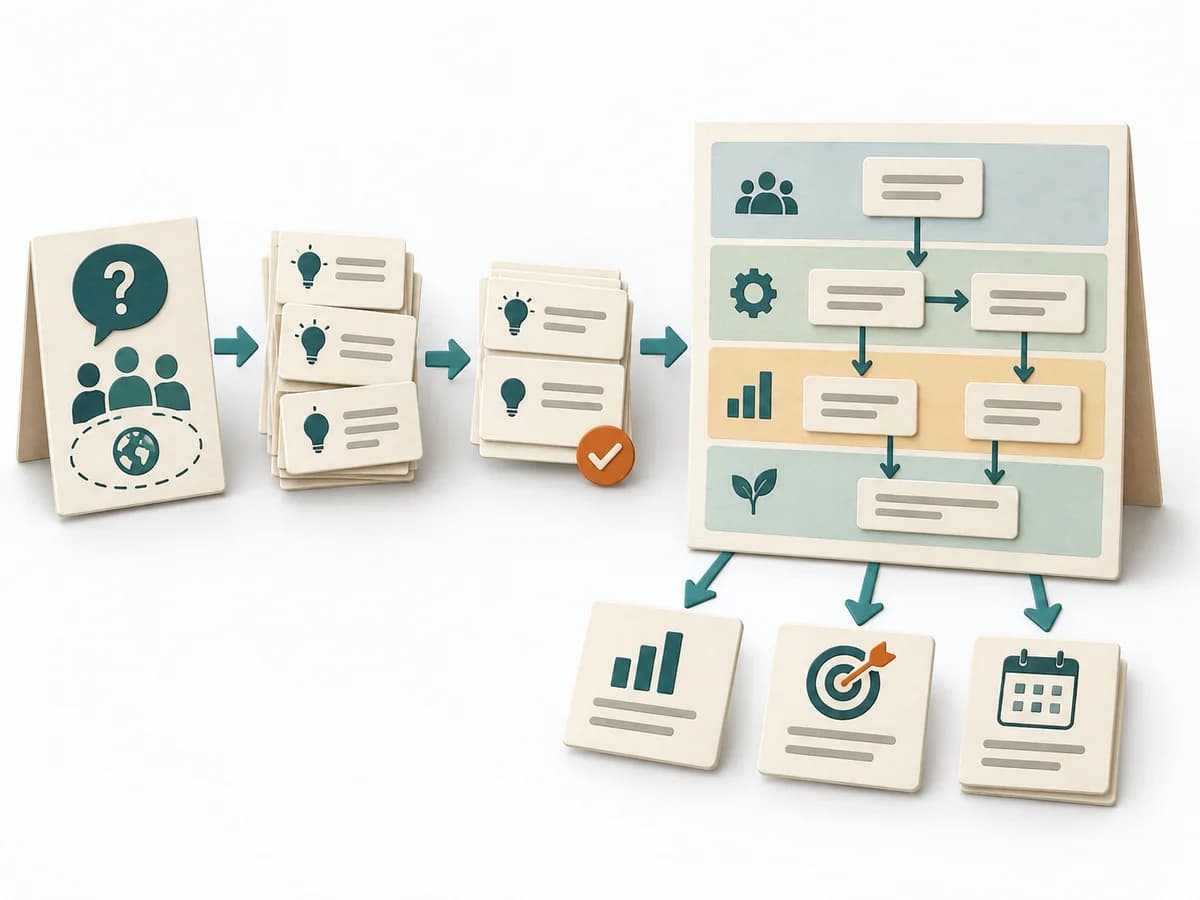 Business Strategy Strategy Map |  Facilitation Alignment Mapping | 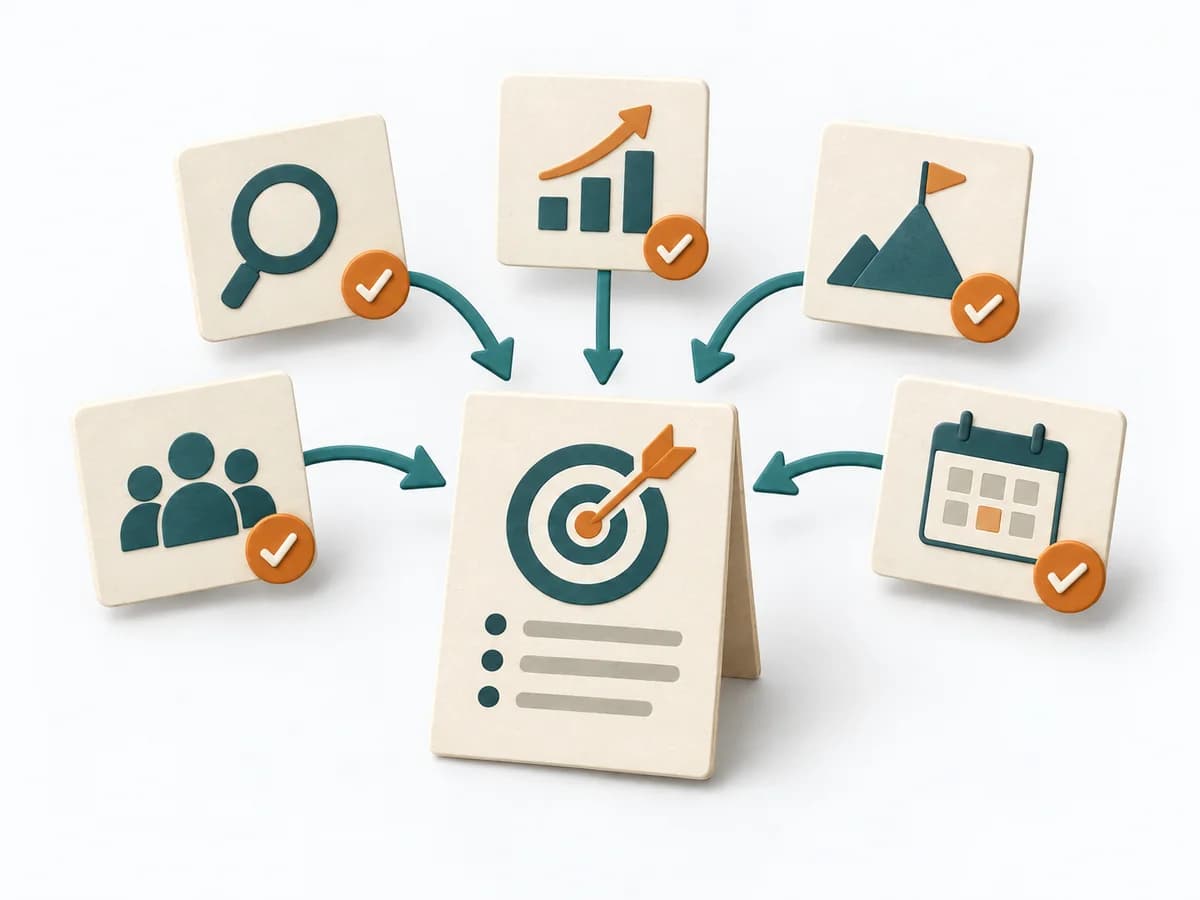 Product Strategy SMART Goals |
|---|---|---|---|---|
Purposedifferent | GIST Planning helps clarify target groups, value, goals, and priorities. It links customer value, product logic, and decision priorities, and captures the result as goals, an idea bank, and a step-project list. | A Strategy Map translates strategy into a few connected objectives across perspectives such as finance, customers, processes, and learning. This makes visible which capabilities and activities are meant to drive which results. | When several people work toward one goal but hold different mental maps, Alignment Mapping makes the discrepancies visible. It arranges goals, assumptions, and priorities so shared direction becomes verifiable. | When goals are formulated too generally, it brings measurability, direction, and timing into shape. It prevents intentions from staying without clear verification. |
Complexitydifferent | Medium | Medium | Medium | Low |
Timedifferent | Wochen bis Monate je Goal | 2-4 h workshop plus review | 1-2 h | 15-30 min |
Participantsdifferent | 3-10 | 4-10 | 4-12 | 1-8 |
Formatdifferent | Workshop + async | Workshop | Workshop | Workshop + async |
Outputdifferent | Goals, Idea bank, Step-project list, Tasks, Learning reports | Strategy Map, Objective Set, Cause-Effect Hypotheses | Alignment Map, Open Issues, Decision Questions | SMART Goal, Measurement Note, Deadline |
Tagsno overlap | RoadmapOutcomesPlanningExperiments | AlignmentExecutionGoalsCausality | AlignmentStakeholdersStrategyFacilitation | GoalsPlanningMeasurementAlignment |