View methods side by side.
Choose up to four methods. Add them using the search and share the comparison by copying its link.
| Criterion | 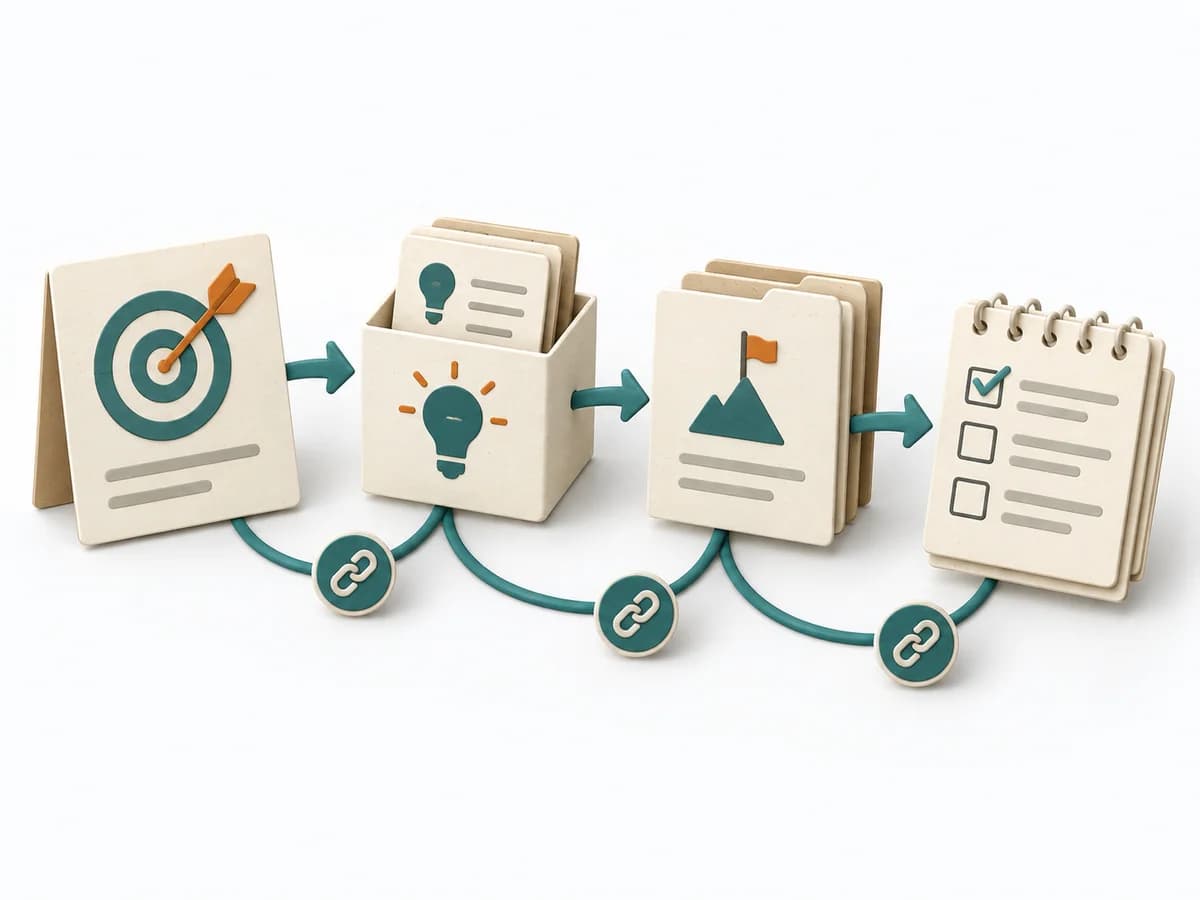 Product Strategy GIST Planning |  UX Research Empathy Mapping |  Operations Root Cause Analysis |  Operations 8D Problem Solving |
|---|---|---|---|---|
Purposedifferent | GIST Planning helps clarify target groups, value, goals, and priorities. It links customer value, product logic, and decision priorities, and captures the result as goals, an idea bank, and a step-project list. | When a lot is assumed about a target group but little is seen jointly, empathy mapping makes knowledge and gaps directly comparable. The picture also shows which assumptions hold up and where evidence is missing. | When a problem keeps recurring and the cause stays unclear, the method exposes the underlying mechanism. It separates symptom, guess, and robust explanation from one another. | For an acute quality or delivery problem, the method structures immediate protection and root cause work together. It keeps the situation stable while the actual cause is investigated cleanly. |
Complexitydifferent | Medium | Low | Medium | High |
Timedifferent | Wochen bis Monate je Goal | 30–60 min | 1-4 h | 1-6 Wochen |
Participantsdifferent | 3-10 | 4-8 | 3-8 | 4-10 |
Formatdifferent | Workshop + async | Workshop | Workshop + async | Workshop + async |
Outputdifferent | Goals, Idea bank, Step-project list, Tasks, Learning reports | Empathy Map, Assumptions List, Research Gaps | Problem Statement, Cause Hypotheses, Confirmed Causes, Action Plan | 8D Report, Containment Plan, Root Cause Evidence, Corrective Action Plan |
Tagsno overlap | RoadmapOutcomesPlanningExperiments | SynthesisQualitativeWorkshop | Root causeProblem solvingQualityIncident | QualityProblem solvingRoot cause |