View methods side by side.
Choose up to four methods. Add them using the search and share the comparison by copying its link.
| Criterion | 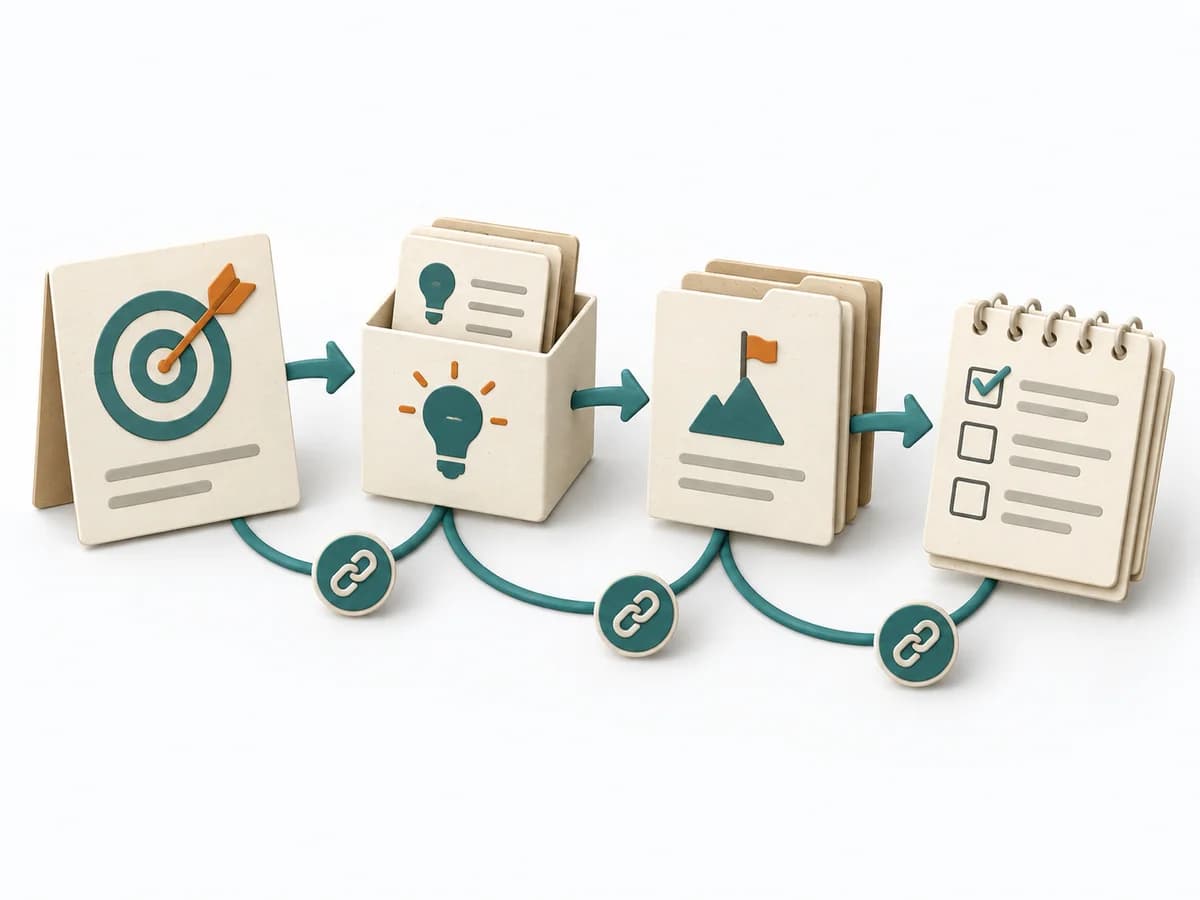 Product Strategy GIST Planning |  Operations Change Analysis |  Operations ALPEN Method |  Operations Fishbone Diagram |
|---|---|---|---|---|
Purposedifferent | GIST Planning helps clarify target groups, value, goals, and priorities. It links customer value, product logic, and decision priorities, and captures the result as goals, an idea bank, and a step-project list. | For a deviation after a change, the method isolates the influence of the altered condition. It narrows down which differences are relevant and which are just accompanying noise. | With an overloaded day full of too many tasks, a realistic picture of the day emerges. The method connects estimating, deciding, and buffer thinking so planning fits available energy and time. | When a problem has several possible contributing factors, the method sorts causes by cause areas. It prevents an initial hunch from blocking the view of other plausible drivers. |
Complexitydifferent | Medium | Medium | Low | Low |
Timedifferent | Wochen bis Monate je Goal | 45-120 min | 10-20 min daily | 30-60 min |
Participantsdifferent | 3-10 | 2-6 | 1 | 2-8 |
Formatdifferent | Workshop + async | Workshop + async | Async | Workshop |
Outputdifferent | Goals, Idea bank, Step-project list, Tasks, Learning reports | Change Matrix, Cause Hypotheses, Validation Questions, Action List | Daily Plan, Time Estimates, Review Notes | Fishbone Diagram, Cause Categories, Investigation Backlog |
Tagsno overlap | RoadmapOutcomesPlanningExperiments | ChangeRoot causeTroubleshootingComparison | PlanningTime managementProductivityOperations | Root causeQualityOperations |