View methods side by side.
Choose up to four methods. Add them using the search and share the comparison by copying its link.
| Criterion | 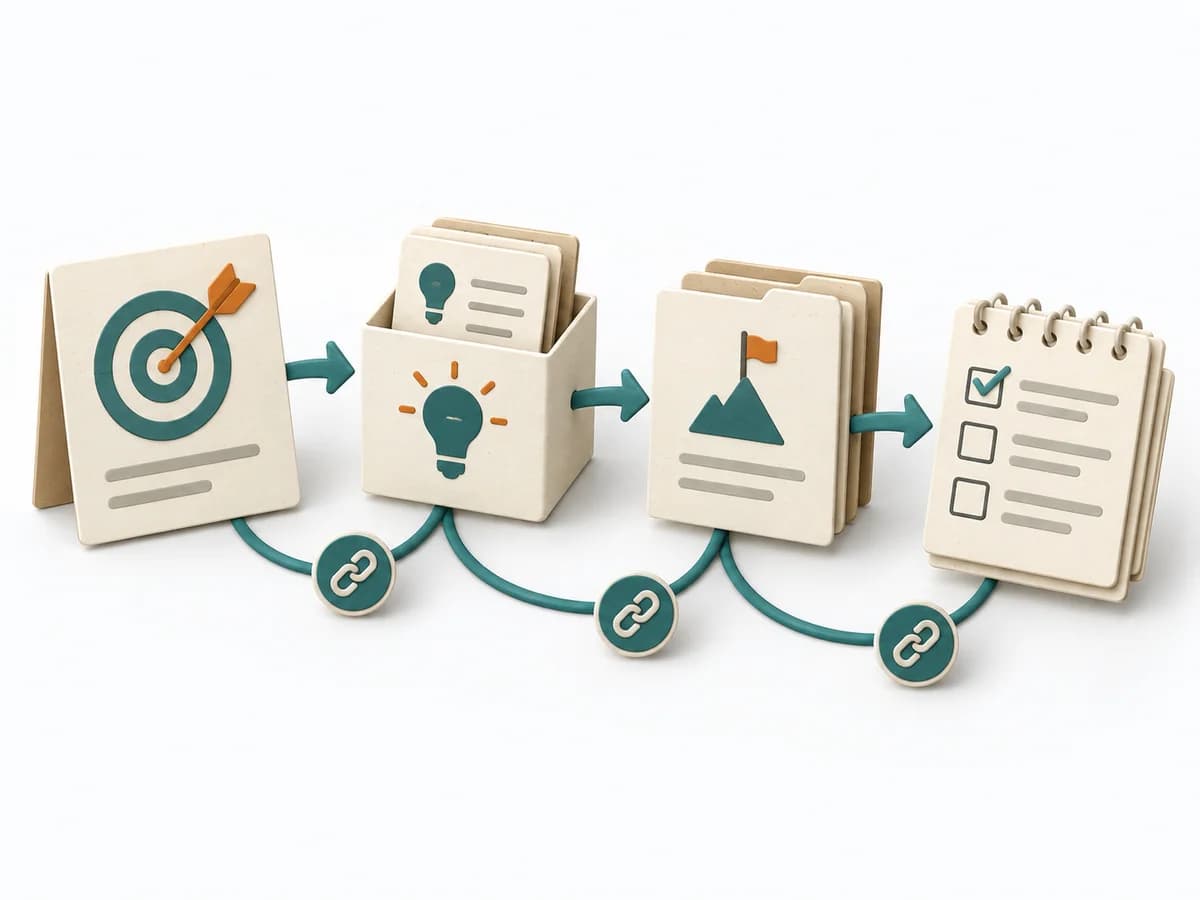 Product Strategy GIST Planning | 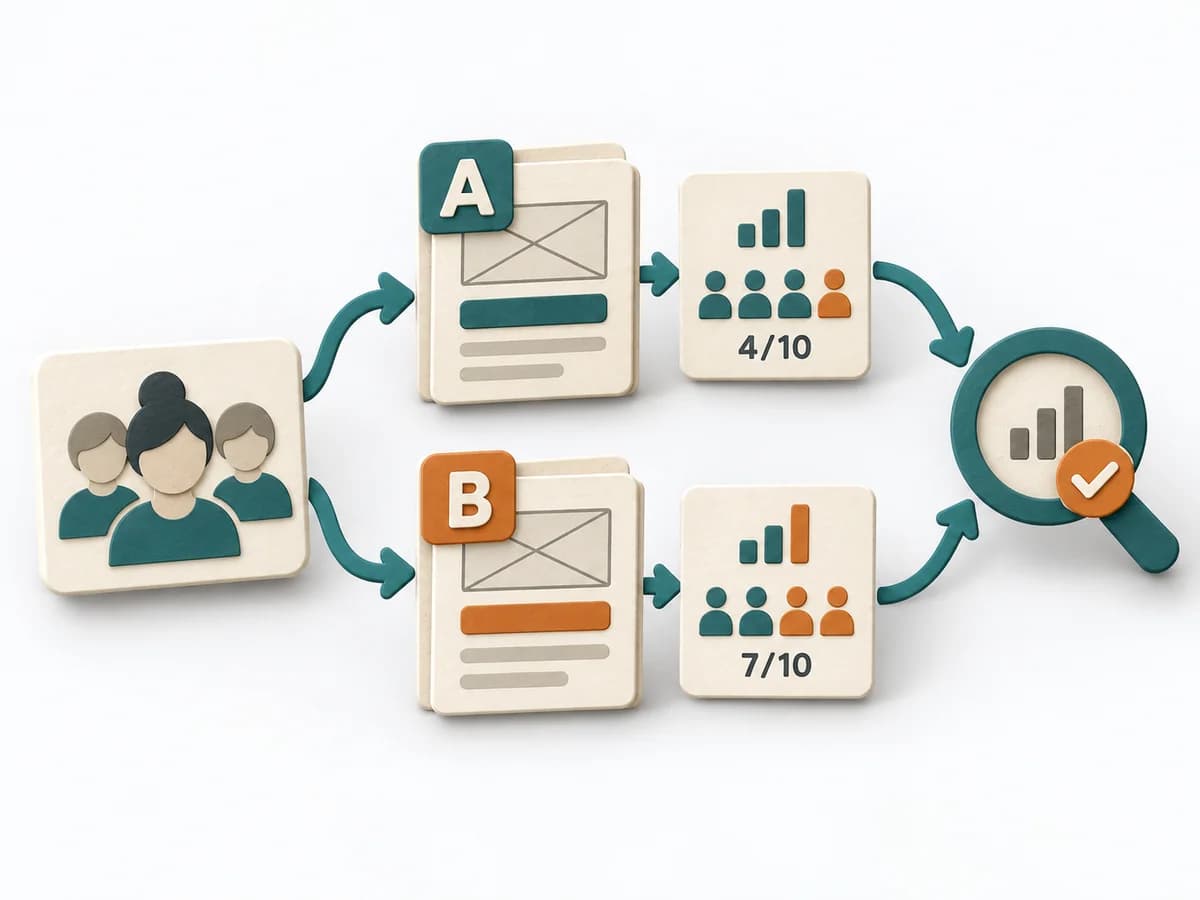 Growth A/B Testing | 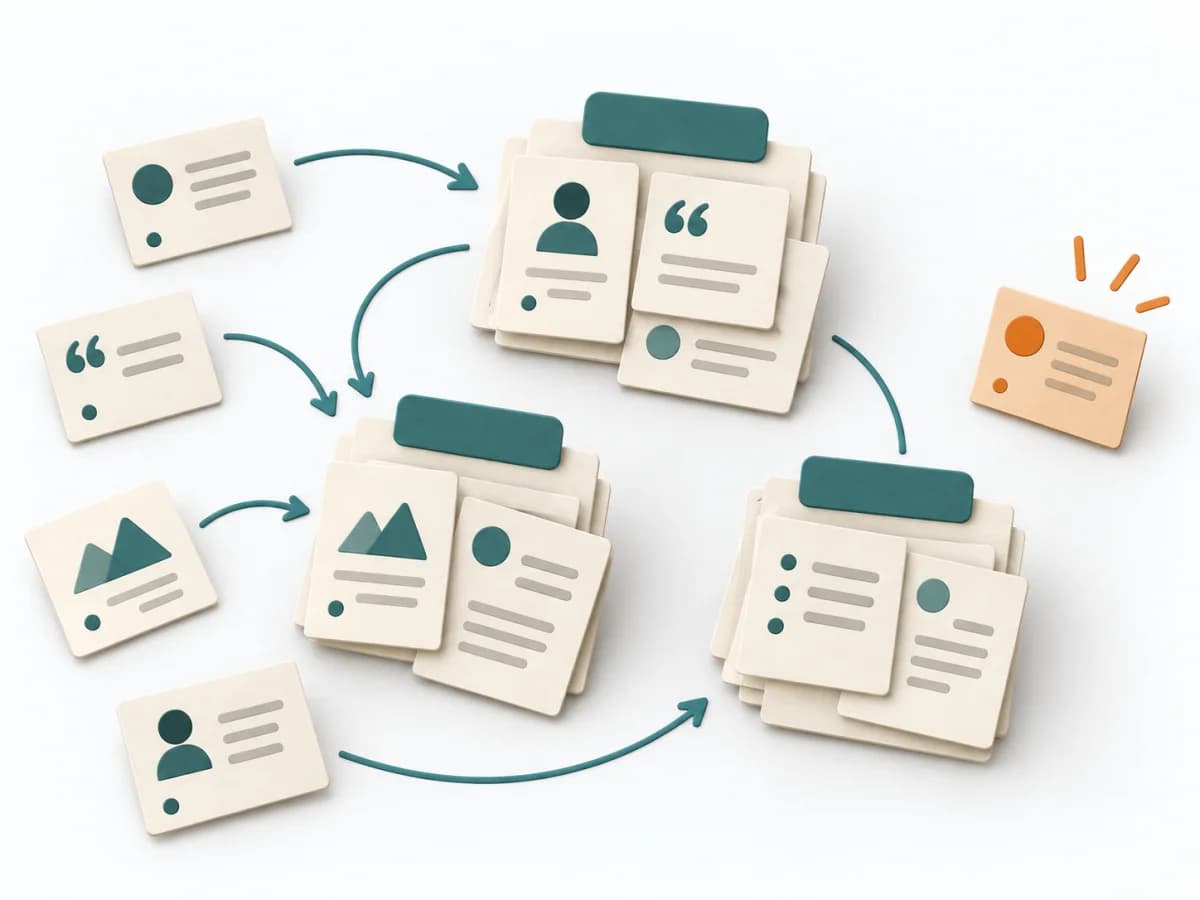 UX Research Affinity Diagramming |  UX Research Empathy Mapping |
|---|---|---|---|---|
Purposedifferent | GIST Planning helps clarify target groups, value, goals, and priorities. It links customer value, product logic, and decision priorities, and captures the result as goals, an idea bank, and a step-project list. | When two variants compete, discussions quickly decide by taste rather than effect. A/B Testing checks behavior under controlled conditions and separates real improvement from chance or expectation effects. | When research notes, feedback, or observations sit unconnected side by side, affinity diagramming sorts the raw material into solid themes. Many individual points turn into patterns that make decisions and opportunities clearer. | When a lot is assumed about a target group but little is seen jointly, empathy mapping makes knowledge and gaps directly comparable. The picture also shows which assumptions hold up and where evidence is missing. |
Complexitydifferent | Medium | High | Low | Low |
Timedifferent | Wochen bis Monate je Goal | 1-4 Wochen | 45–90 min | 30–60 min |
Participantsdifferent | 3-10 | 1-6 | 3-10 | 4-8 |
Formatdifferent | Workshop + async | Async | Workshop | Workshop |
Outputdifferent | Goals, Idea bank, Step-project list, Tasks, Learning reports | Experiment results, Decision log, Learning summary | Theme clusters, Insight statements, Opportunity areas | Empathy Map, Assumptions List, Research Gaps |
Tagsno overlap | RoadmapOutcomesPlanningExperiments | ExperimentsGrowthAnalyticsValidation | SynthesisQualitativeRoot cause | SynthesisQualitativeWorkshop |