View methods side by side.
Choose up to four methods. Add them using the search and share the comparison by copying its link.
| Criterion |  Operations Gemba Walk |  Operations Failure Mode and Effects Analysis | 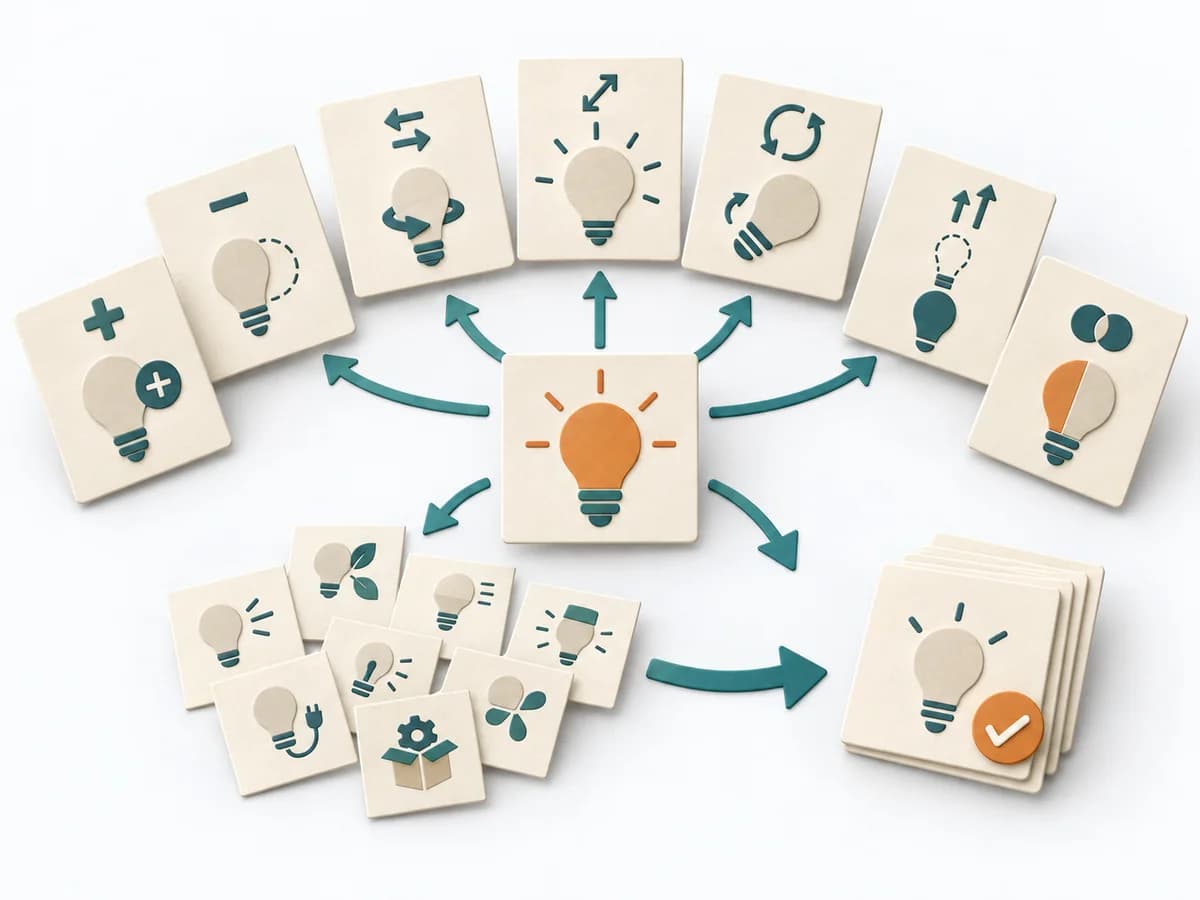 Innovation SCAMPER |
|---|---|---|---|
Purposedifferent | When there is uncertainty about the real course of a process, the method brings observation to the place where work happens. It combines perception, follow-up questions, and process knowledge so decisions rest on actual workflows instead of assumptions. | For a process, product, or service with noticeable failure risks, the method assesses possible failure modes in advance. It directs attention to combinations of occurrence, effect, and detectability. | For an existing solution under pressure to change, the method deliberately opens space for systematic variants. It directs attention to rebuilding, combining, and repurposing rather than only new basic ideas. This produces concrete evolution paths for products, offerings, or workflows. |
Complexitydifferent | Low | High | Low |
Timedifferent | 30-120 min | 2-6 h | 30-60 min |
Participantsdifferent | 2-6 | 3-10 | 2-10 |
Formatsame | Workshop | Workshop | Workshop |
Outputdifferent | Observation Notes, Improvement Ideas | FMEA Table, Risk Priority, Mitigation Actions | SCAMPER Idea List, Concept Shortlist, Variation Notes |
Tagsno overlap | LeanObservationProcessOperations | RiskQualityOperationsRoot cause | BrainstormingIdeationCreativityReframingInnovation |
Often compared together
Methods with strong topical overlap with the current selection, not yet in the comparison.



