View methods side by side.
Choose up to four methods. Add them using the search and share the comparison by copying its link.
Selected:GAP AnalysisGIST PlanningLASR (Lightweight Approach for Software Reviews)SAAM (Software Architecture Analysis Method)
| Criterion |  Business Strategy GAP Analysis | 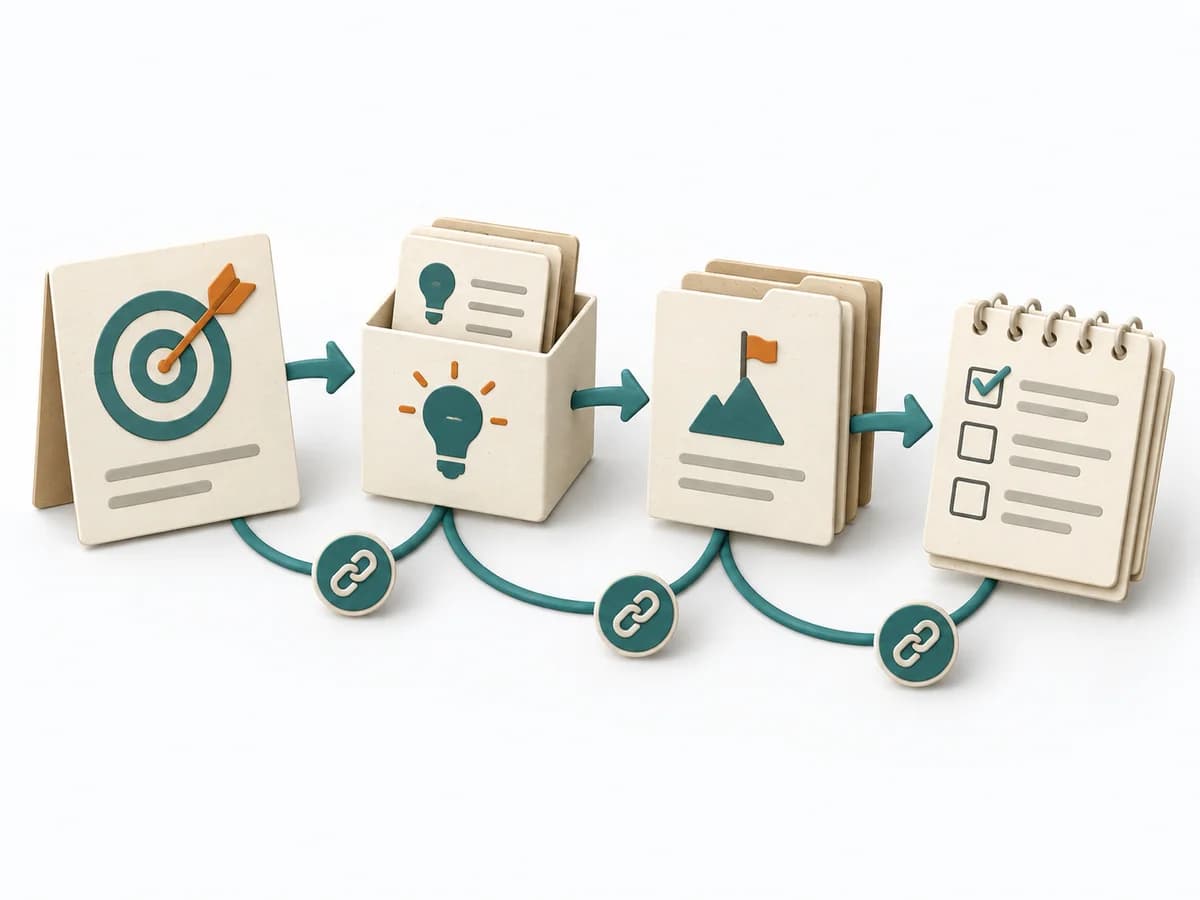 Product Strategy GIST Planning |  Architecture LASR (Lightweight Approach for Software Reviews) |  Architecture SAAM (Software Architecture Analysis Method) |
|---|---|---|---|---|
Purposedifferent | GAP Analysis compares the current state with a target picture and makes the distance manageable. It becomes useful when, ahead of new initiatives, it must become clear which capabilities, processes, or resources are missing. | GIST Planning helps clarify target groups, value, goals, and priorities. It links customer value, product logic, and decision priorities, and captures the result as goals, an idea bank, and a step-project list. | LASR helps development teams identify where their software falls short of important quality goals and which improvements to consider. A small group with existing system knowledge can make an initial assessment and investigate open questions in more detail. | SAAM helps teams judge an architecture’s suitability for selected tasks and changes. It is particularly useful for examining modifiability and comparing architecture alternatives with clear reasoning. |
Complexitydifferent | Medium | Medium | Medium | High |
Timedifferent | 1-3 h | Wochen bis Monate je Goal | 3–4 h for initial assessment; preparation and deeper analysis additional | Preparation, scenario analysis, and findings review; effort depends on scope |
Participantsdifferent | 2-8 | 3-10 | 1 or a small team; particularly suitable for 3–4 people | Architecture experts and stakeholders for scenarios and weighting |
Formatsame | Workshop + async | Workshop + async | Workshop + async | Workshop + async |
Outputdifferent | Gap Matrix, Action Plan, Risk Notes | Goals, Idea bank, Step-project list, Tasks, Learning reports | Lean Mission Statement describing the software’s purpose, Prioritized quality goals and evaluation criteria, Risks and estimated gaps against quality goals, More closely examined findings and open checks | Domain functions mapped to components and connections, Quality attributes and evaluation criteria, Typical tasks and their effects on the architecture, Reasoned evaluation or comparison of alternatives |
Tagsno overlap | StrategyAnalysisPlanning | RoadmapOutcomesPlanningExperiments | ArchitectureQualityRiskAssessmentLean | ArchitectureChangeAnalysisComparisonQuality |