View methods side by side.
Choose up to four methods. Add them using the search and share the comparison by copying its link.
| Criterion |  Business Strategy GAP Analysis |  Business Strategy Ansoff Matrix | 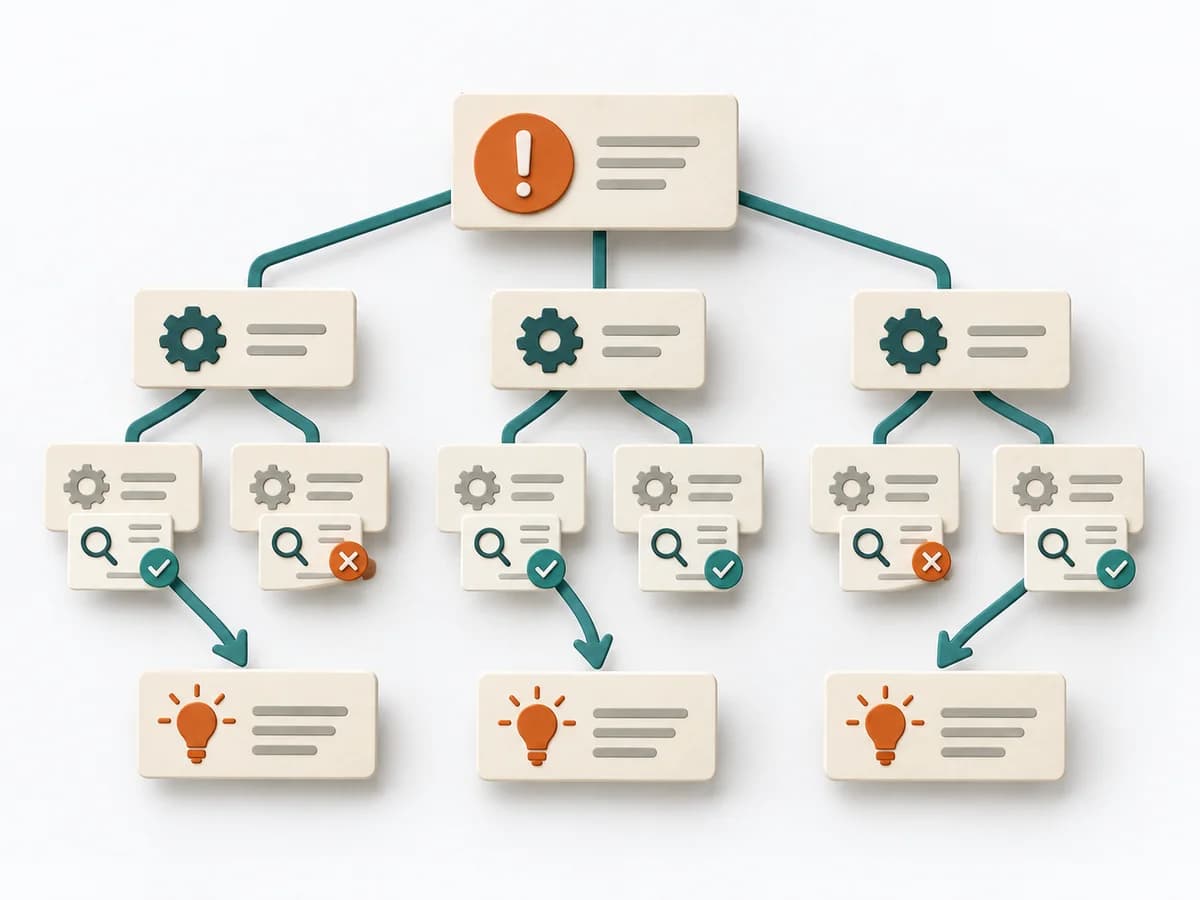 Operations Root Cause Tree Analysis |  Operations 5 Whys |
|---|---|---|---|---|
Purposedifferent | GAP Analysis compares the current state with a target picture and makes the distance manageable. It becomes useful when, ahead of new initiatives, it must become clear which capabilities, processes, or resources are missing. | The Ansoff Matrix organizes growth options by market and product relation. It helps weigh expansion, diversification, and adaptation cleanly against each other. | For a problem with several suspected causes, the method builds a causal structure instead of a mere list. It makes visible how causes connect and where the strongest points of leverage lie. | For a single, hard-to-explain deviation, the method exposes the causal chain behind the visible symptom. It keeps the cause open until a controllable condition emerges instead of a mere description. |
Complexitydifferent | Medium | Low | Medium | Low |
Timedifferent | 1-3 h | 45-90 min | 1-3 h | 15-30 min |
Participantsdifferent | 2-8 | 2-8 | 2-8 | 2-6 |
Formatdifferent | Workshop + async | Workshop + async | Workshop | Workshop |
Outputdifferent | Gap Matrix, Action Plan, Risk Notes | Ansoff Matrix, Growth Options, Risk Notes | Cause Tree, Evidence Notes, Countermeasures | Root cause notes, Countermeasures |
Tagsno overlap | StrategyAnalysisPlanning | GrowthStrategyMarketPortfolio | Root causeTreeIncidentQuality | Root causeIncidentLeanProblem solving |