View methods side by side.
Choose up to four methods. Add them using the search and share the comparison by copying its link.
| Criterion | 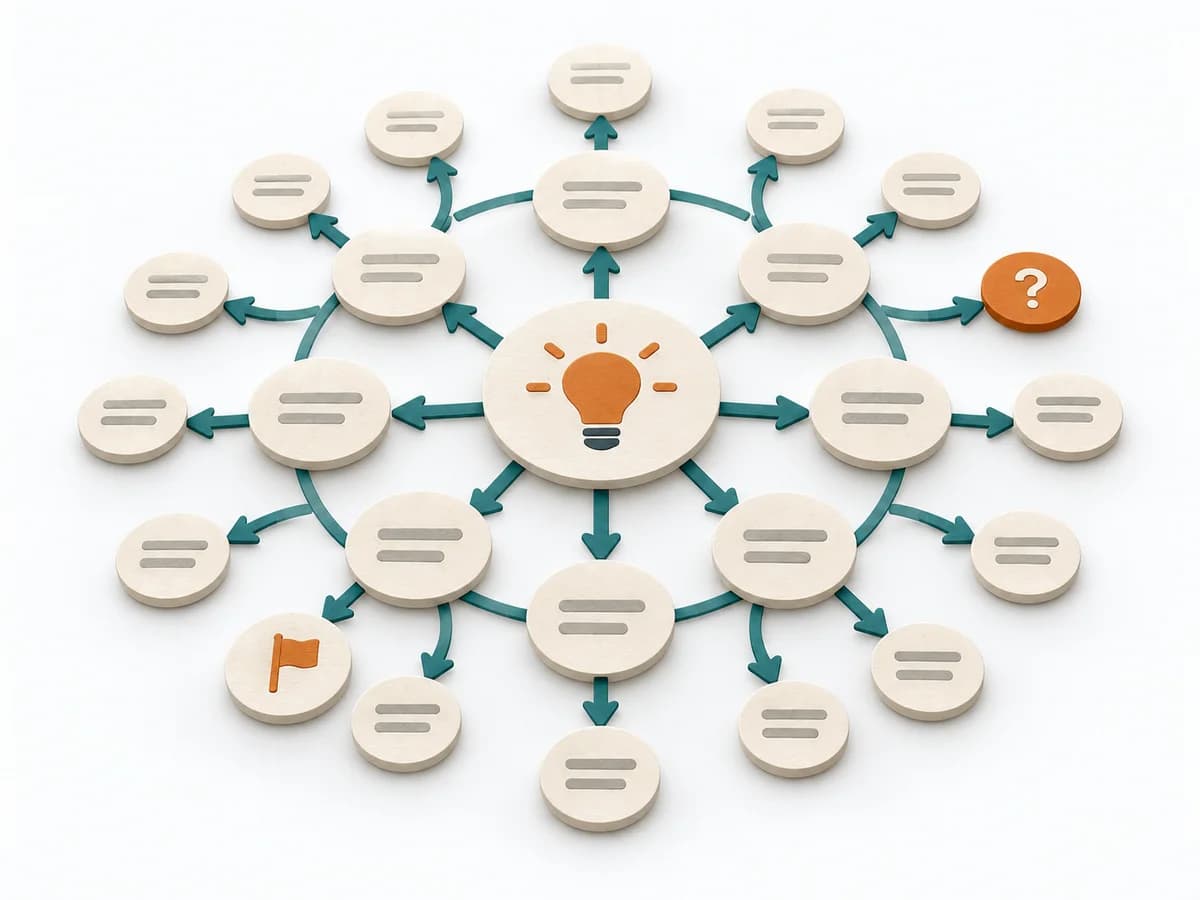 Systems Thinking Futures Wheel | 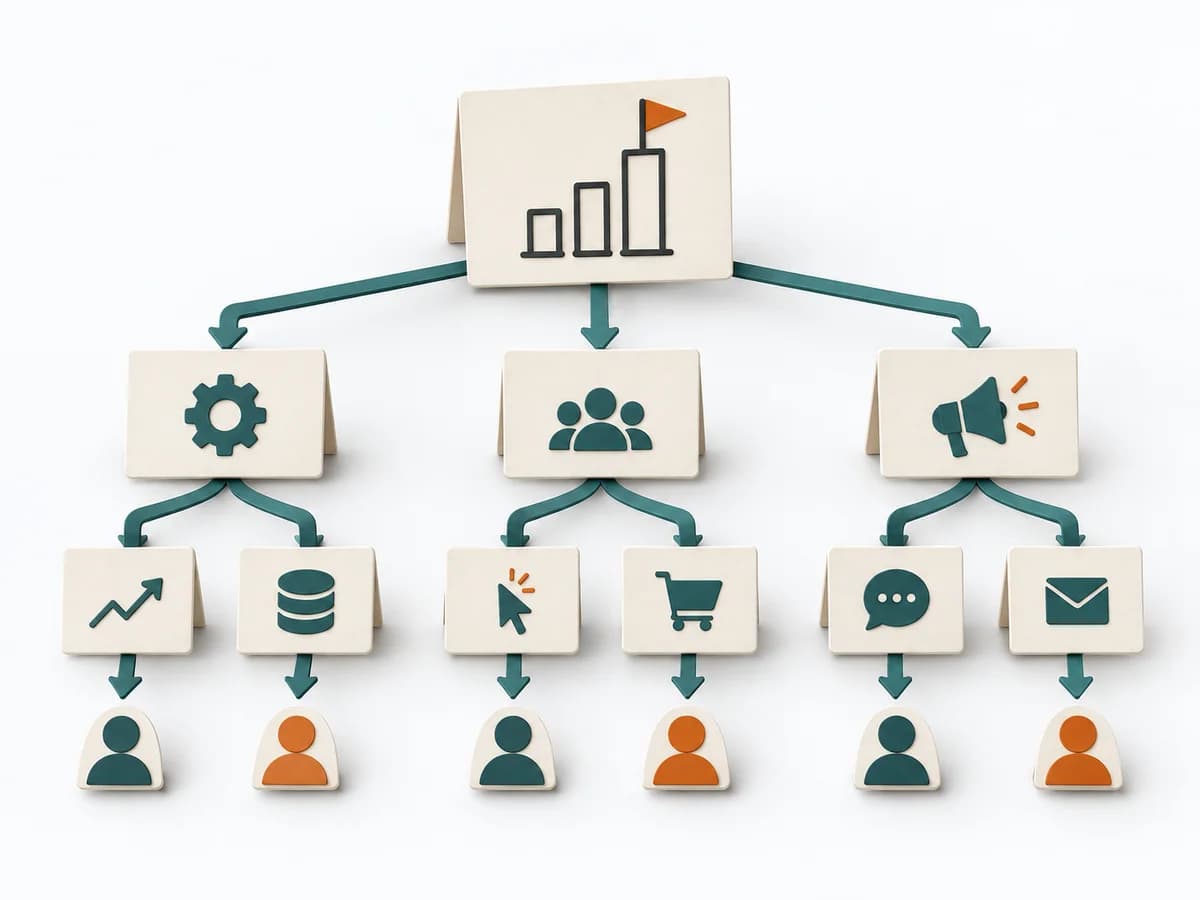 Product Strategy KPI Tree |  Facilitation Stakeholder Mapping |  Systems Thinking Leverage Points |
|---|---|---|---|---|
Purposedifferent | The Futures Wheel helps explore the consequences of a decision, a trend, or a strategic move in a structured way. It makes visible which first, second, and third-order effects could arise from an event. | When metrics across the organization drift apart, it arranges drivers and effects under one shared logic. It connects customer value, product logic, and decision priorities. The result is captured as a KPI tree and owner list. | When an initiative depends on many people, interests, and power dynamics, Stakeholder Mapping systematically orders the environment. It shows who influences, who is affected, and where relationship management or safeguarding matters first. | Leverage Points show exactly where interventions in a system produce a disproportionate effect. It draws relationships, patterns, and feedback loops. The result is captured as a leverage map and action strategy. |
Complexitydifferent | Medium | Medium | Low | High |
Timedifferent | 60-120 min | 90-180 min initial, dann laufend | 60–90 min | Half day |
Participantsdifferent | 3-10 | 3-8 | 2-8 | 3-12 |
Formatdifferent | Workshop + async | Workshop + async | Workshop + async | Workshop |
Outputdifferent | Futures Wheel, Consequence Chains, Strategic Signals | KPI Tree, Owner List | Stakeholder Map, Engagement Plan, Risk Notes | Leverage Map, Action Strategy |
Tagsno overlap | ForesightSystems thinkingSignals | MetricsStrategyAlignmentMeasurement | StakeholdersAlignmentFacilitationChange | Systems thinkingChangeStrategy |