View methods side by side.
Choose up to four methods. Add them using the search and share the comparison by copying its link.
| Criterion | 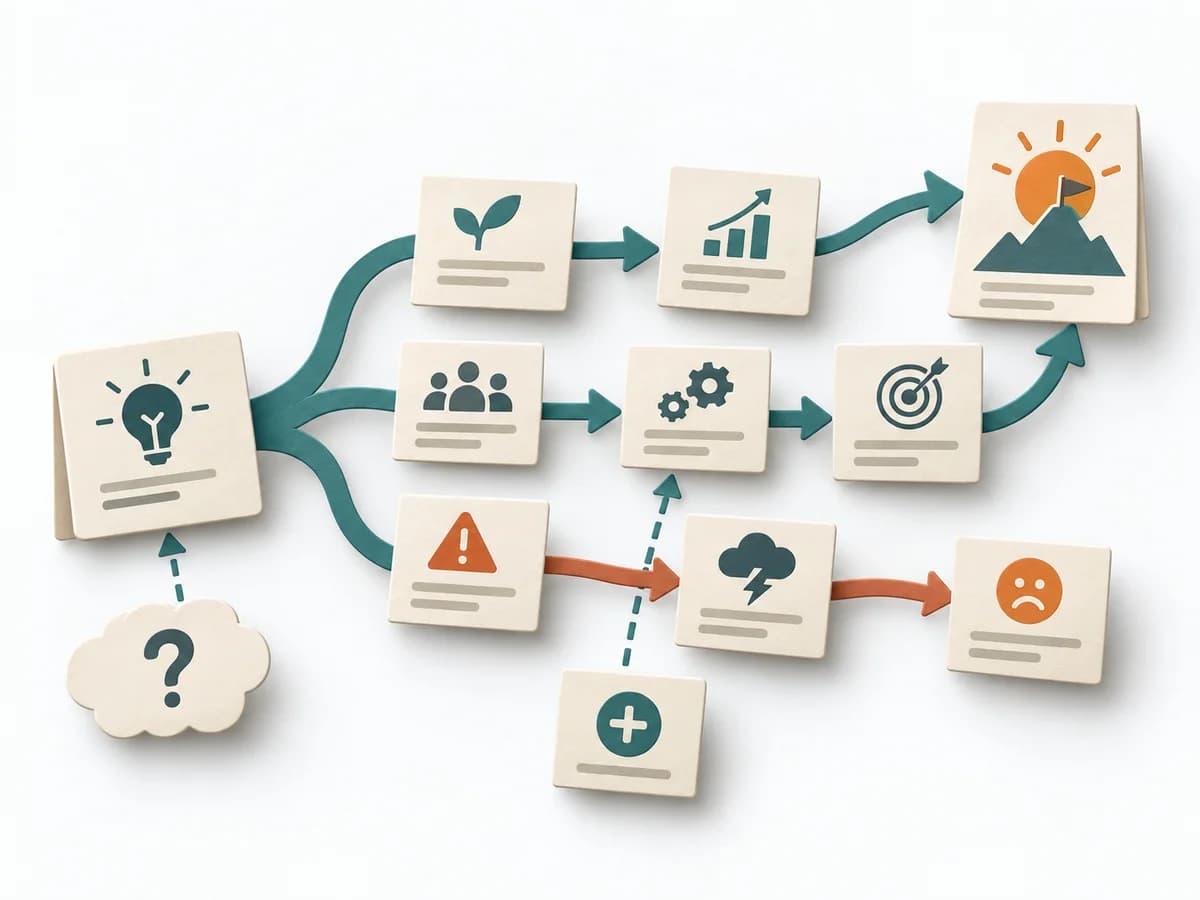 Systems Thinking Future Reality Tree |  Systems Thinking Intervention Mapping | 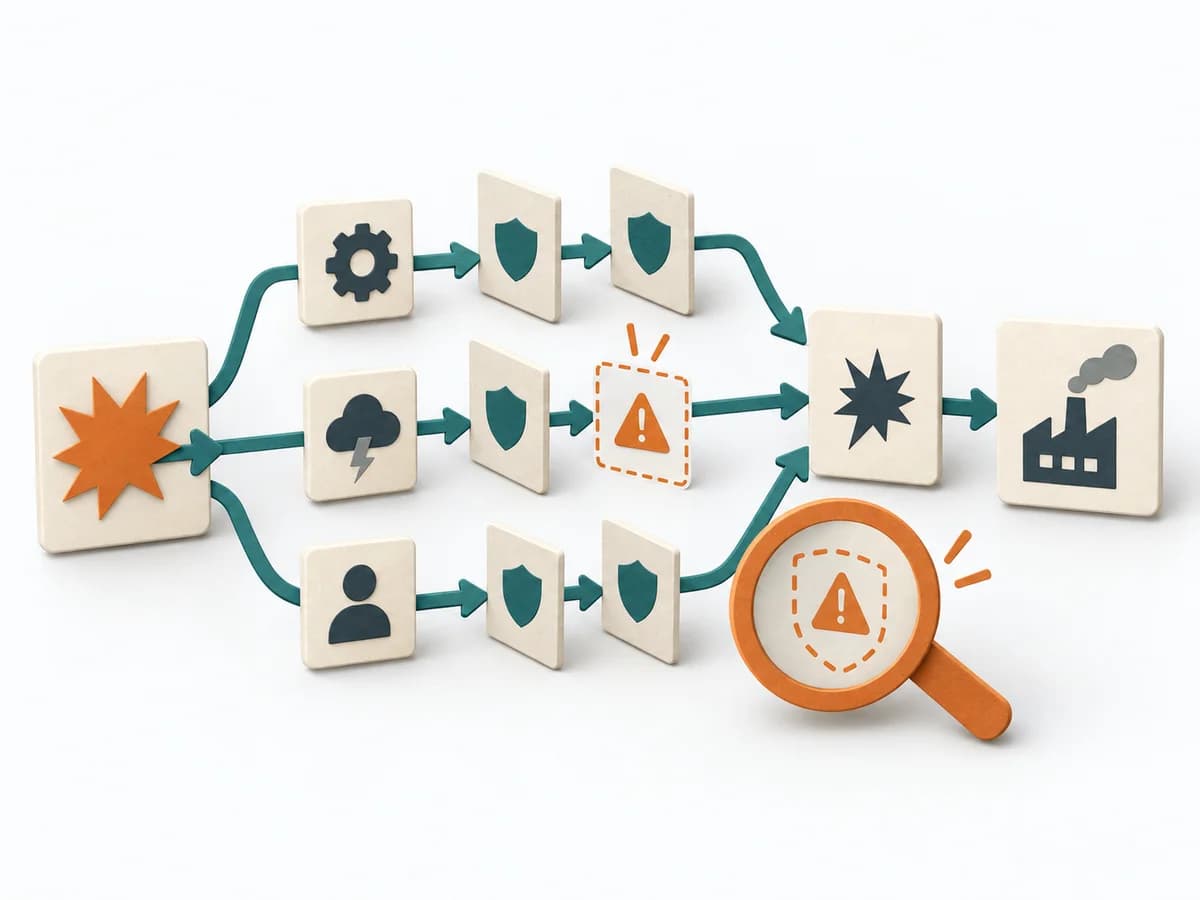 Engineering Failure Scenario Analysis |  Systems Thinking Systems Mapping |
|---|---|---|---|---|
Purposedifferent | A Future Reality Tree shows how desired actions are meant to lead to a better system state. The method checks whether a path of change holds together logically before time flows into implementation. | Intervention Mapping translates a need for change into a planned, evaluable program. The method connects target group, determinants, actions, and measurement into a traceable chain. | In critical processes, it is not enough to plan only for the normal case. Failure Scenario Analysis looks at the path into failure and shows which failures, chains, and control gaps cause the most damage. | Systems Mapping arranges elements, relationships, and boundaries so a complex field becomes legible at a glance. The overview stabilizes the overall picture before detail work or steering begins. |
Complexitydifferent | High | High | Medium | Medium |
Timedifferent | 2-4 h | 1-5 Tage | 1-3 h | 1-3 h |
Participantsdifferent | 3-8 | 4-12 | 3-8 | 3-12 |
Formatdifferent | Workshop | Workshop + async | Workshop | Workshop + async |
Outputdifferent | Future Reality Tree, Negative Branches, Assumption List, Improved Injections | Logic Model, Change Objectives, Intervention Components, Evaluation Plan | Failure Scenarios, Risk Notes, Control Gaps, Test and Response Actions | System Map, Dependencies, Leverage Points |
Tagsno overlap | Theory of ConstraintsSystems thinkingChange | ChangeSystems thinkingCapability | FailureResilienceRisk | Systems thinkingMappingBoundariesChange |