View methods side by side.
Choose up to four methods. Add them using the search and share the comparison by copying its link.
| Criterion |  Decision Making Force Field Analysis | 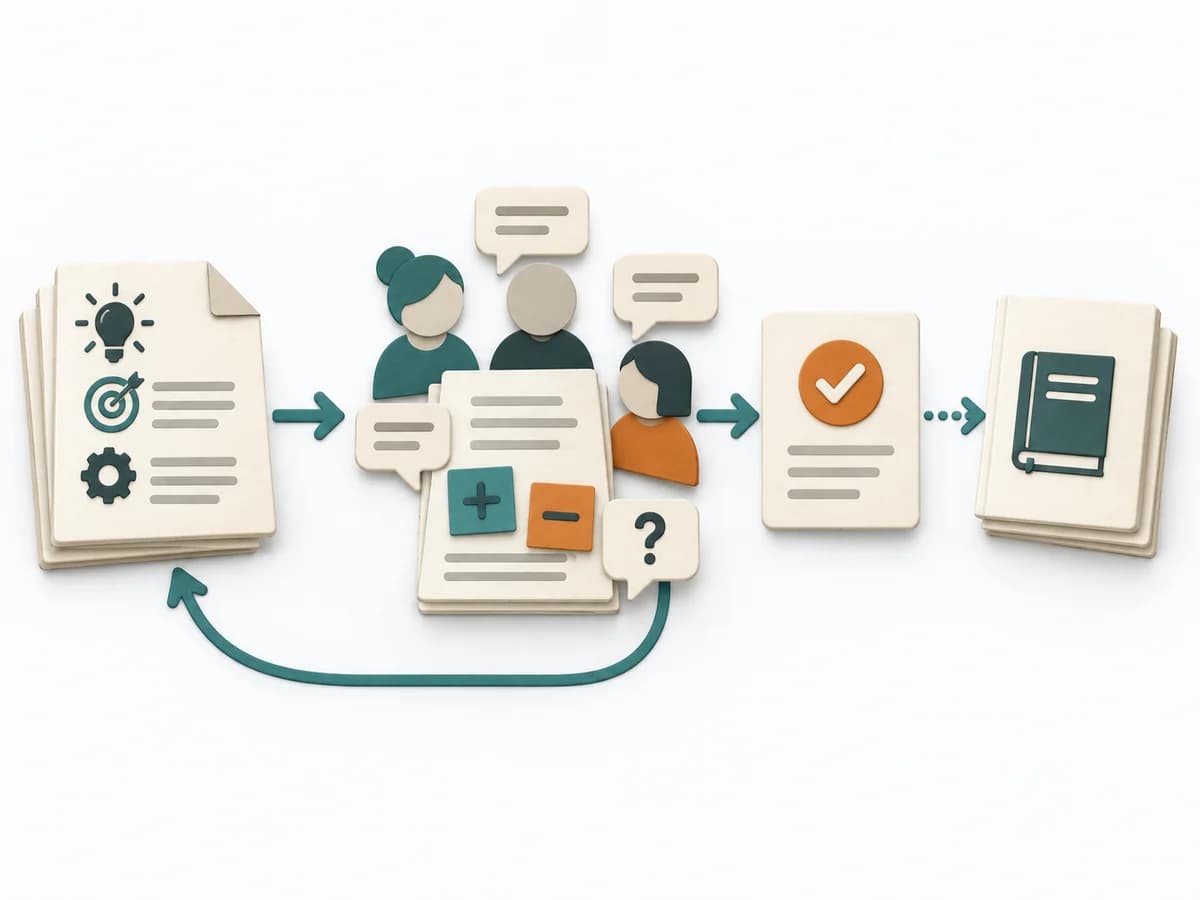 Architecture Request for Comments |  Decision Making Argument Mapping |  Decision Making Cynefin Workshop |
|---|---|---|---|---|
Purposedifferent | In change initiatives, supporting and restraining forces sit at the table at the same time. Force Field Analysis makes these tensions explicit and shows where change can be pushed forward by strengthening or relieving. | An RFC clarifies architecture context, options, and consequences. It structures technical context, alternatives, tradeoffs, open questions, and review feedback, and captures the result as an RFC document, reviewer comments, and a decision rationale. | When statements, evidence, and counterarguments get mixed up, a debate quickly loses its structure. Argument Mapping breaks a thesis down into its reasoning and makes visible what it really rests on. | When problems are unclear, chaotic, or only seemingly familiar, standard recipes fall short. A Cynefin Workshop sorts situations by the nature of their problem and connects them with matching action logic. |
Complexitydifferent | Low | Medium | Medium | Medium |
Timedifferent | 45-90 min | 1-3 Wochen vom Draft bis zur Entscheidung | 1-3 h | 60-180 min |
Participantsdifferent | 3-12 | 3-20 Reviewer | 1-8 | 4-20 |
Formatdifferent | Workshop | Async | Workshop + async | Workshop |
Outputdifferent | Force Field Map, Change Levers, Risk Notes | RFC document, Reviewer comments, Decision rationale, Follow-up ADR or tickets | Argument Map, Evidence Gaps, Decision Rationale | Cynefin Map, Domain-specific Actions, Sensemaking Notes |
Tags1 shared | ChangeDecisionStrategy | ArchitectureDecisionAsyncGovernance | SensemakingDecisionRationale | ComplexitySensemakingDecision |