View methods side by side.
Choose up to four methods. Add them using the search and share the comparison by copying its link.
| Criterion |  Operations Failure Mode and Effects Analysis | 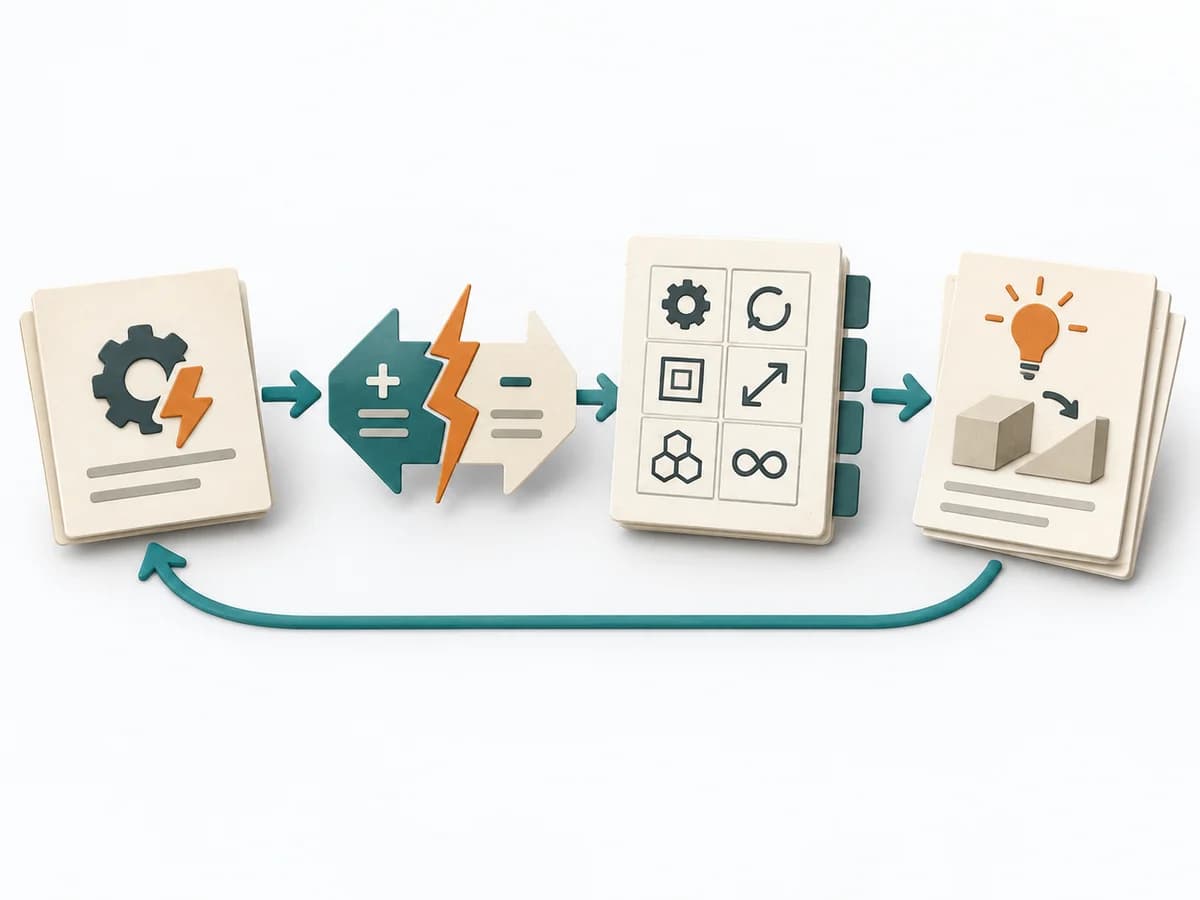 Innovation TRIZ | 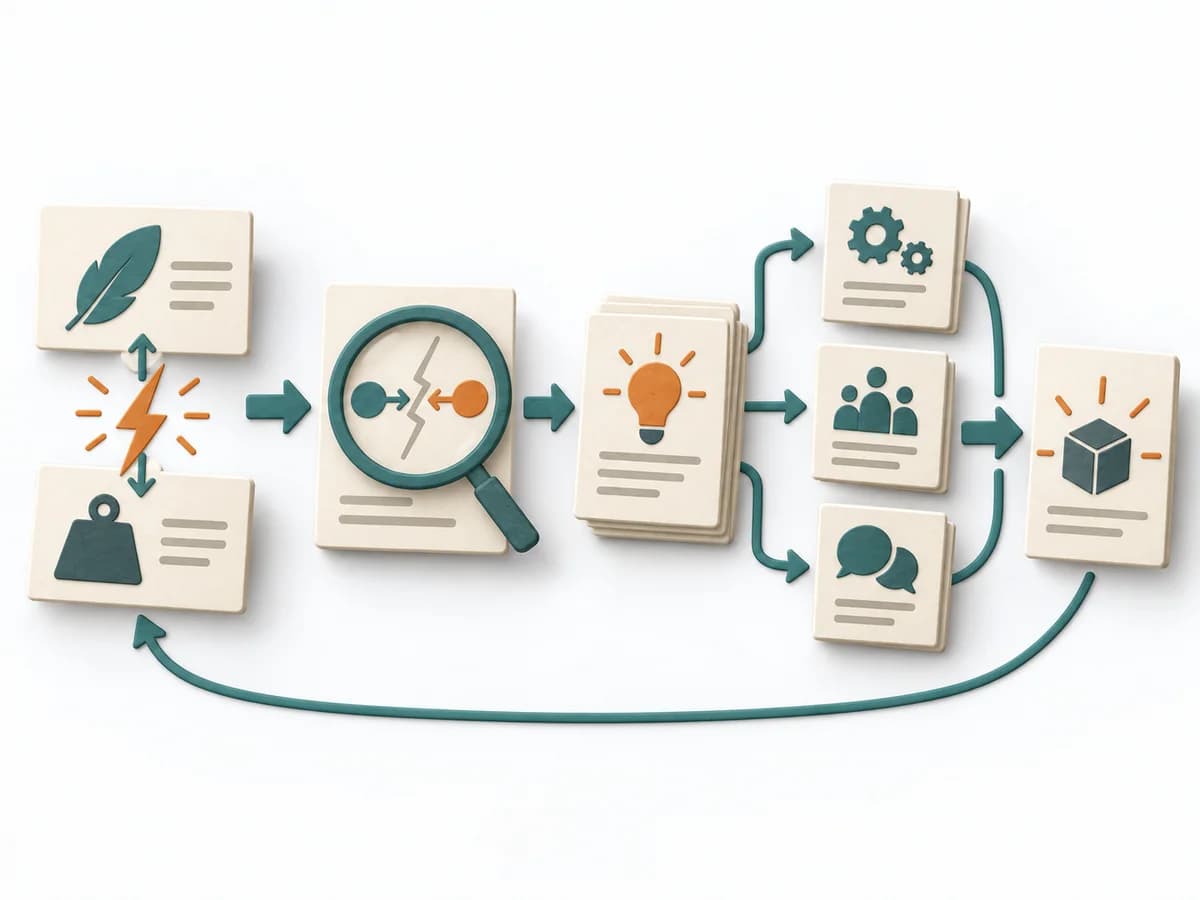 Innovation Contradiction Analysis |  Operations Root Cause Analysis |
|---|---|---|---|---|
Purposedifferent | For a process, product, or service with noticeable failure risks, the method assesses possible failure modes in advance. It directs attention to combinations of occurrence, effect, and detectability. | For technical contradictions or trade-offs, the method looks for solutions that resolve opposing requirements at the same time. It translates limits into an explicit picture of conflict that becomes workable. This produces not just compromises but more elegant principles. | When a system should improve while another measure suffers as a result, the method makes the underlying conflict precisely formulable. It separates the desired effect from its side effect. This makes solutions possible that address the contradiction deliberately instead of half-heartedly. | When a problem keeps recurring and the cause stays unclear, the method exposes the underlying mechanism. It separates symptom, guess, and robust explanation from one another. |
Complexitydifferent | High | High | Medium | Medium |
Timedifferent | 2-6 h | 1-4 h | 60-120 min | 1-4 h |
Participantsdifferent | 3-10 | 2-8 | 2-8 | 3-8 |
Formatdifferent | Workshop | Workshop + async | Workshop | Workshop + async |
Outputdifferent | FMEA Table, Risk Priority, Mitigation Actions | Contradiction Statement, Inventive Principles, Solution Concepts | Contradiction Statement, Abstraction Notes, Solution Principles, Concept Ideas | Problem Statement, Cause Hypotheses, Confirmed Causes, Action Plan |
Tagsno overlap | RiskQualityOperationsRoot cause | InnovationProblem solvingContradictionsCreativity | ContradictionsInnovationProblem solving | Root causeProblem solvingQualityIncident |