View methods side by side.
Choose up to four methods. Add them using the search and share the comparison by copying its link.
| Criterion |  Operations Failure Mode and Effects Analysis |  Decision Making Force Field Analysis |  Operations Kepner-Tregoe | 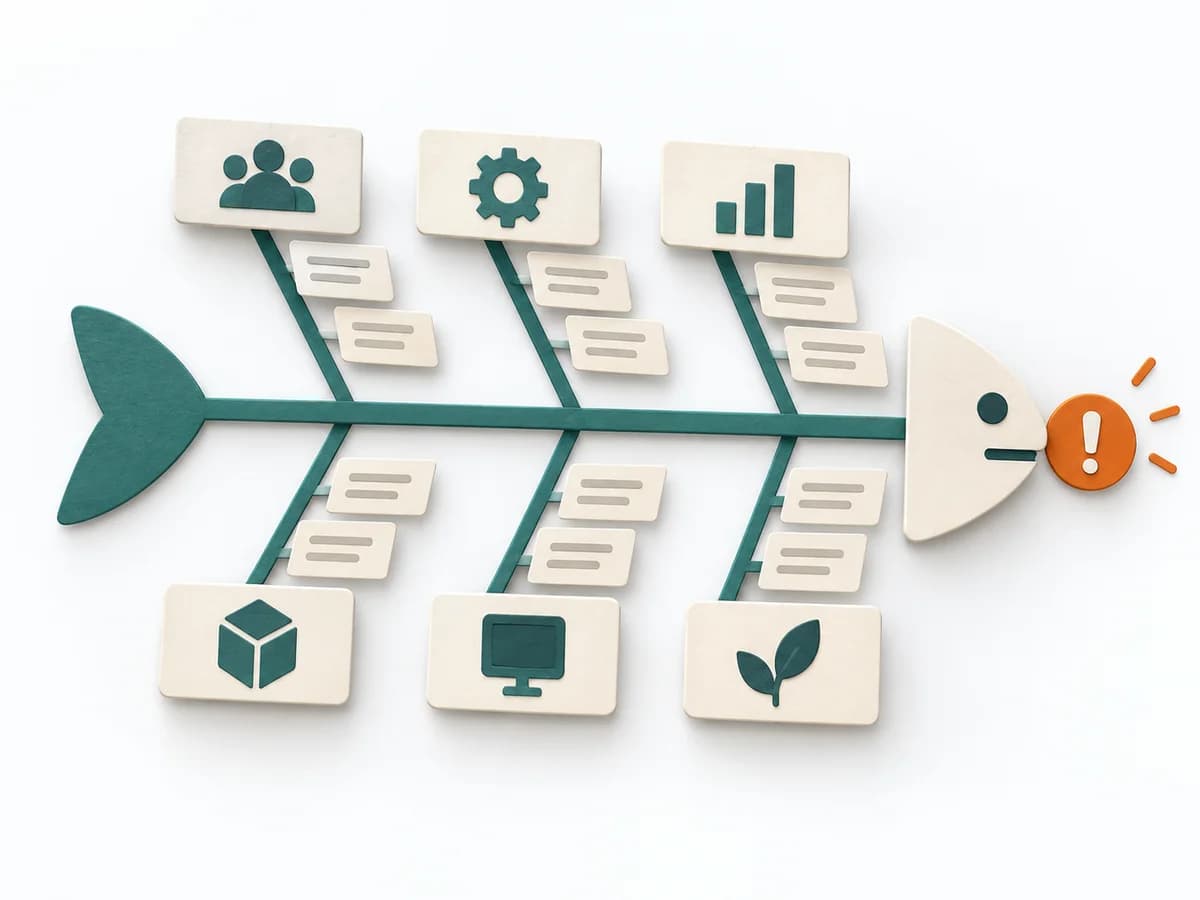 Operations Fishbone Diagram |
|---|---|---|---|---|
Purposedifferent | For a process, product, or service with noticeable failure risks, the method assesses possible failure modes in advance. It directs attention to combinations of occurrence, effect, and detectability. | In change initiatives, supporting and restraining forces sit at the table at the same time. Force Field Analysis makes these tensions explicit and shows where change can be pushed forward by strengthening or relieving. | For a disturbance that's hard to pin down, the method cleanly separates problem, cause, and decision. It reduces mixing when symptoms allow several interpretations. | When a problem has several possible contributing factors, the method sorts causes by cause areas. It prevents an initial hunch from blocking the view of other plausible drivers. |
Complexitydifferent | High | Low | High | Low |
Timedifferent | 2-6 h | 45-90 min | 2-8 h | 30-60 min |
Participantsdifferent | 3-10 | 3-12 | 2-8 | 2-8 |
Formatdifferent | Workshop | Workshop | Workshop + async | Workshop |
Outputdifferent | FMEA Table, Risk Priority, Mitigation Actions | Force Field Map, Change Levers, Risk Notes | Problem Analysis, Decision Analysis, Risk Plan | Fishbone Diagram, Cause Categories, Investigation Backlog |
Tagsno overlap | RiskQualityOperationsRoot cause | ChangeDecisionStrategy | Problem solvingRoot causeDecisionOperations | Root causeQualityOperations |