View methods side by side.
Choose up to four methods. Add them using the search and share the comparison by copying its link.
| Criterion |  Operations Fishbone Diagram | 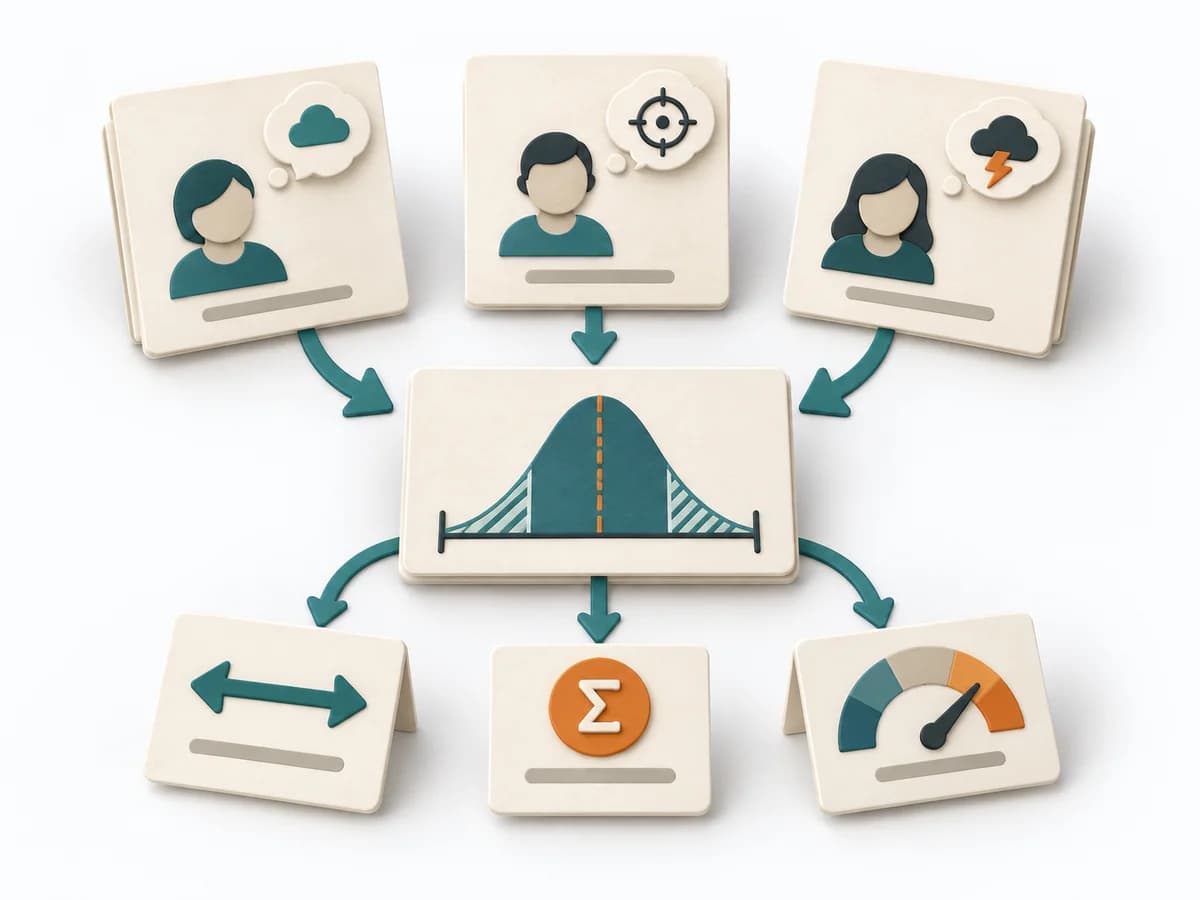 Decision Making Three-Point Estimation |  Decision Making Delphi Method |  Operations Kepner-Tregoe |
|---|---|---|---|---|
Purposedifferent | When a problem has several possible contributing factors, the method sorts causes by cause areas. It prevents an initial hunch from blocking the view of other plausible drivers. | A single estimate for effort, time, or risk often looks too smooth for the real uncertainty behind it. It separates options, evaluation criteria, and open risks. The result is captured as a Three-Point Estimate, Risk Range, and Assumption Notes. | When knowledge is distributed and direct dominance should be avoided, groups quickly fall under the sway of their opinion leaders. The Delphi Method gathers assessments iteratively and gradually brings expert judgments closer together. | For a disturbance that's hard to pin down, the method cleanly separates problem, cause, and decision. It reduces mixing when symptoms allow several interpretations. |
Complexitydifferent | Low | Medium | High | High |
Timedifferent | 30-60 min | 10-30 min je Item | 1-4 Wochen | 2-8 h |
Participantsdifferent | 2-8 | 1-8 | 6-30 Experten | 2-8 |
Formatdifferent | Workshop | Workshop + async | Async | Workshop + async |
Outputdifferent | Fishbone Diagram, Cause Categories, Investigation Backlog | Three-Point Estimate, Risk Range, Assumption Notes | Expert Forecast, Consensus Range, Assumption Notes | Problem Analysis, Decision Analysis, Risk Plan |
Tagsno overlap | Root causeQualityOperations | EstimationUncertaintyForecasting | ForecastingExpertsDecisionStrategy | Problem solvingRoot causeDecisionOperations |