View methods side by side.
Choose up to four methods. Add them using the search and share the comparison by copying its link.
| Criterion |  UX Research First-click Testing | 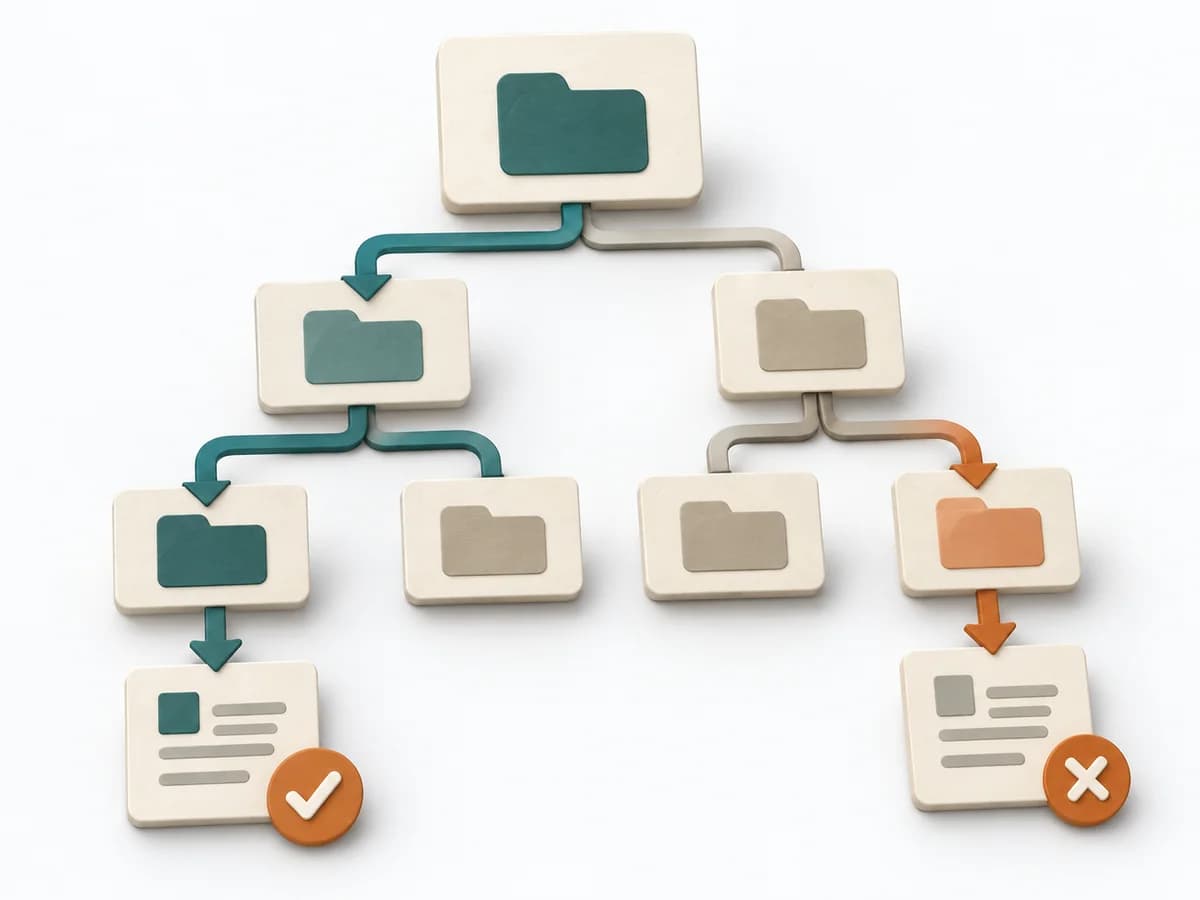 UX Research Tree Testing | 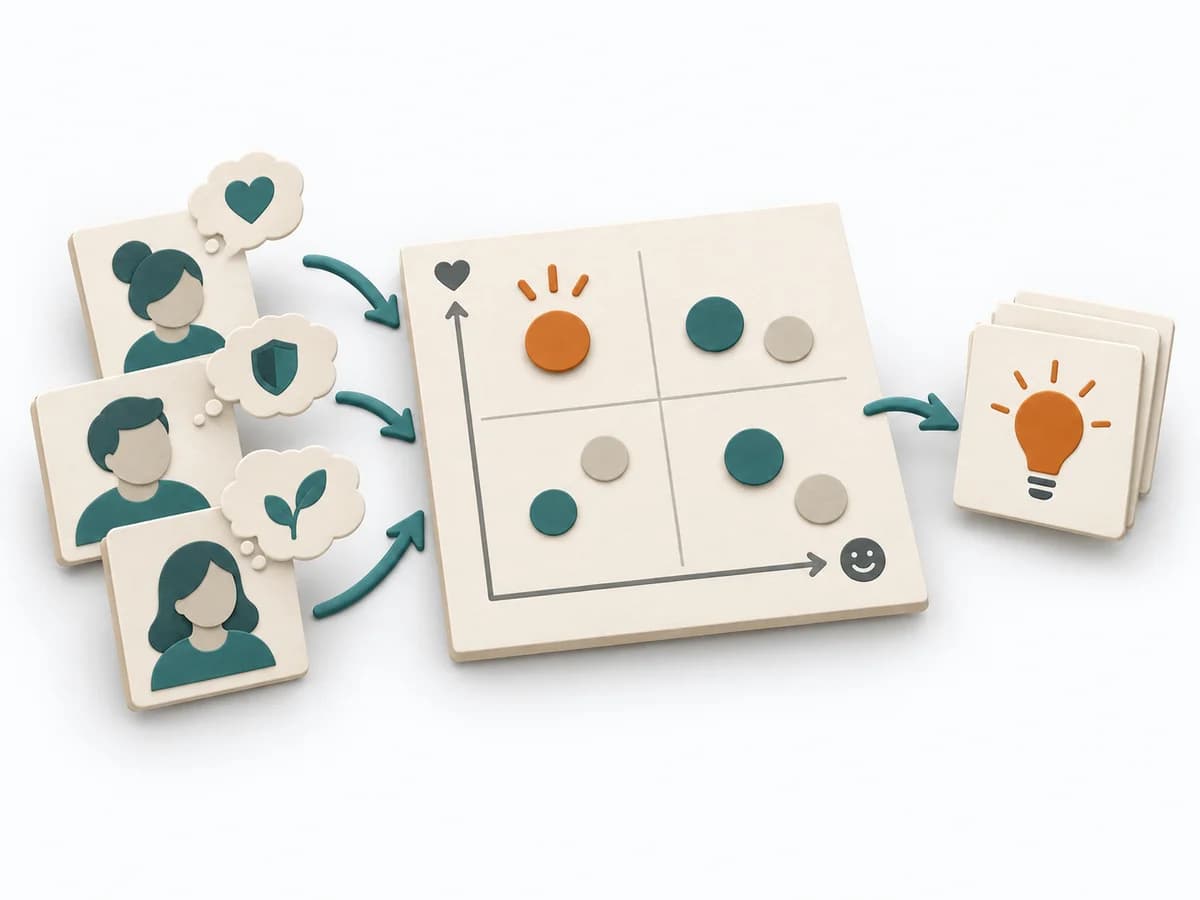 Product Discovery Outcome-Driven Innovation | 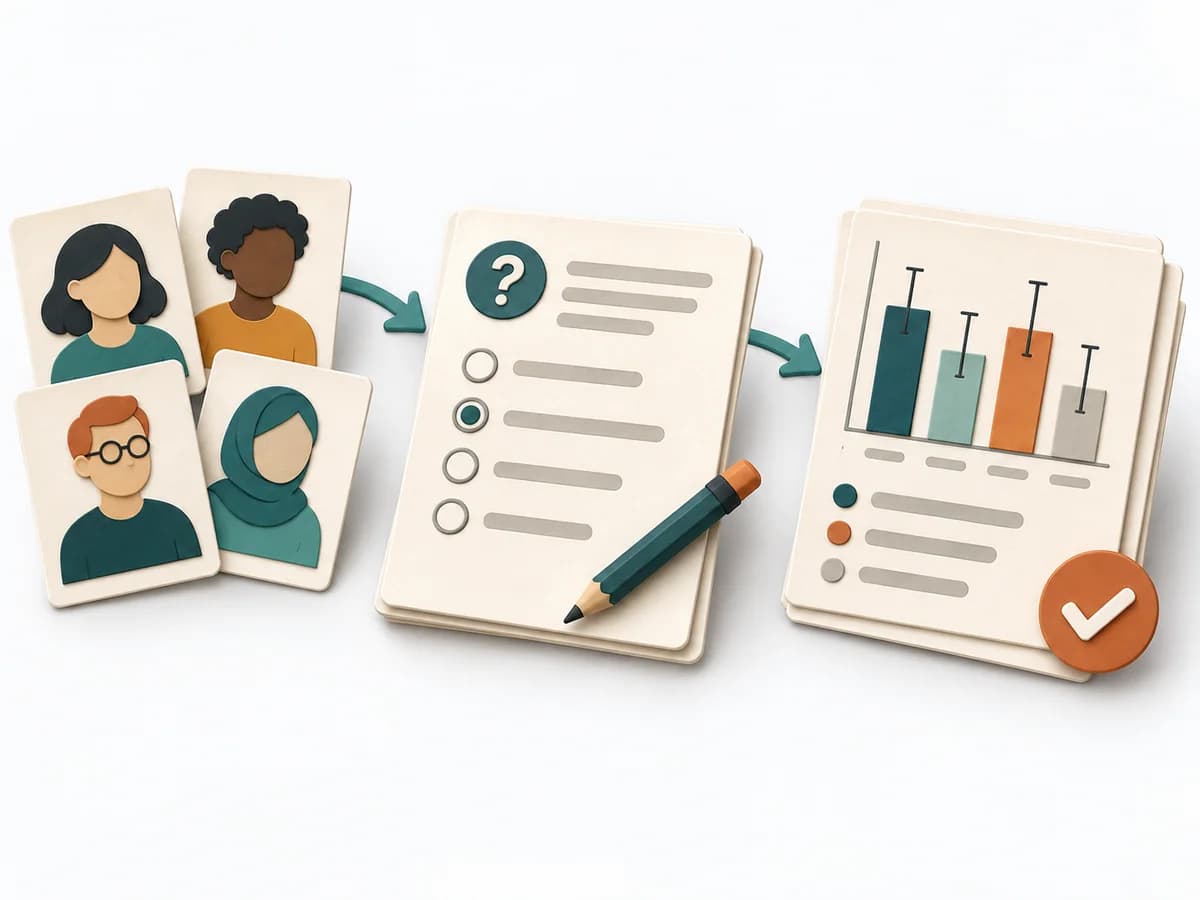 UX Research Surveys |
|---|---|---|---|---|
Purposedifferent | When users immediately turn the wrong way on a screen or wireframe, first click testing checks initial orientation at high speed. The first click shows early whether expectation, labeling, and wayfinding fit together. | When a navigation exists but search paths still fail, tree testing checks findability without visual distraction. The method shows whether labels, levels, and paths really lead to the intended destination. | Outcome-Driven Innovation clarifies customer problems, solution opportunities, and evidence. It separates jobs, desired outcomes, importance, satisfaction, and opportunity, and captures results as desired outcome statements, an opportunity landscape, and segments by underserved needs. | When a topic needs to be validated broadly and many people can answer the same question, surveys gather structured feedback in a scalable form. Answers become comparable and segmentable instead of remaining merely anecdotal. |
Complexitydifferent | Low | Medium | High | Medium |
Timedifferent | 1-2 Tage | 1-2 Tage | Mehrere Wochen | 3-14 Tage |
Participantsdifferent | 10-30 | Based on research question | 2-6 researchers plus sample | 50+ |
Formatdifferent | Async | Async | Workshop + async | Async |
Outputdifferent | Click Heatmap, Success Rate, Design Recommendations | Findability Metrics, Path Analysis, Revised IA | Desired outcome statements, Opportunity landscape, Segmentation by underserved needs, Innovation hypotheses | Survey Results, Charts, Segment Insights |
Tagsno overlap | UXNavigationFindabilityValidation | Information architectureNavigationFindability | OutcomesInnovationResearchQuantitative | QuantitativeResearchValidation |