View methods side by side.
Choose up to four methods. Add them using the search and share the comparison by copying its link.
| Criterion |  Knowledge Modeling Feynman Technique | 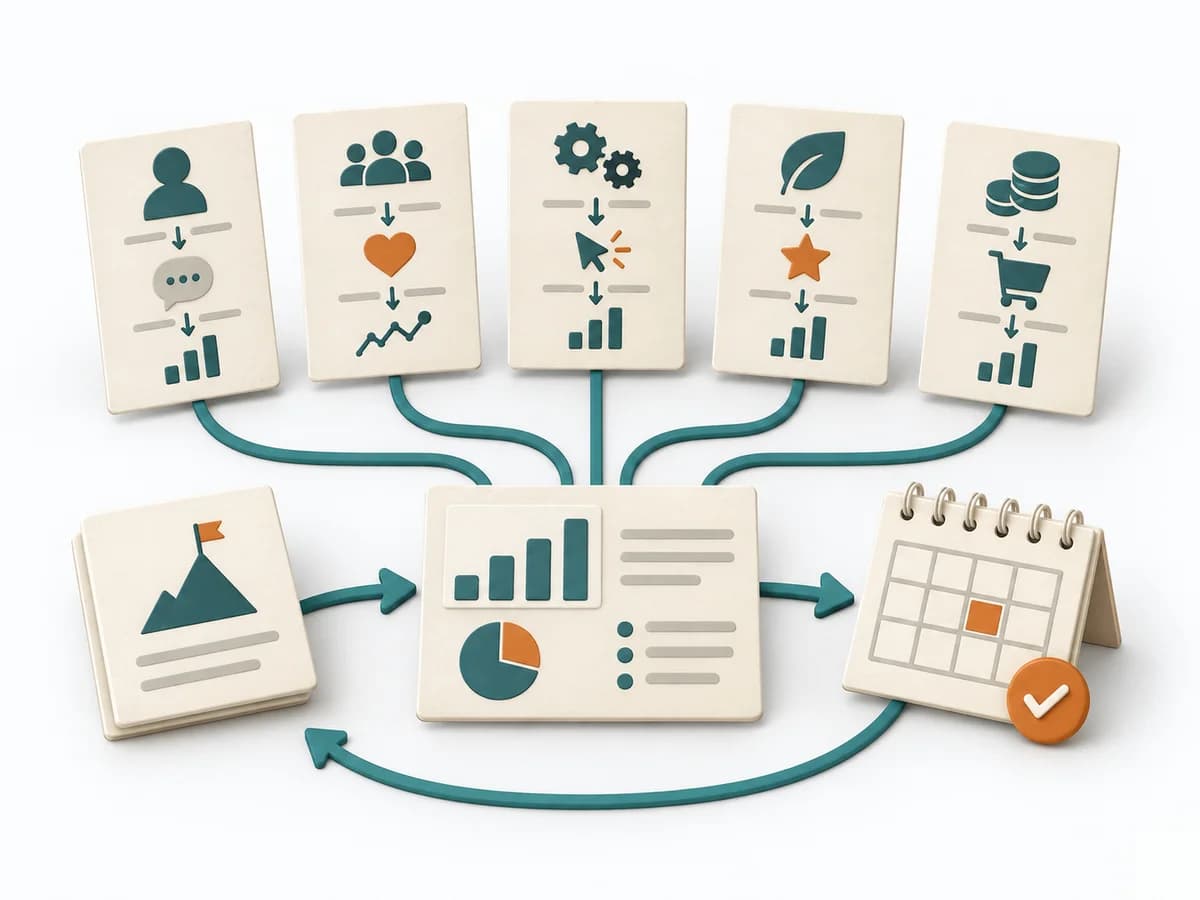 UX Research HEART Framework |  Decision Making Force Field Analysis | 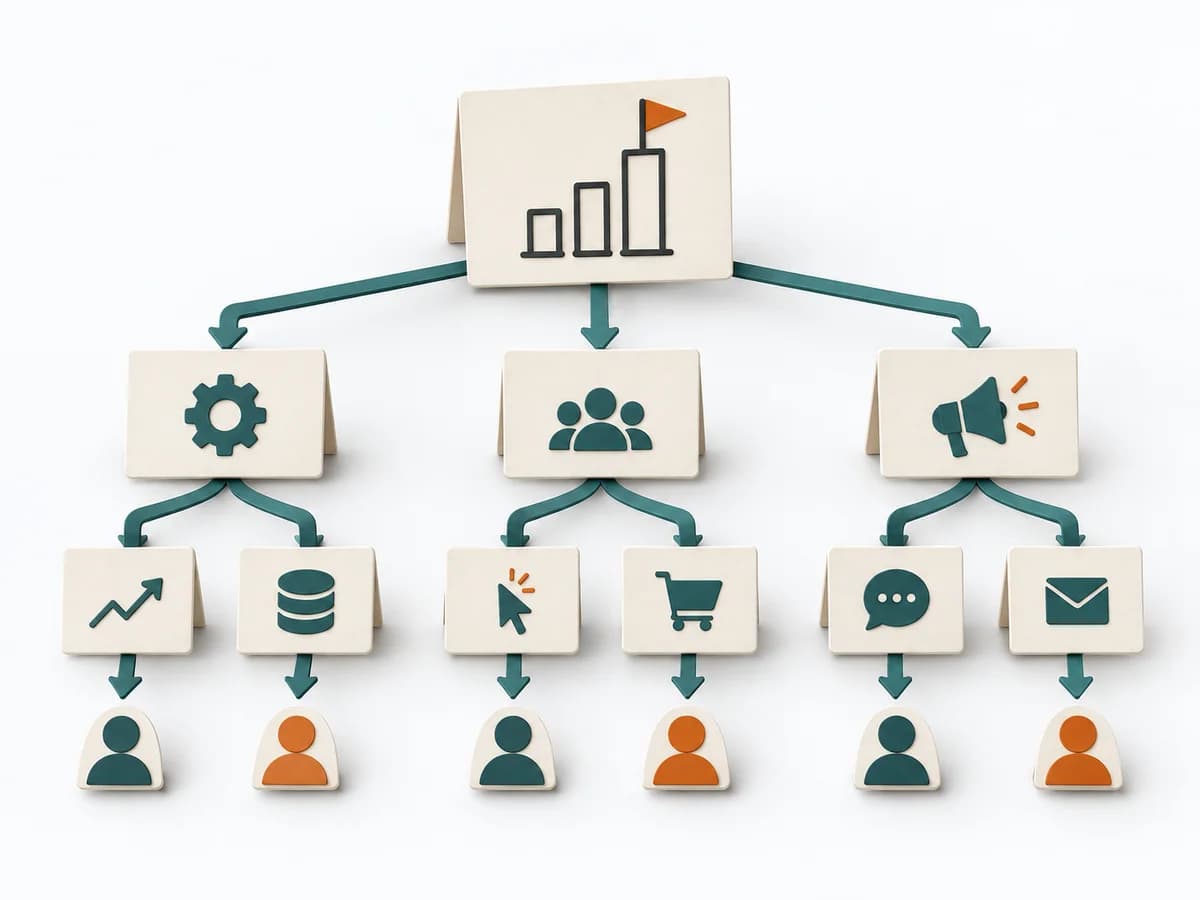 Product Strategy KPI Tree |
|---|---|---|---|---|
Purposedifferent | The Feynman Technique checks understanding by explaining a topic so that it stays easy for others to understand. It makes knowledge gaps visible before they become costly in everyday work. | Helps clarify observations, needs, and patterns in concrete terms. It groups observations into patterns, questions, and decisions. The result is captured as a HEART-GSM table and dashboard. | In change initiatives, supporting and restraining forces sit at the table at the same time. Force Field Analysis makes these tensions explicit and shows where change can be pushed forward by strengthening or relieving. | When metrics across the organization drift apart, it arranges drivers and effects under one shared logic. It connects customer value, product logic, and decision priorities. The result is captured as a KPI tree and owner list. |
Complexitydifferent | Low | Medium | Low | Medium |
Timedifferent | 20-60 min | 120 min initial, dann laufend | 45-90 min | 90-180 min initial, dann laufend |
Participantsdifferent | 1 | 3-6 | 3-12 | 3-8 |
Formatdifferent | Async | Workshop + async | Workshop | Workshop + async |
Outputdifferent | Plain-language Explanation, Knowledge Gaps, Study Notes | HEART-GSM Table, Dashboard | Force Field Map, Change Levers, Risk Notes | KPI Tree, Owner List |
Tagsno overlap | LearningKnowledgeUnderstanding | MetricsUX researchMeasurementSatisfaction | ChangeDecisionStrategy | MetricsStrategyAlignmentMeasurement |