View methods side by side.
Choose up to four methods. Add them using the search and share the comparison by copying its link.
| Criterion |  Knowledge Modeling Feynman Technique |  Operations ALPEN Method | 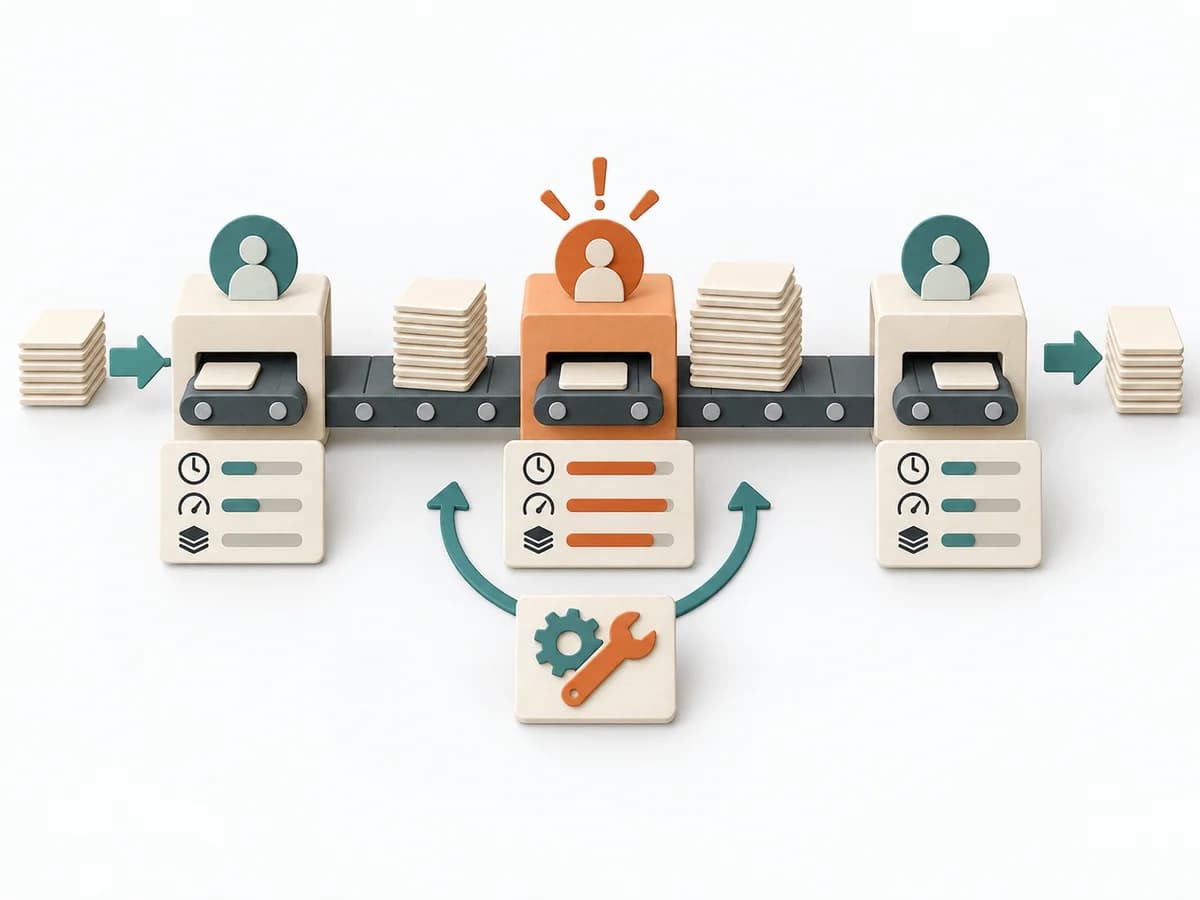 Operations Bottleneck Analysis |  Operations After-Action Review |
|---|---|---|---|---|
Purposedifferent | The Feynman Technique checks understanding by explaining a topic so that it stays easy for others to understand. It makes knowledge gaps visible before they become costly in everyday work. | With an overloaded day full of too many tasks, a realistic picture of the day emerges. The method connects estimating, deciding, and buffer thinking so planning fits available energy and time. | For a flow that backs up at one point, the method looks for the capacity limit with the greatest leverage. It explains why extra effort elsewhere barely improves throughput. | After missions or project phases with unclear outcomes, the method makes visible what actually happened and what can be learned from it. It separates course, effect, and causes so experience turns into solid improvement. |
Complexitydifferent | Low | Low | Medium | Low |
Timedifferent | 20-60 min | 10-20 min daily | 1-3 h | 20-45 min |
Participantsdifferent | 1 | 1 | 3-8 | 3-12 |
Formatdifferent | Async | Async | Workshop + async | Workshop + async |
Outputdifferent | Plain-language Explanation, Knowledge Gaps, Study Notes | Daily Plan, Time Estimates, Review Notes | Bottleneck Map, Flow Metrics, Improvement Options, Follow-up Measures | Lessons learned, Action items, Event summary |
Tagsno overlap | LearningKnowledgeUnderstanding | PlanningTime managementProductivityOperations | FlowMeasurementConstraints | LearningOperationsImprovement |