View methods side by side.
Choose up to four methods. Add them using the search and share the comparison by copying its link.
| Criterion |  Knowledge Modeling Feynman Technique |  Operations After-Action Review |  Operations Pomodoro Technique | 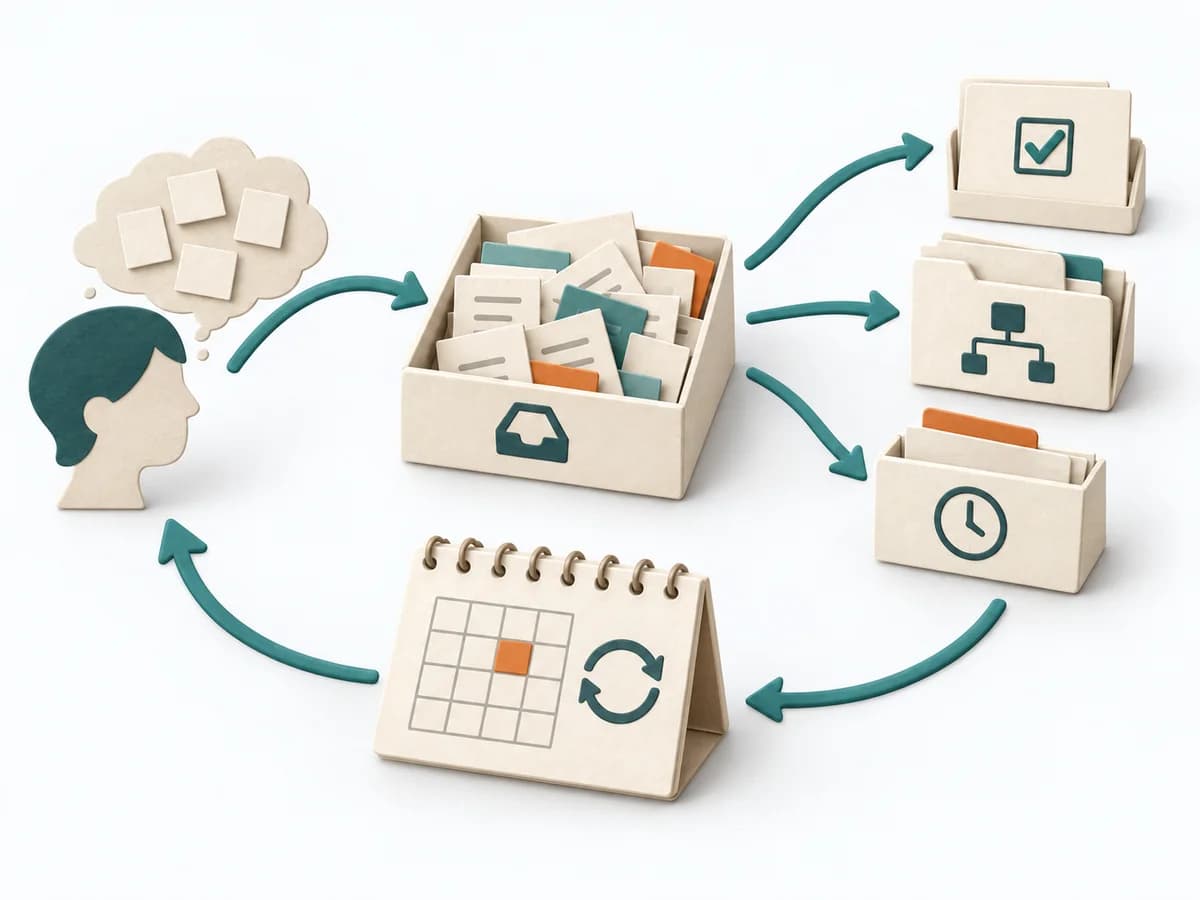 Operations Getting Things Done |
|---|---|---|---|---|
Purposedifferent | The Feynman Technique checks understanding by explaining a topic so that it stays easy for others to understand. It makes knowledge gaps visible before they become costly in everyday work. | After missions or project phases with unclear outcomes, the method makes visible what actually happened and what can be learned from it. It separates course, effect, and causes so experience turns into solid improvement. | For easily distracted solo work, the method sets clear time boundaries for concentrated work. It protects attention when large tasks would otherwise fall apart into small avoidance moves. | With many open commitments and ideas in daily life, a reliable external storage system emerges. The method relieves the mind so priority and context don't have to compete in memory. |
Complexitydifferent | Low | Low | Low | Medium |
Timedifferent | 20-60 min | 20-45 min | 25 min Zyklen | 1-2 h Setup, laufend |
Participantsdifferent | 1 | 3-12 | 1 | 1 |
Formatdifferent | Async | Workshop + async | Async | Async |
Outputdifferent | Plain-language Explanation, Knowledge Gaps, Study Notes | Lessons learned, Action items, Event summary | Focus Sessions, Task Progress, Interruption Notes | Action Lists, Project List, Review Routine |
Tagsno overlap | LearningKnowledgeUnderstanding | LearningOperationsImprovement | FocusTime managementProductivityExecution | ProductivityPlanningTasksExecution |