View methods side by side.
Choose up to four methods. Add them using the search and share the comparison by copying its link.
| Criterion |  Operations Fault Tree Analysis | 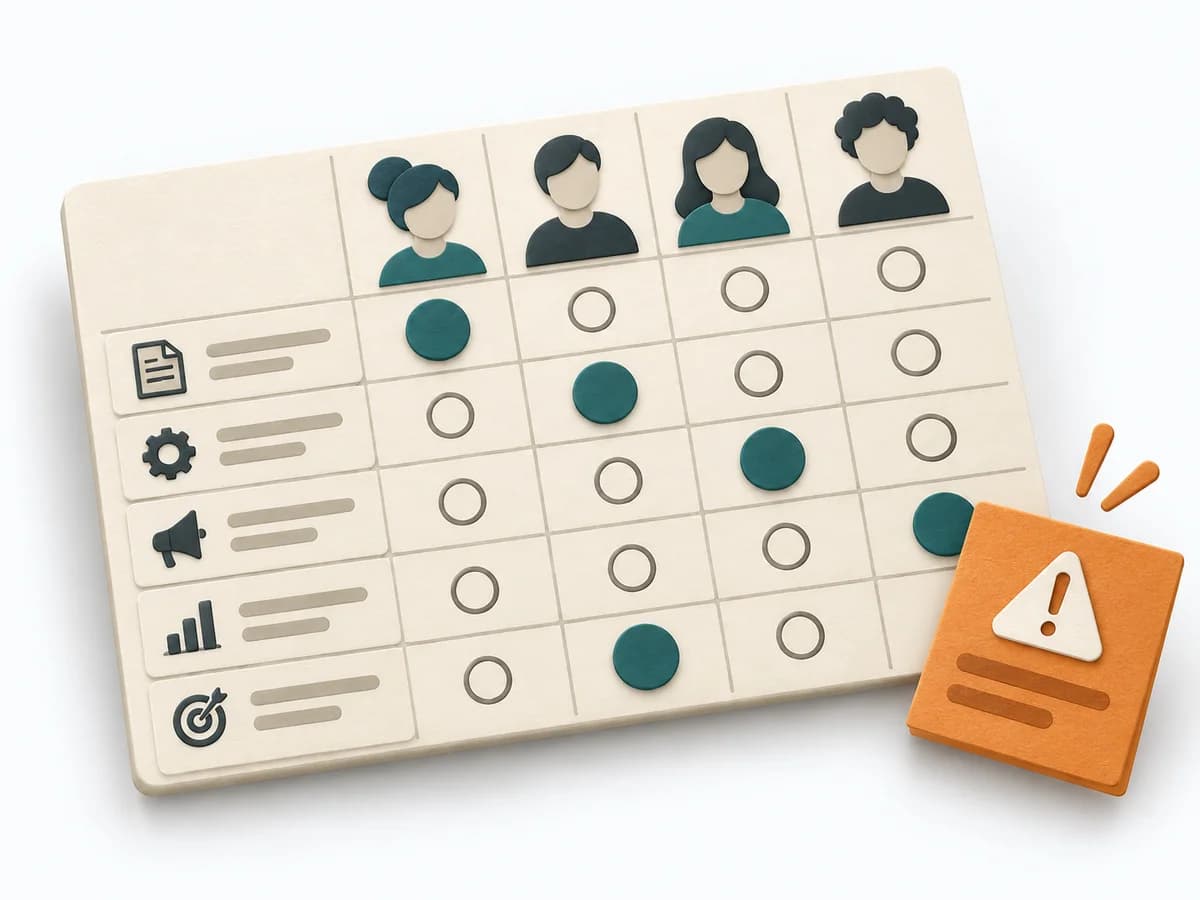 Operations RACI Matrix |  Operations Causal Factor Analysis |  Operations 5 Whys |
|---|---|---|---|---|
Purposedifferent | For a critical top event with several possible triggers, the method logically models failure paths. It makes visible which combinations of conditions can lead to damage. | With unclear responsibilities across several roles or areas, the method creates unambiguous accountability logic. It reduces friction because decision, execution, contribution, and information become separately visible. | For an event with a complicated course, the method breaks down the contributing factors along the timeline. It shows how conditions, decisions, and reactions together produce a course of events. | For a single, hard-to-explain deviation, the method exposes the causal chain behind the visible symptom. It keeps the cause open until a controllable condition emerges instead of a mere description. |
Complexitydifferent | High | Low | High | Low |
Timedifferent | 2-6 h | 45-90 min | 2-6 h | 15-30 min |
Participantsdifferent | 3-8 | 2-8 | 3-10 | 2-6 |
Formatdifferent | Workshop + async | Workshop + async | Workshop + async | Workshop |
Outputdifferent | Fault Tree, Critical Paths, Cause Hypotheses, Control Actions | RACI Matrix, Responsibility Map, Decision Notes | Event Timeline, Causal Factor Chart, Cause List, Corrective Actions | Root cause notes, Countermeasures |
Tagsno overlap | RiskRoot causeSafety | RolesResponsibilityGovernanceOperations | CausalityIncidentRoot causeTimeline | Root causeIncidentLeanProblem solving |