View methods side by side.
Choose up to four methods. Add them using the search and share the comparison by copying its link.
| Criterion | 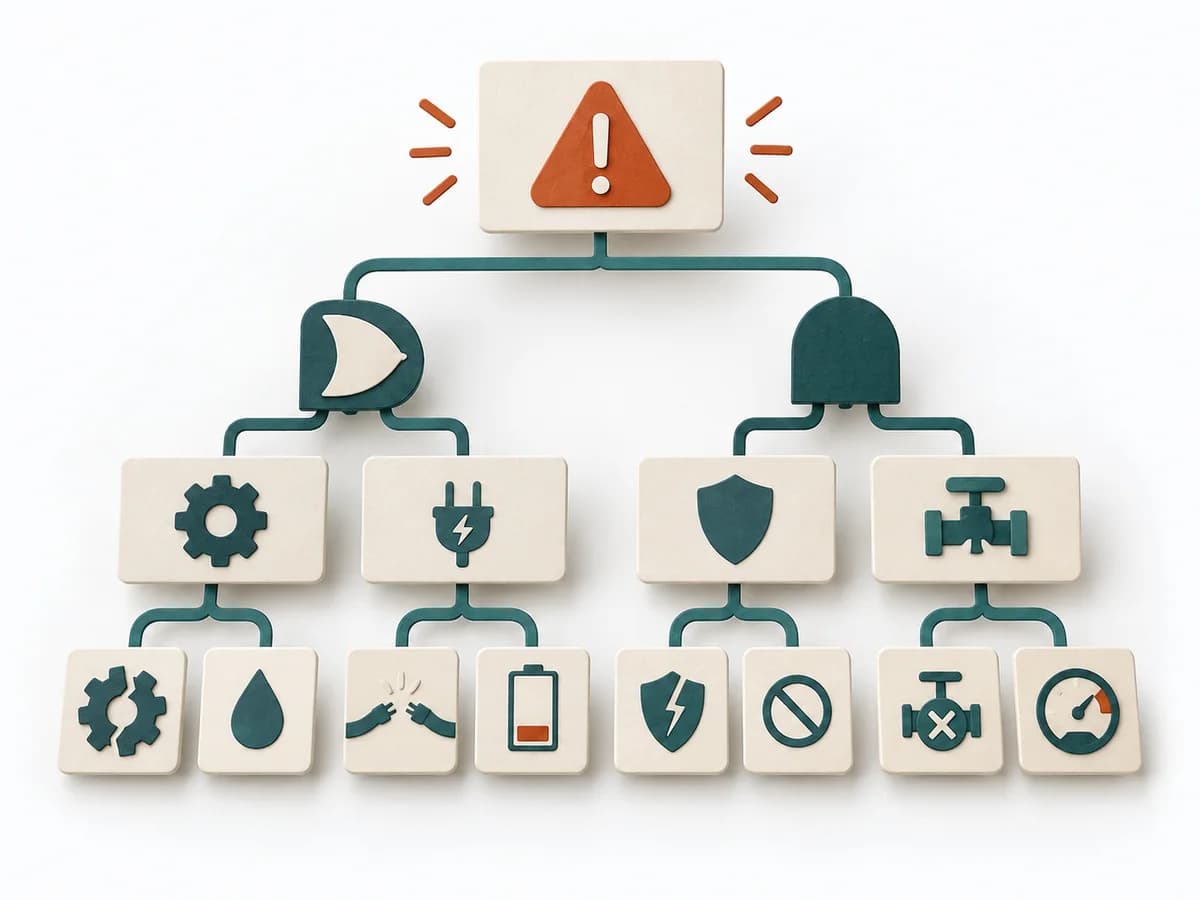 Operations Fault Tree Analysis |  Domain Modeling EventStorming | 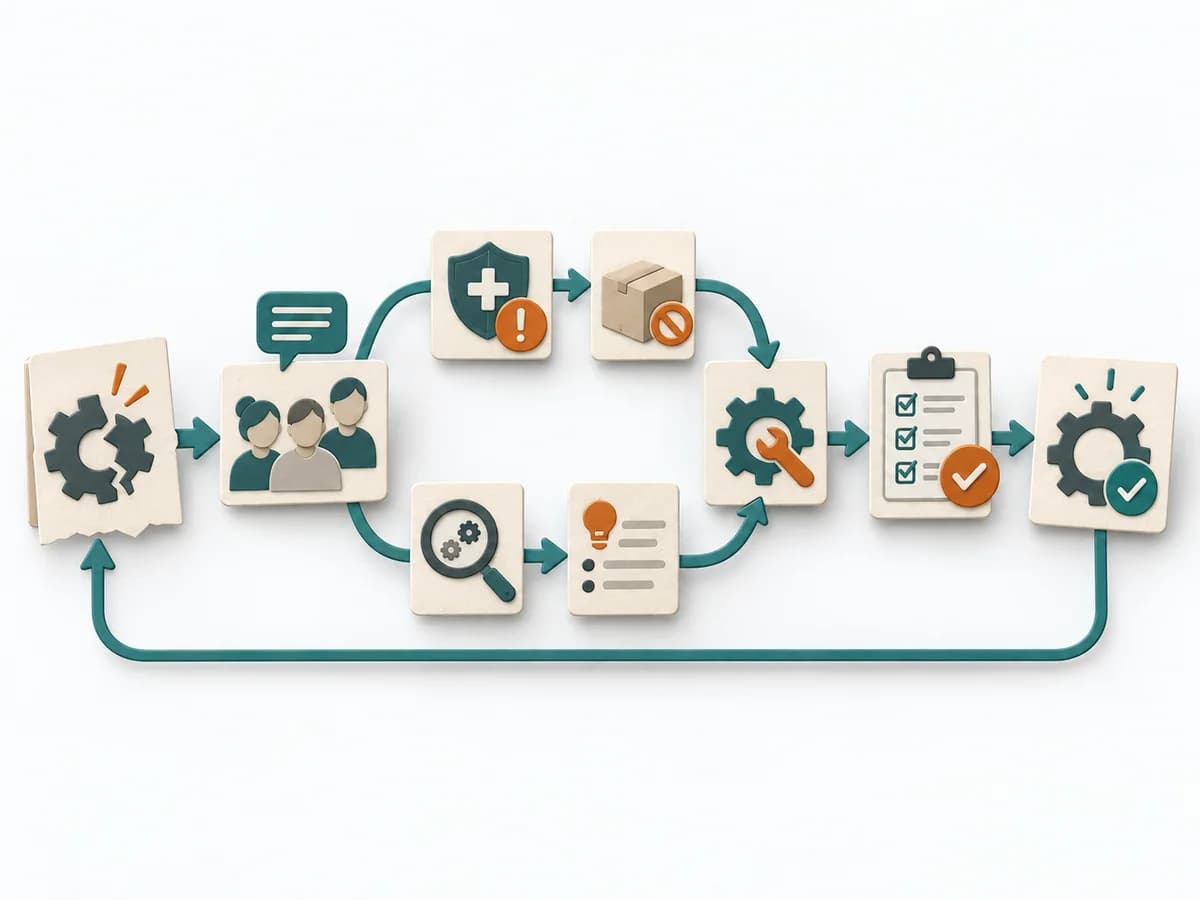 Operations 8D Problem Solving |  Decision Making Assumption Surfacing |
|---|---|---|---|---|
Purposedifferent | For a critical top event with several possible triggers, the method logically models failure paths. It makes visible which combinations of conditions can lead to damage. | When a domain consists of many events, rules, and states, it creates a shared modeling space for the team. It bundles language, flows, and boundaries before domain knowledge fragments into siloed views. | For an acute quality or delivery problem, the method structures immediate protection and root cause work together. It keeps the situation stable while the actual cause is investigated cleanly. | Plans often contain assumptions that were never openly stated and remain dangerous precisely because of that. Assumption Surfacing makes these silent premises visible and prioritizes which of them carry the initiative or could sink it. |
Complexitydifferent | High | Medium | High | Low |
Timedifferent | 2-6 h | 2-8 h | 1-6 Wochen | 45-90 min |
Participantsdifferent | 3-8 | 5-12 | 4-10 | 2-8 |
Formatdifferent | Workshop + async | Workshop | Workshop + async | Workshop + async |
Outputdifferent | Fault Tree, Critical Paths, Cause Hypotheses, Control Actions | Event Timeline, Ubiquitous Language, Boundaries, Open Questions | 8D Report, Containment Plan, Root Cause Evidence, Corrective Action Plan | Assumption List, Critical Assumptions, Learning Plan |
Tagsno overlap | RiskRoot causeSafety | Domain-Driven DesignEventsDiscoveryWorkshop | QualityProblem solvingRoot cause | AssumptionsRiskDecisionDiscovery |