View methods side by side.
Choose up to four methods. Add them using the search and share the comparison by copying its link.
| Criterion |  Operations Fault Tree Analysis | 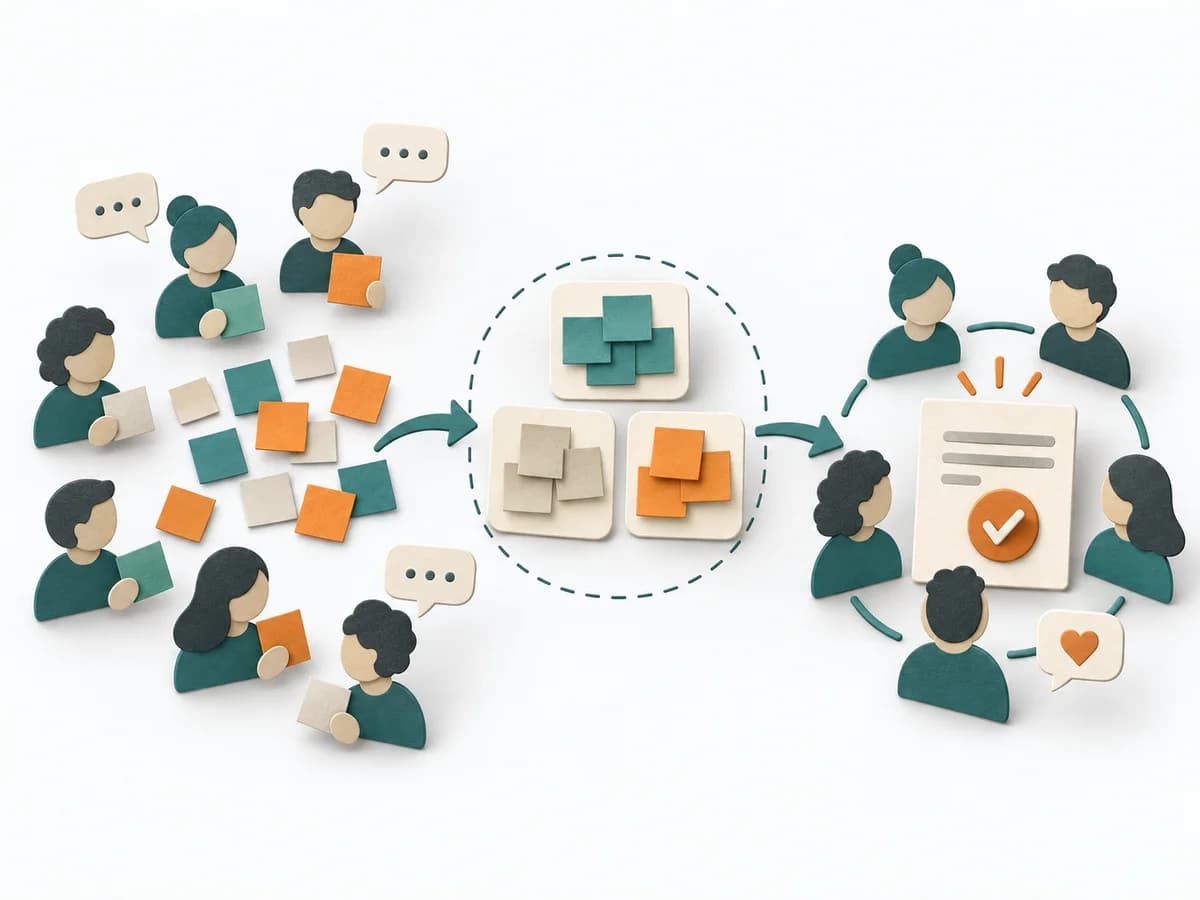 Facilitation Consensus Workshop |  UX Research Affinity Diagramming |  Operations Barrier Analysis |
|---|---|---|---|---|
Purposedifferent | For a critical top event with several possible triggers, the method logically models failure paths. It makes visible which combinations of conditions can lead to damage. | When a group needs a solid decision without outvoting individual factions, a Consensus Workshop creates a negotiable common ground. It makes agreement, reservations, and open tensions discussable at the same time. | When research notes, feedback, or observations sit unconnected side by side, affinity diagramming sorts the raw material into solid themes. Many individual points turn into patterns that make decisions and opportunities clearer. | For a risk that can only be managed through multiple layers of protection, the method examines the effectiveness of each barrier. It shows where safeguards are missing, too weak, or fail under real conditions. |
Complexitydifferent | High | Medium | Low | Medium |
Timedifferent | 2-6 h | 1-3 h | 45–90 min | 2-4 h |
Participantsdifferent | 3-8 | 5-30 | 3-10 | 2-6 |
Formatdifferent | Workshop + async | Workshop | Workshop | Workshop + async |
Outputdifferent | Fault Tree, Critical Paths, Cause Hypotheses, Control Actions | Consensus Clusters, Theme Titles, Priority Areas | Theme clusters, Insight statements, Opportunity areas | Barrier Inventory, Failure Analysis per Barrier, Action Backlog |
Tagsno overlap | RiskRoot causeSafety | FacilitationConsensusWorkshopAlignment | SynthesisQualitativeRoot cause | Root causeSafetyIncident |