View methods side by side.
Choose up to four methods. Add them using the search and share the comparison by copying its link.
| Criterion | 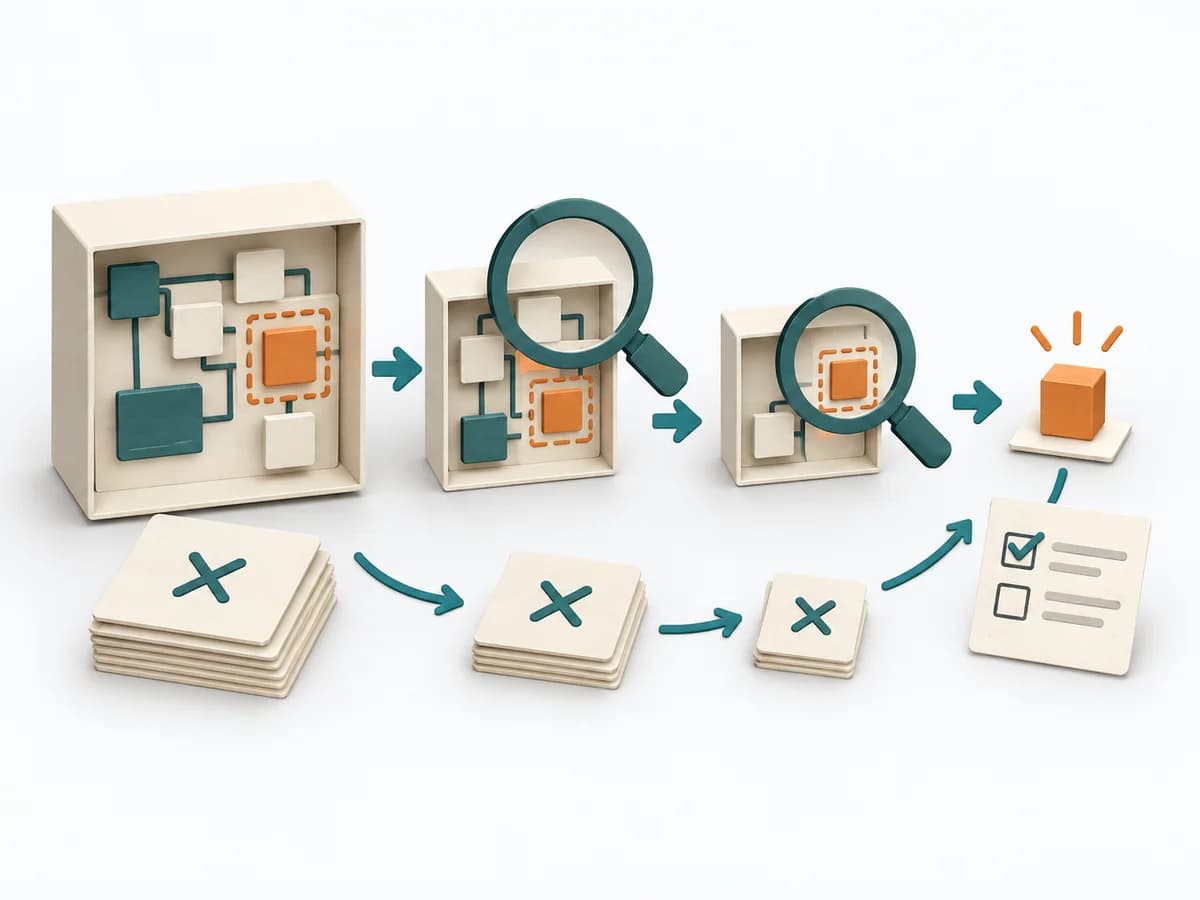 Engineering Fault Isolation |  Architecture Request for Comments |  Facilitation Consensus Workshop |  Decision Making Decision Rights Mapping |
|---|---|---|---|---|
Purposedifferent | In technical failures, the visible symptom often gets mixed up with the actual cause. Fault Isolation narrows the fault space and progressively reduces which part of the system is truly affected. | An RFC clarifies architecture context, options, and consequences. It structures technical context, alternatives, tradeoffs, open questions, and review feedback, and captures the result as an RFC document, reviewer comments, and a decision rationale. | When a group needs a solid decision without outvoting individual factions, a Consensus Workshop creates a negotiable common ground. It makes agreement, reservations, and open tensions discussable at the same time. | In organizations with many stakeholders, it often blurs who actually decides and who is merely consulted. It separates options, evaluation criteria, and open risks. The result is captured as a Decision Rights matrix and an agreement. |
Complexitysame | Medium | Medium | Medium | Medium |
Timedifferent | 30-180 min | 1-3 Wochen vom Draft bis zur Entscheidung | 1-3 h | 90-180 min |
Participantsdifferent | 1-6 | 3-20 Reviewer | 5-30 | 4-12 |
Formatdifferent | Workshop + async | Async | Workshop | Workshop |
Outputdifferent | Fault Isolation Map, Test Log, Excluded Hypotheses, Narrowed Fault Area | RFC document, Reviewer comments, Decision rationale, Follow-up ADR or tickets | Consensus Clusters, Theme Titles, Priority Areas | Decision Rights Matrix, Agreement |
Tagsno overlap | TroubleshootingDiagnosisEngineering | ArchitectureDecisionAsyncGovernance | FacilitationConsensusWorkshopAlignment | DecisionGovernanceAlignmentResponsibility |