View methods side by side.
Choose up to four methods. Add them using the search and share the comparison by copying its link.
| Criterion |  Operations Family Tree Analysis | 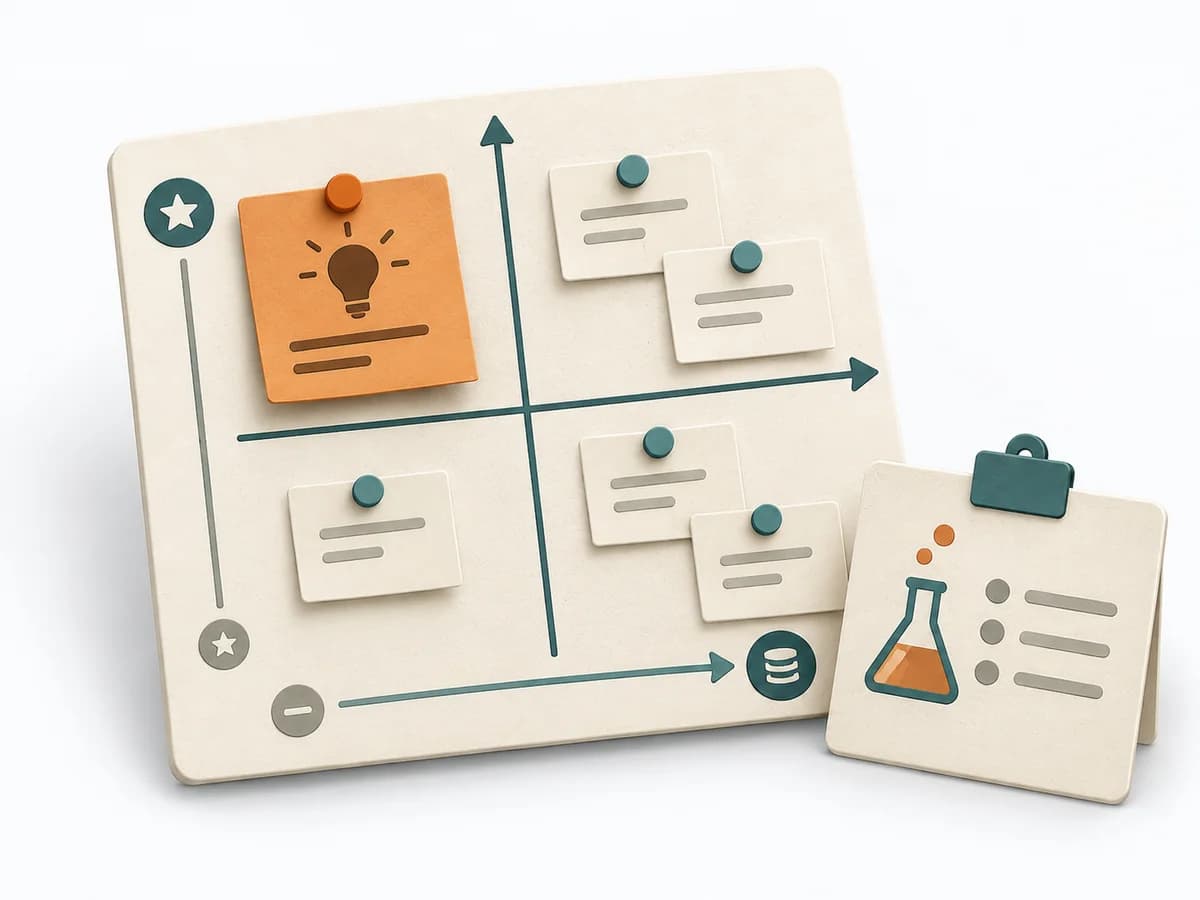 Product Discovery Assumption Mapping | 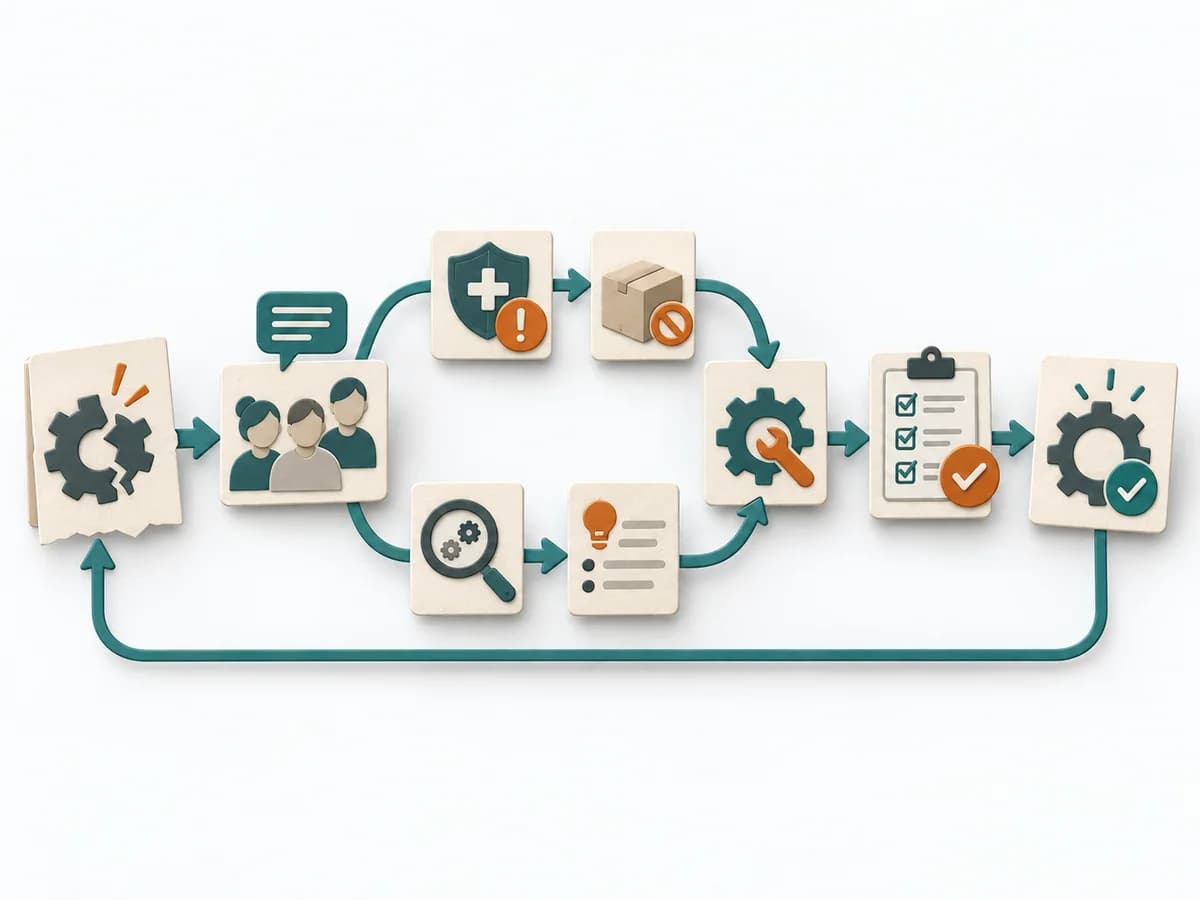 Operations 8D Problem Solving |  Operations Root Cause Analysis |
|---|---|---|---|---|
Purposedifferent | For a series of incidents with a similar pattern, the method arranges individual events as branches of a common origin. It makes visible which conditions keep recurring. | When assumptions still sit unordered in the room, it weighs uncertainty against leverage. It makes visible which hypotheses should be checked first. | For an acute quality or delivery problem, the method structures immediate protection and root cause work together. It keeps the situation stable while the actual cause is investigated cleanly. | When a problem keeps recurring and the cause stays unclear, the method exposes the underlying mechanism. It separates symptom, guess, and robust explanation from one another. |
Complexitydifferent | Medium | Medium | High | Medium |
Timedifferent | 2-4 h | 45-60 min | 1-6 Wochen | 1-4 h |
Participantsdifferent | 2-6 | 2-8 | 4-10 | 3-8 |
Formatsame | Workshop + async | Workshop + async | Workshop + async | Workshop + async |
Outputdifferent | Family Tree Diagram, Pattern Notes, Systemic Measures | Assumption map, Test backlog, Risk ranking | 8D Report, Containment Plan, Root Cause Evidence, Corrective Action Plan | Problem Statement, Cause Hypotheses, Confirmed Causes, Action Plan |
Tagsno overlap | Root causePatternsIncidentSystemic | AssumptionsRiskExperimentsValidation | QualityProblem solvingRoot cause | Root causeProblem solvingQualityIncident |