View methods side by side.
Choose up to four methods. Add them using the search and share the comparison by copying its link.
| Criterion | 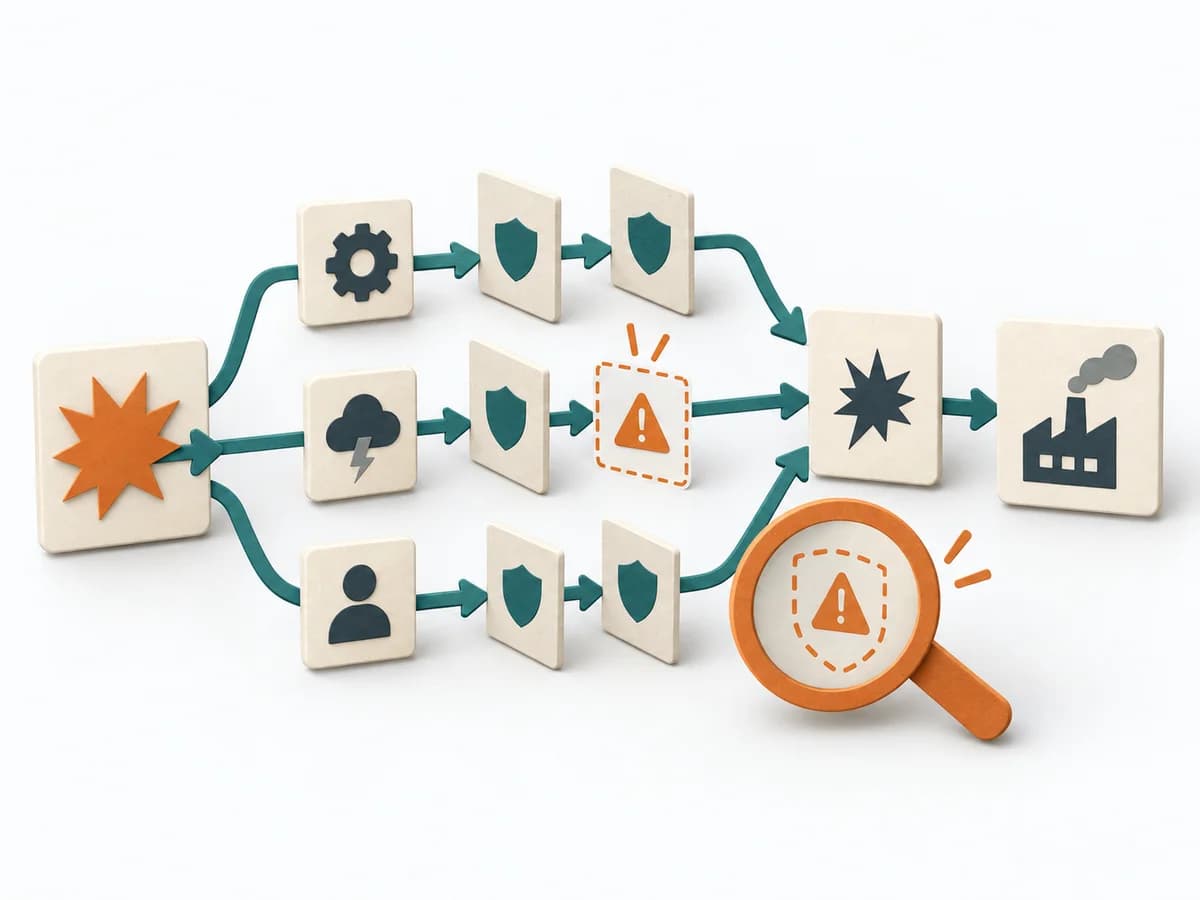 Engineering Failure Scenario Analysis | 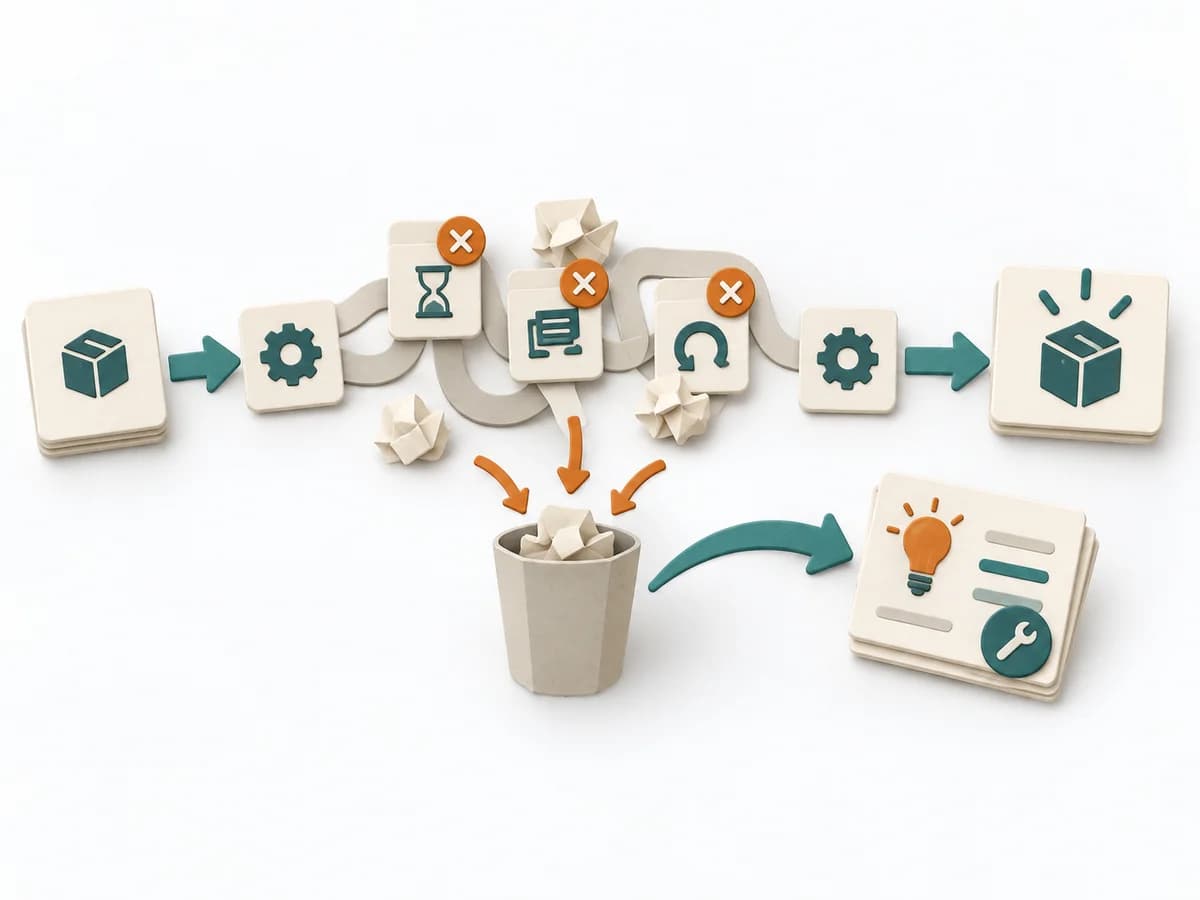 Operations Waste Analysis | 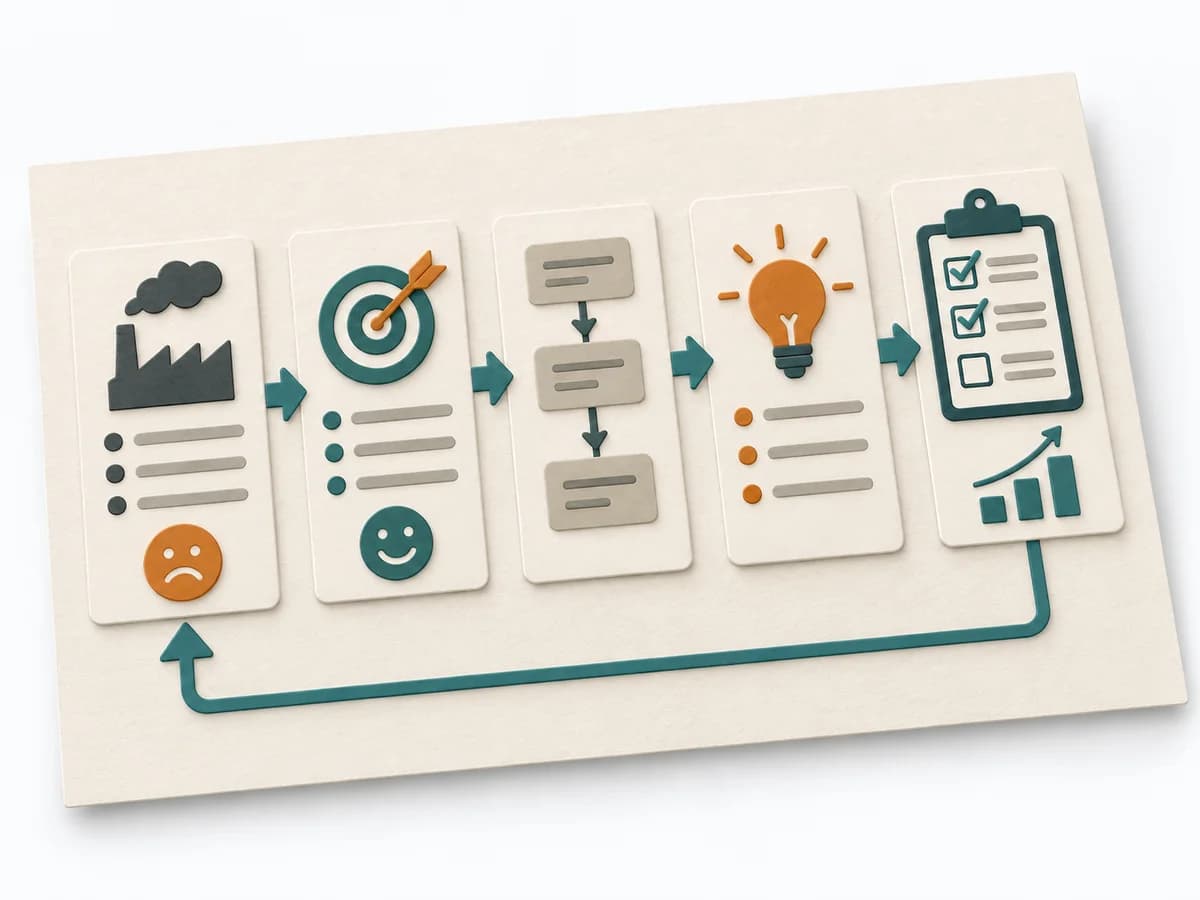 Operations A3 Problem Solving |  Operations 5 Whys |
|---|---|---|---|---|
Purposedifferent | In critical processes, it is not enough to plan only for the normal case. Failure Scenario Analysis looks at the path into failure and shows which failures, chains, and control gaps cause the most damage. | For a process that keeps people busy but creates little value, the method exposes waste. It directs attention to unnecessary movement, waiting times, rework, and overdelivery. | For a complex deviation with several people involved, the method bundles problem, analysis, and decision onto one page. It creates a shared working space where causes, countermeasures, and follow-up fit together. | For a single, hard-to-explain deviation, the method exposes the causal chain behind the visible symptom. It keeps the cause open until a controllable condition emerges instead of a mere description. |
Complexitydifferent | Medium | Low | Medium | Low |
Timedifferent | 1-3 h | 45-120 min | 45-90 min | 15-30 min |
Participantsdifferent | 3-8 | 2-8 | 2-5 | 2-6 |
Formatdifferent | Workshop | Workshop | Workshop + async | Workshop |
Outputdifferent | Failure Scenarios, Risk Notes, Control Gaps, Test and Response Actions | Waste Map, Prioritized Waste, Improvement Backlog | A3 Report, Action Plan, Root Cause Analysis | Root cause notes, Countermeasures |
Tagsno overlap | FailureResilienceRisk | WasteLeanProcess improvement | LeanProblem solvingCoachingOperations | Root causeIncidentLeanProblem solving |