View methods side by side.
Choose up to four methods. Add them using the search and share the comparison by copying its link.
| Criterion | 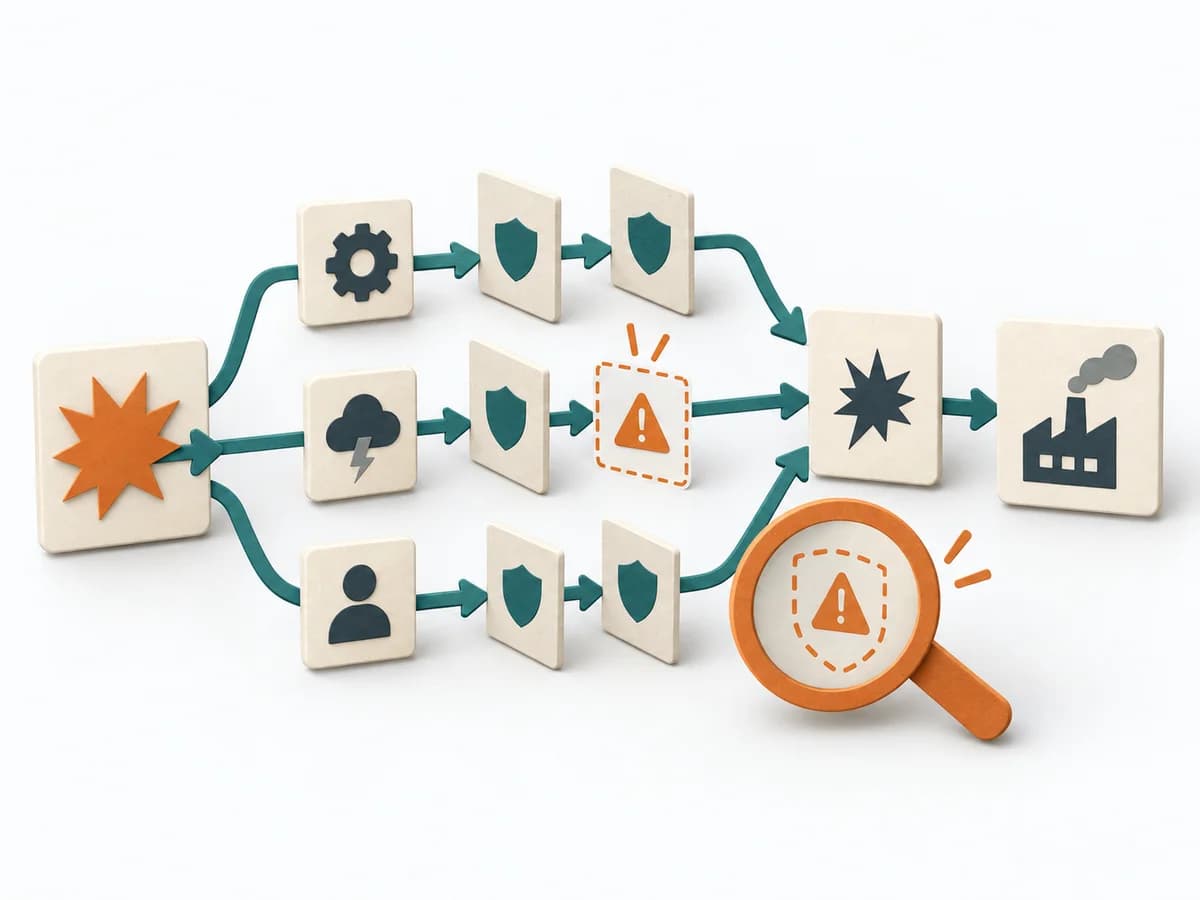 Engineering Failure Scenario Analysis | 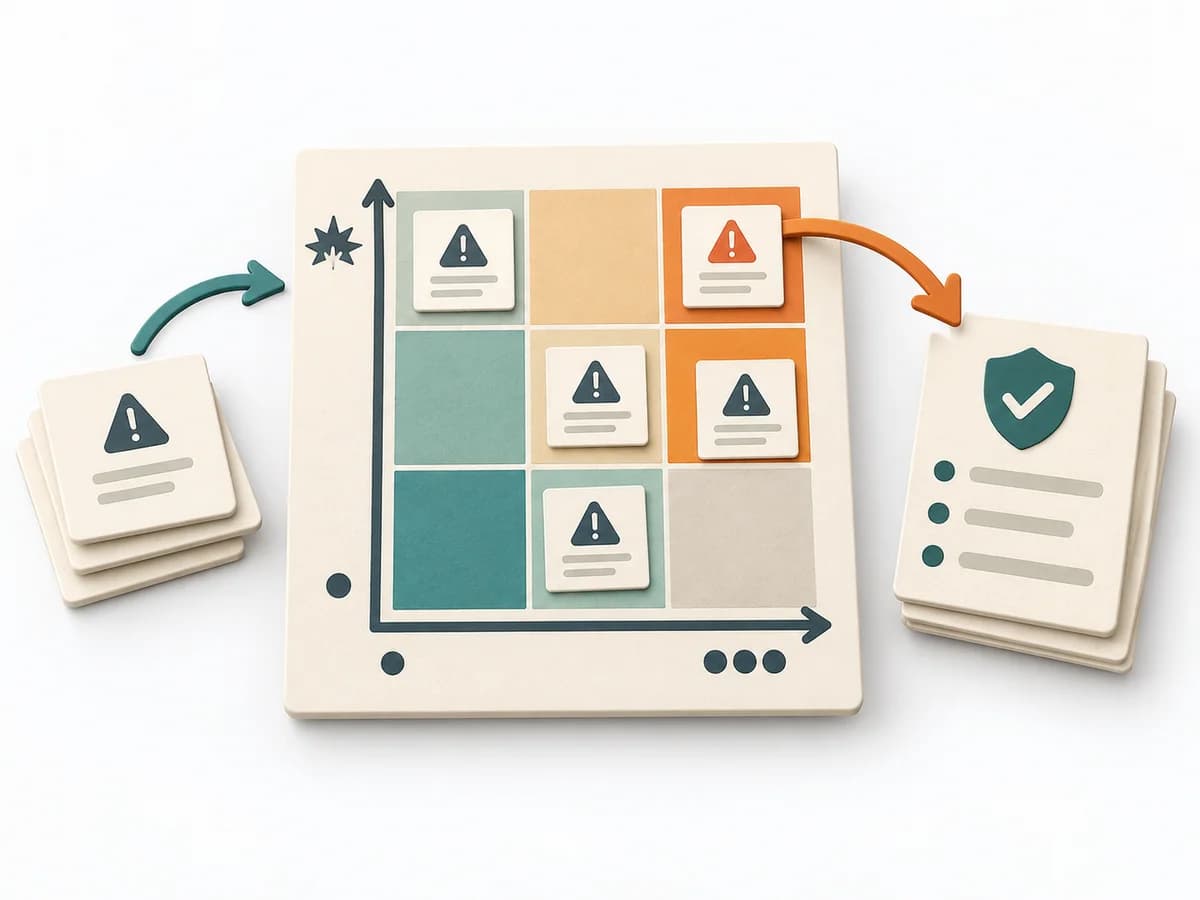 Decision Making Risk Matrix |  Facilitation Dot Voting |  Decision Making Pre-Mortem |
|---|---|---|---|---|
Purposedifferent | In critical processes, it is not enough to plan only for the normal case. Failure Scenario Analysis looks at the path into failure and shows which failures, chains, and control gaps cause the most damage. | When a project faces many possible disruptions, it quickly becomes unclear which risks deserve attention first. It separates options, evaluation criteria, and open risks. The result is captured as a Risk Matrix and a Top Risk List. | When a workshop has produced too many options and the group needs to condense quickly, dot voting makes preferences visible in a short time. It bundles individual votes into a solid signal for the next selection. | In early initiatives with many uncertainties, planning quickly turns too optimistic. A pre-mortem makes the expected failure visible in advance and sharpens the view of causes, gaps, and countermeasures. |
Complexitydifferent | Medium | Low | Low | Low |
Timedifferent | 1-3 h | 30-60 min | 5-15 min | 20–45 min |
Participantsdifferent | 3-8 | 3-10 | 3-20 | Small cross-functional group |
Formatdifferent | Workshop | Workshop + async | Workshop | Workshop |
Outputdifferent | Failure Scenarios, Risk Notes, Control Gaps, Test and Response Actions | Risk Matrix, Top Risk List | Ranked list, Consensus signal, Shortlist | Risk list, Mitigation plan, Assumption log |
Tagsno overlap | FailureResilienceRisk | RiskDecisionPrioritizationAssessment | FacilitationVotingConsensusPrioritization | RiskDecisionFailurePlanning |