View methods side by side.
Choose up to four methods. Add them using the search and share the comparison by copying its link.
| Criterion |  Engineering Failure Scenario Analysis | 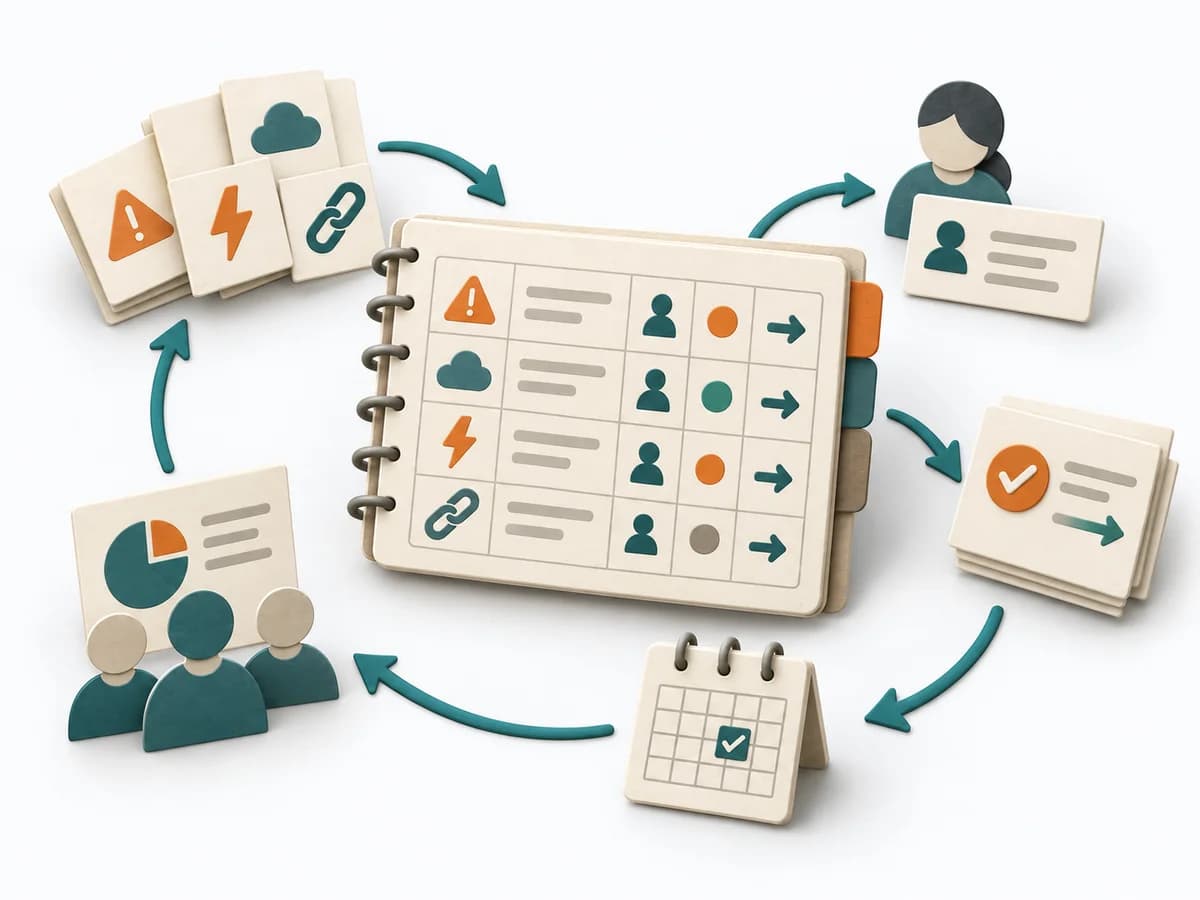 Delivery RAID Log |  Operations Failure Mode and Effects Analysis |  Operations Fault Tree Analysis |
|---|---|---|---|---|
Purposedifferent | In critical processes, it is not enough to plan only for the normal case. Failure Scenario Analysis looks at the path into failure and shows which failures, chains, and control gaps cause the most damage. | Helps clarify scope, sequence, and delivery flow in concrete terms. It makes work, boundaries, and order steerable. The result is captured as a RAID Log and a source for status reporting. | For a process, product, or service with noticeable failure risks, the method assesses possible failure modes in advance. It directs attention to combinations of occurrence, effect, and detectability. | For a critical top event with several possible triggers, the method logically models failure paths. It makes visible which combinations of conditions can lead to damage. |
Complexitydifferent | Medium | Low | High | High |
Timedifferent | 1-3 h | 30 min Setup, dann laufend | 2-6 h | 2-6 h |
Participantsdifferent | 3-8 | 1-3 maintaining, briefing for everyone | 3-10 | 3-8 |
Formatdifferent | Workshop | Async | Workshop | Workshop + async |
Outputdifferent | Failure Scenarios, Risk Notes, Control Gaps, Test and Response Actions | RAID Log, Status Report Source | FMEA Table, Risk Priority, Mitigation Actions | Fault Tree, Critical Paths, Cause Hypotheses, Control Actions |
Tags1 shared | FailureResilienceRisk | RiskTrackingStakeholdersGovernance | RiskQualityOperationsRoot cause | RiskRoot causeSafety |