View methods side by side.
Choose up to four methods. Add them using the search and share the comparison by copying its link.
| Criterion | 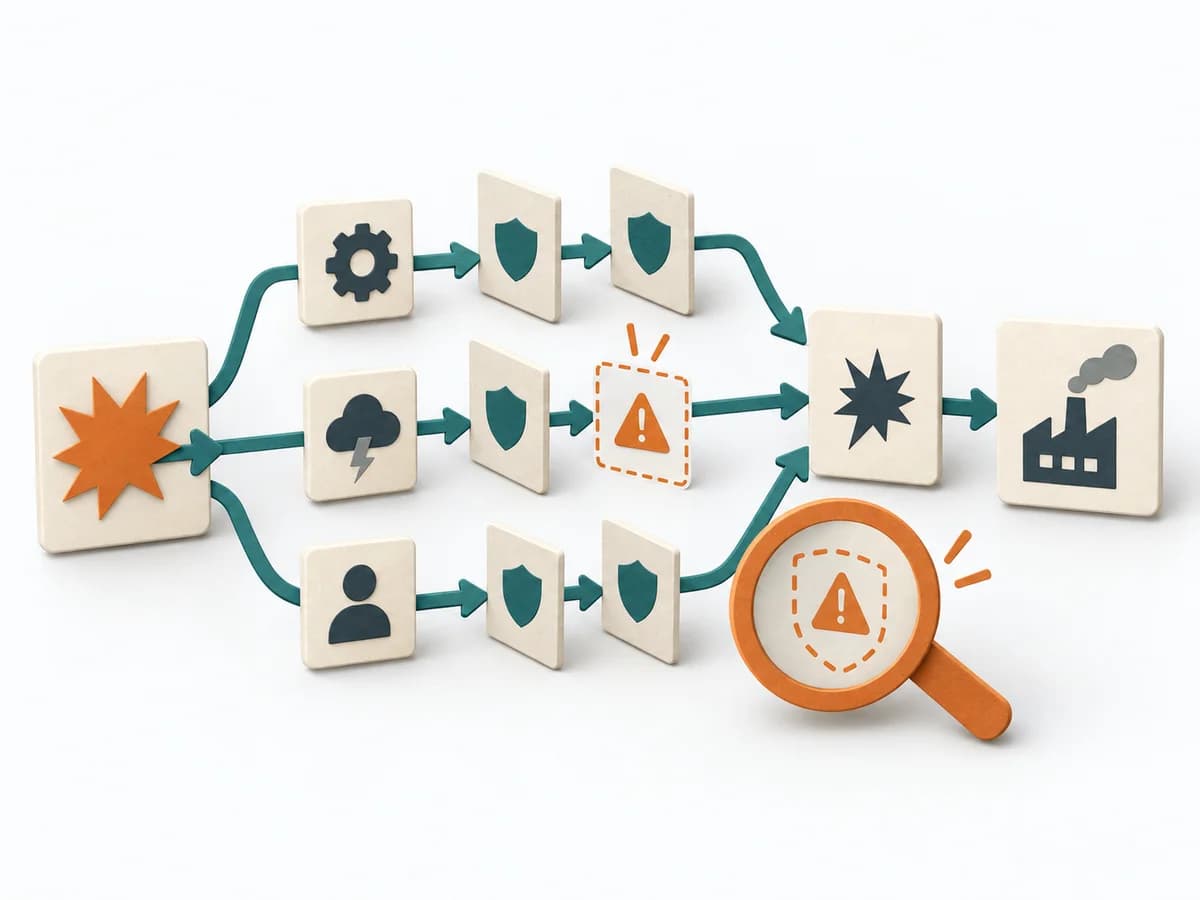 Engineering Failure Scenario Analysis | 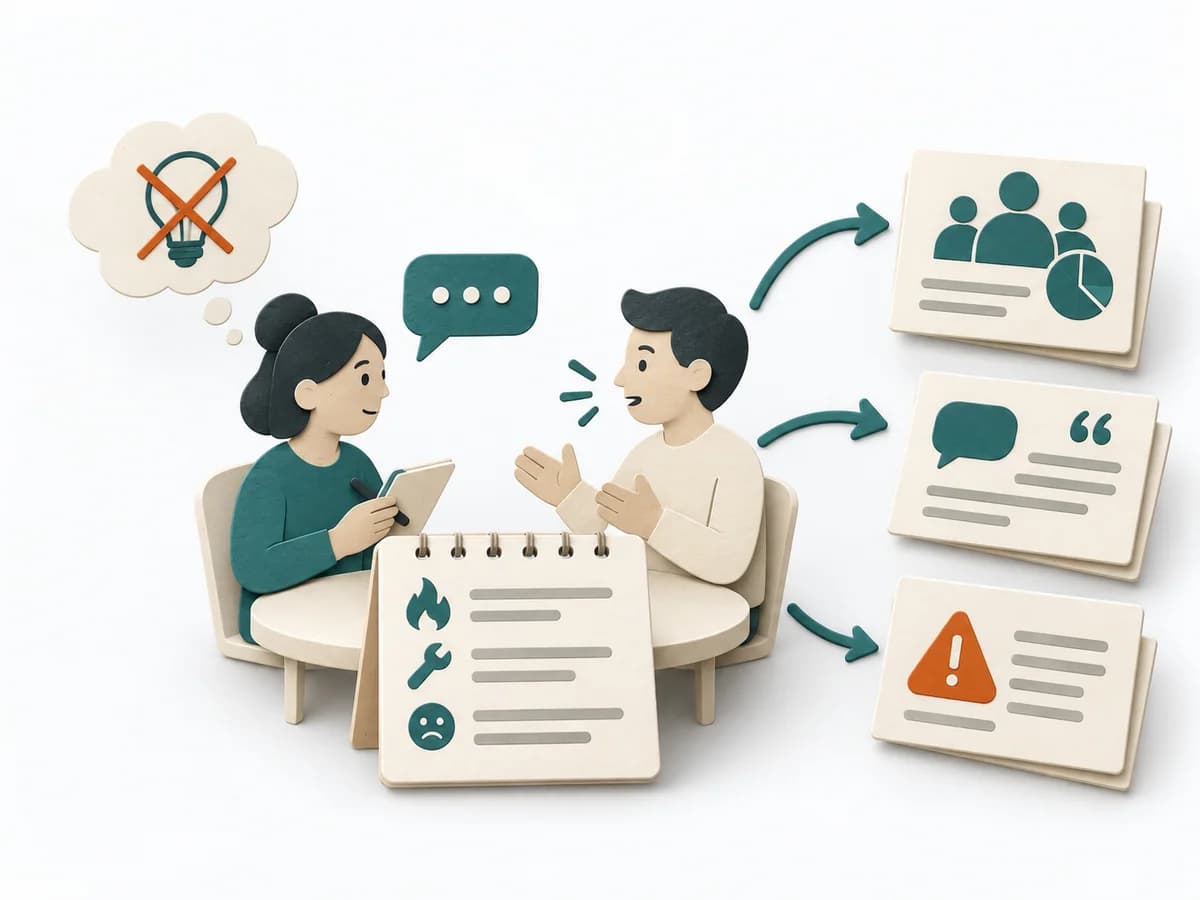 Product Discovery Problem Interview | 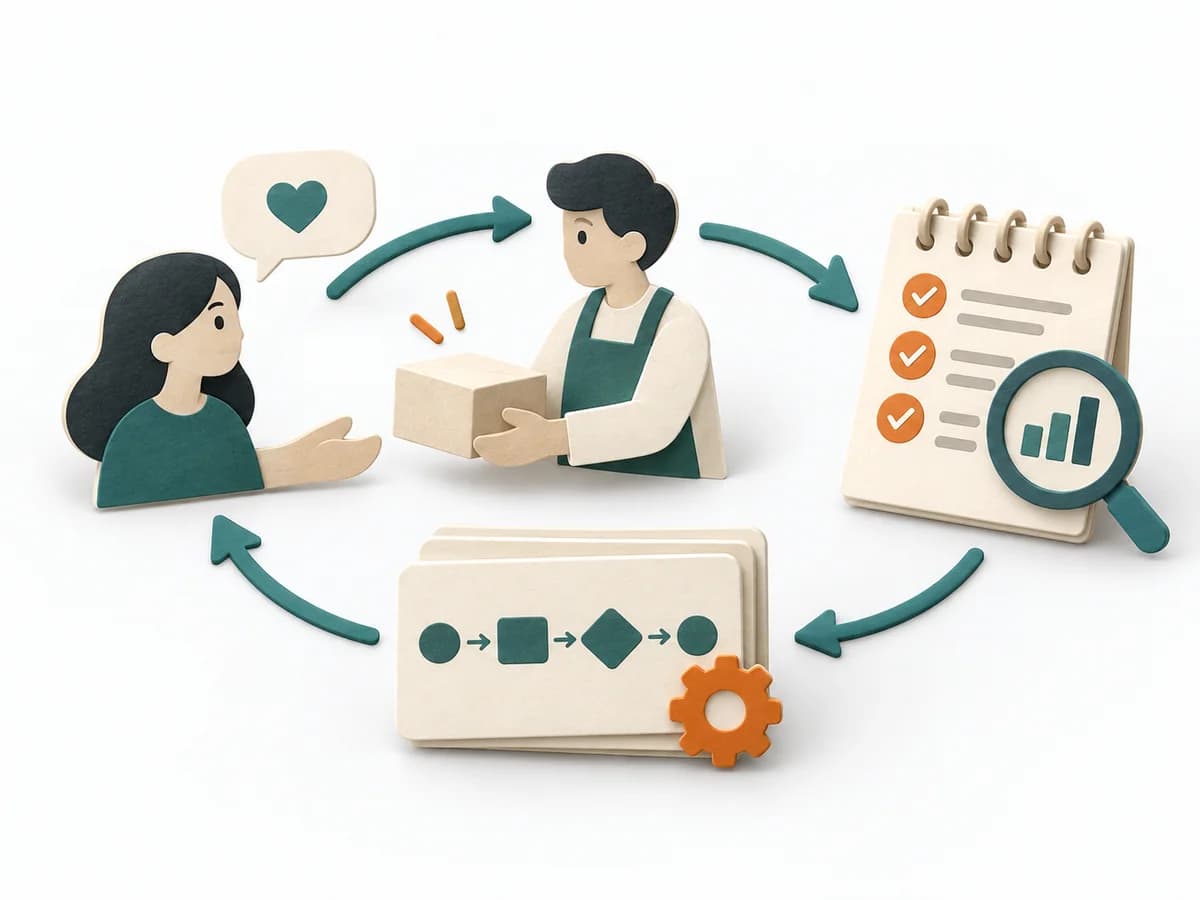 Product Discovery Concierge MVP |  Product Discovery Experiment Canvas |
|---|---|---|---|---|
Purposedifferent | In critical processes, it is not enough to plan only for the normal case. Failure Scenario Analysis looks at the path into failure and shows which failures, chains, and control gaps cause the most damage. | When the picture of the problem still needs to become solid, it asks about real situations and consequences. It separates genuine suffering from mere interest in a solution. | When an idea can first fail or grow through genuine hands-on support, it relies on manual work instead of automation. It shows whether user value holds up even under manual execution. | When experiments become unreadable after the fact, it arranges hypothesis, signal, and learning goal on a single canvas. It separates problem, assumption, solution, and evidence. The result is captured as a Completed Experiment Canvas and a Success Metric. |
Complexitydifferent | Medium | Medium | Medium | Low |
Timedifferent | 1-3 h | 30-60 min je Interview | 1-4 Wochen | 30-60 min |
Participantsdifferent | 3-8 | 5-12 Interviews | 3-10 Kunden | 1-5 |
Formatdifferent | Workshop | Workshop + async | Workshop + async | Workshop + async |
Outputdifferent | Failure Scenarios, Risk Notes, Control Gaps, Test and Response Actions | Problem Evidence, Risk Notes, Customer Segments | Concierge Learnings, Service Blueprint, MVP Risks | Completed Experiment Canvas, Success Metric |
Tagsno overlap | FailureResilienceRisk | DiscoveryInterviewsValidation | MVPValidationServiceDiscovery | ExperimentsValidationDiscoveryHypothesis |