View methods side by side.
Choose up to four methods. Add them using the search and share the comparison by copying its link.
| Criterion | 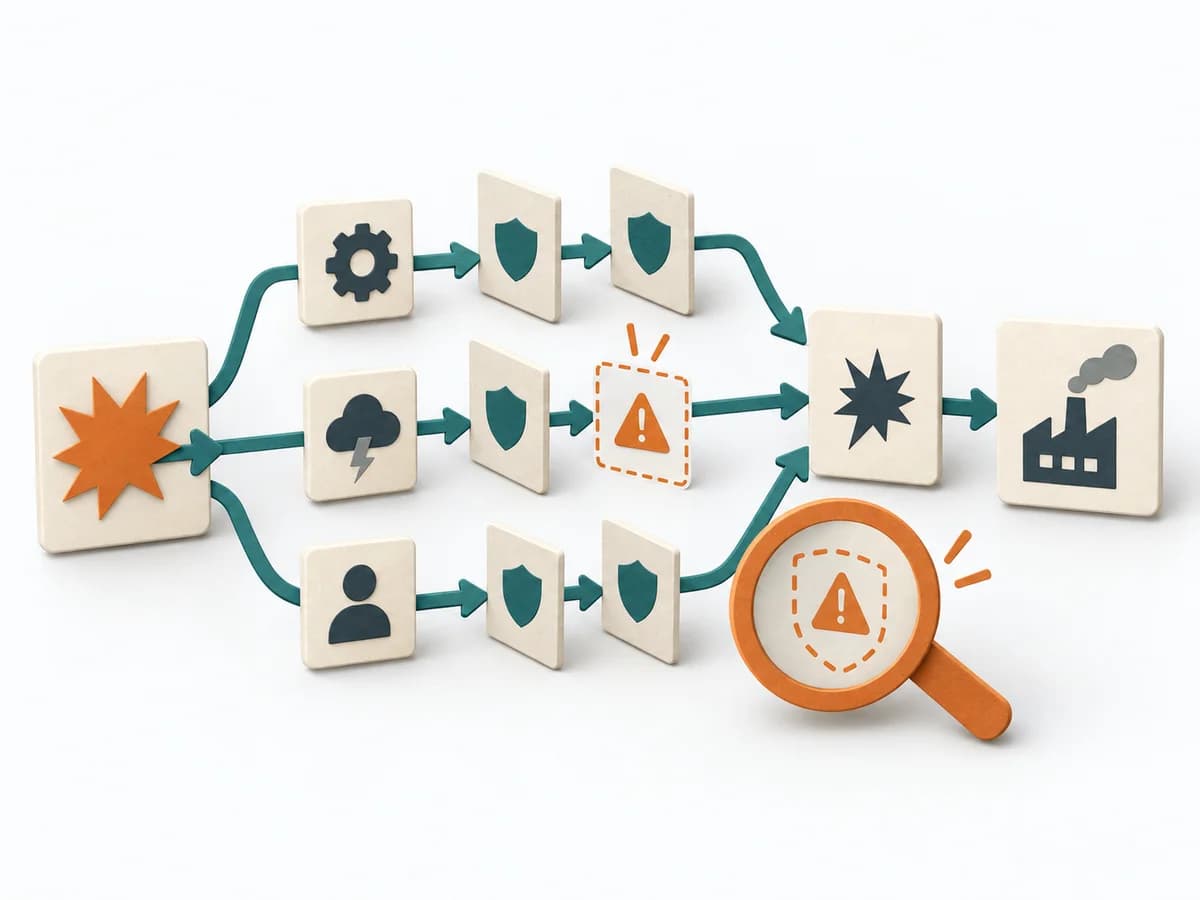 Engineering Failure Scenario Analysis |  Systems Thinking Leverage Points |  Product Strategy DIBB |  Decision Making OODA Loop |
|---|---|---|---|---|
Purposedifferent | In critical processes, it is not enough to plan only for the normal case. Failure Scenario Analysis looks at the path into failure and shows which failures, chains, and control gaps cause the most damage. | Leverage Points show exactly where interventions in a system produce a disproportionate effect. It draws relationships, patterns, and feedback loops. The result is captured as a leverage map and action strategy. | DIBB helps clarify target groups, value, goals, and priorities by making the logic behind a decision explicit. It captures results as a DIBB document, belief list, bet list, and learning report. | In dynamic situations, decisions become outdated faster than they can be prepared. The OODA Loop holds observing, orienting, deciding, and acting together as a recurring rhythm so reaction does not slide into inertia. |
Complexitydifferent | Medium | High | Low | Medium |
Timedifferent | 1-3 h | Half day | 1-2 h | 15-60 min je Zyklus |
Participantsdifferent | 3-8 | 3-12 | 2-8 | 1-8 |
Formatdifferent | Workshop | Workshop | Workshop + async | Workshop + async |
Outputdifferent | Failure Scenarios, Risk Notes, Control Gaps, Test and Response Actions | Leverage Map, Action Strategy | DIBB document, Belief list, Bet list, Learning report | Situation Assessment, Decision Loop, Action Updates |
Tagsno overlap | FailureResilienceRisk | Systems thinkingChangeStrategy | StrategyDecisionAssumptionsHypothesis | DecisionChangeLearningStrategy |