View methods side by side.
Choose up to four methods. Add them using the search and share the comparison by copying its link.
| Criterion |  Engineering Failure Scenario Analysis |  Engineering Hypothesis-Driven Troubleshooting | 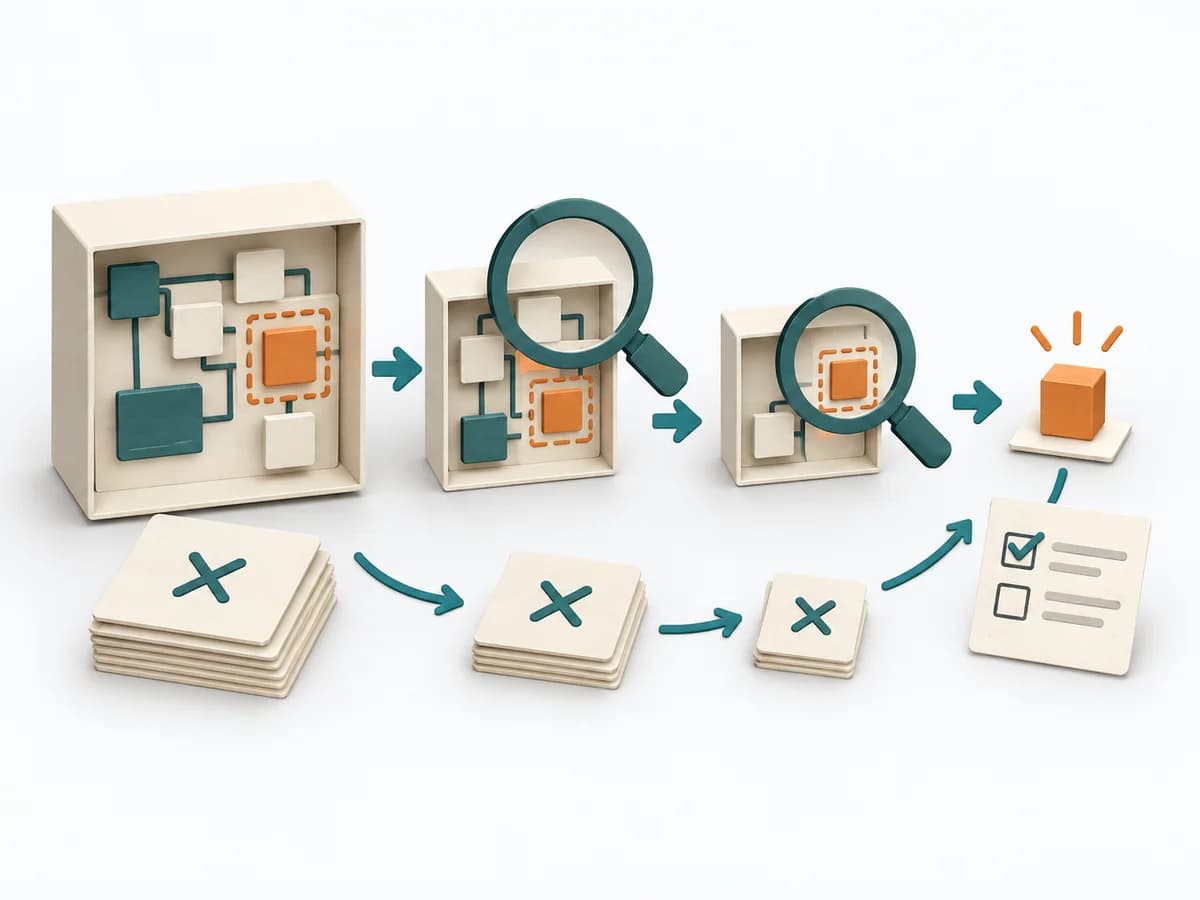 Engineering Fault Isolation | 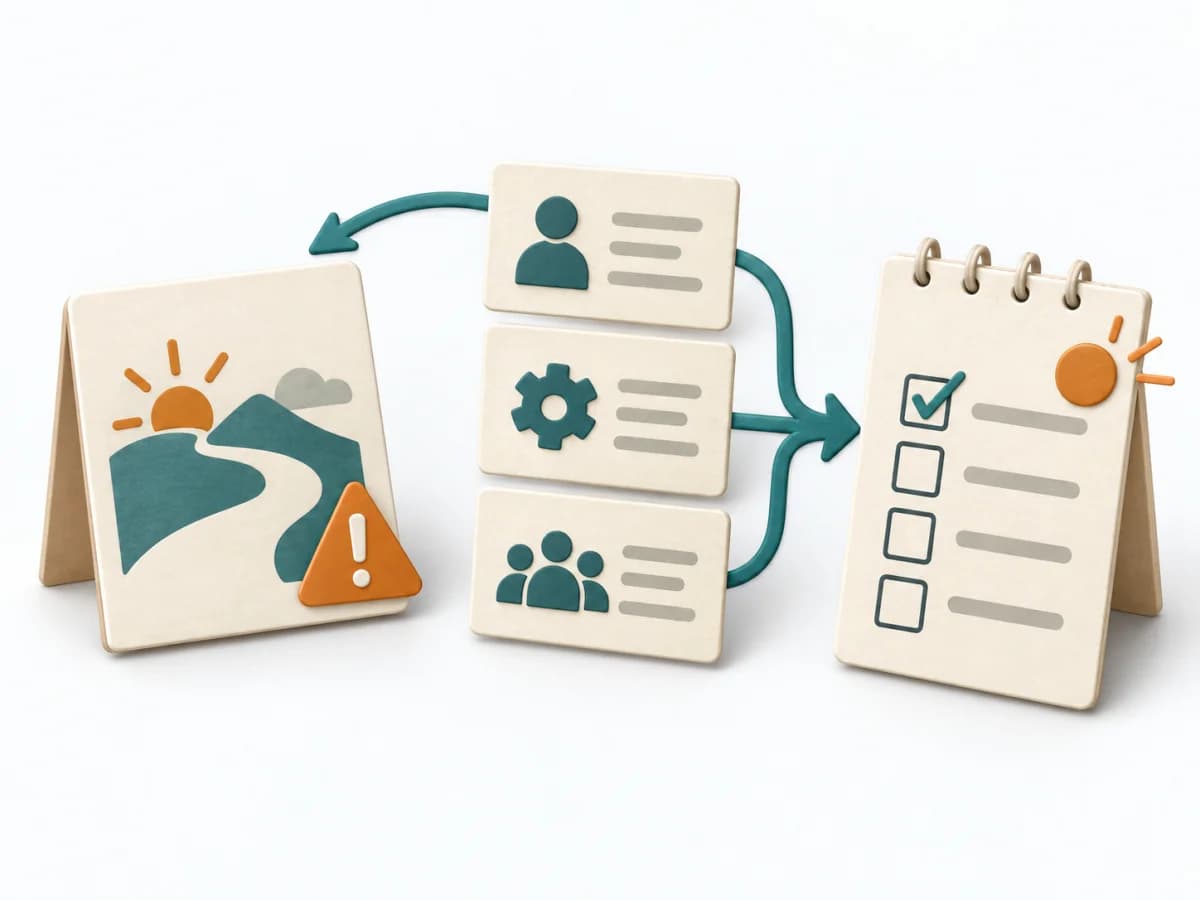 Decision Making Pre-Mortem |
|---|---|---|---|---|
Purposedifferent | In critical processes, it is not enough to plan only for the normal case. Failure Scenario Analysis looks at the path into failure and shows which failures, chains, and control gaps cause the most damage. | When systems fail unexpectedly, spontaneous attempts often produce more noise than insight. Hypothesis-driven Troubleshooting translates symptoms into testable assumptions and makes troubleshooting learnable. | In technical failures, the visible symptom often gets mixed up with the actual cause. Fault Isolation narrows the fault space and progressively reduces which part of the system is truly affected. | In early initiatives with many uncertainties, planning quickly turns too optimistic. A pre-mortem makes the expected failure visible in advance and sharpens the view of causes, gaps, and countermeasures. |
Complexitydifferent | Medium | Medium | Medium | Low |
Timedifferent | 1-3 h | 30-240 min | 30-180 min | 20–45 min |
Participantsdifferent | 3-8 | 1-6 | 1-6 | Small cross-functional group |
Formatdifferent | Workshop | Workshop + async | Workshop + async | Workshop |
Outputdifferent | Failure Scenarios, Risk Notes, Control Gaps, Test and Response Actions | Hypothesis Log, Test Plan, Evidence Notes, Diagnosis Summary | Fault Isolation Map, Test Log, Excluded Hypotheses, Narrowed Fault Area | Risk list, Mitigation plan, Assumption log |
Tagsno overlap | FailureResilienceRisk | TroubleshootingProblem solvingDiagnosis | TroubleshootingDiagnosisEngineering | RiskDecisionFailurePlanning |