View methods side by side.
Choose up to four methods. Add them using the search and share the comparison by copying its link.
| Criterion | 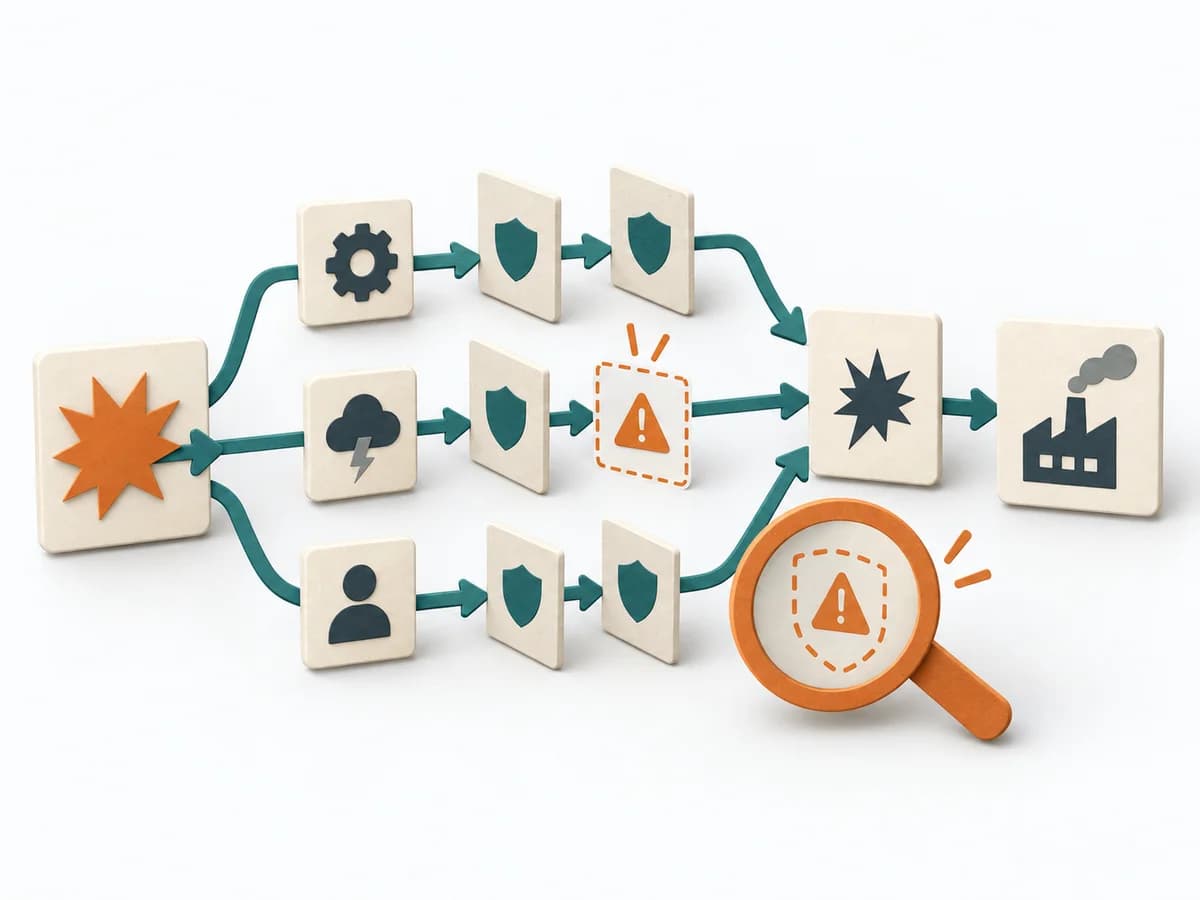 Engineering Failure Scenario Analysis |  Product Strategy DIBB | 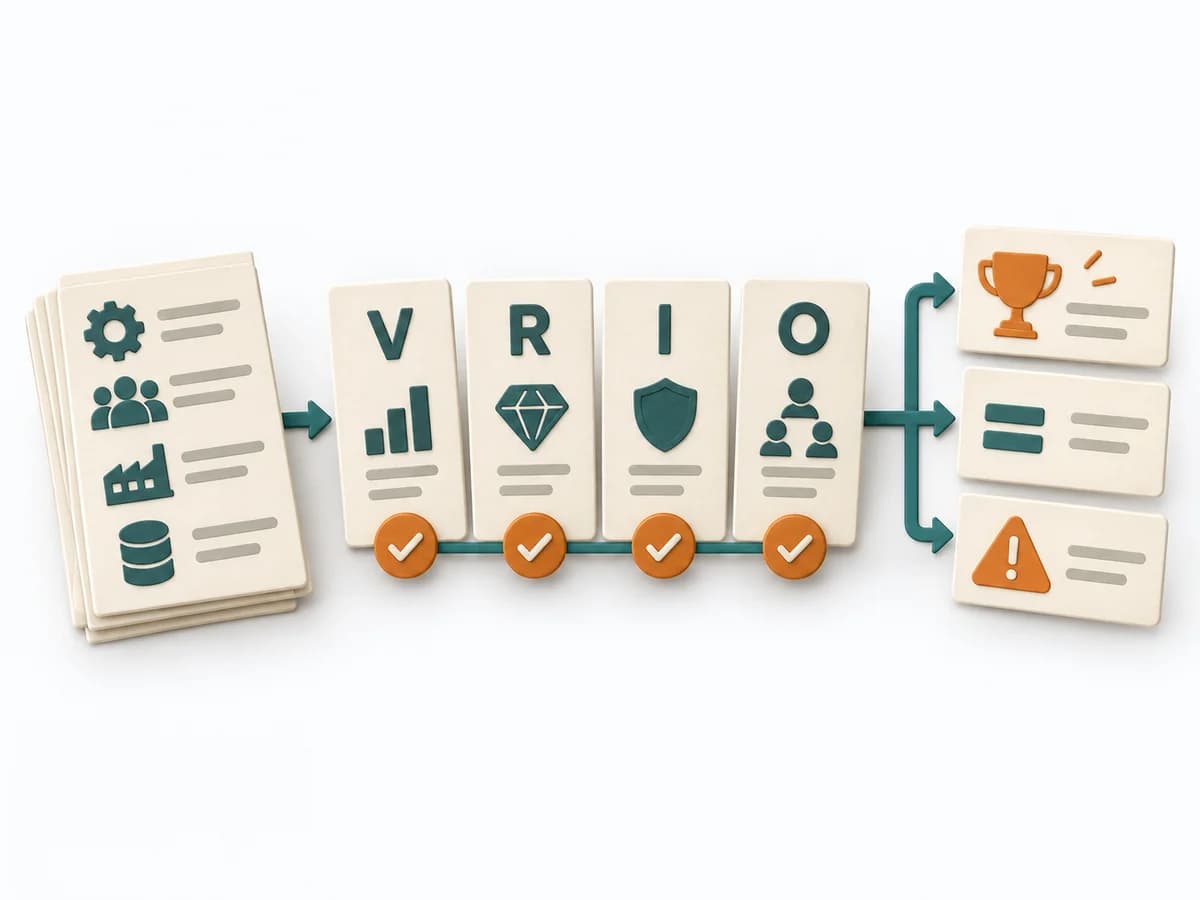 Business Strategy VRIO Framework |  Business Strategy Value Chain Analysis |
|---|---|---|---|---|
Purposedifferent | In critical processes, it is not enough to plan only for the normal case. Failure Scenario Analysis looks at the path into failure and shows which failures, chains, and control gaps cause the most damage. | DIBB helps clarify target groups, value, goals, and priorities by making the logic behind a decision explicit. It captures results as a DIBB document, belief list, bet list, and learning report. | The VRIO Framework rates resources and capabilities on whether they are Valuable, Rare, Inimitable, and Organized. It compares strengths, risks, market logic, and courses of action. The result is captured as a VRIO table and strategic actions. | Value Chain Analysis shows where value is created, costs accrue, and differentiation becomes possible along the process. It compares strengths, risks, market logic, and courses of action. The result is captured as a value-chain map and lever list. |
Complexitydifferent | Medium | Low | Medium | High |
Timedifferent | 1-3 h | 1-2 h | 90-180 min | Half day |
Participantsdifferent | 3-8 | 2-8 | 3-6 | 3-8 |
Formatdifferent | Workshop | Workshop + async | Workshop | Workshop |
Outputdifferent | Failure Scenarios, Risk Notes, Control Gaps, Test and Response Actions | DIBB document, Belief list, Bet list, Learning report | VRIO Table, Strategic Actions | Value Chain Map, Lever List |
Tagsno overlap | FailureResilienceRisk | StrategyDecisionAssumptionsHypothesis | StrategyDiagnosisBusiness modelCapability | StrategyBusiness modelDiagnosisAnalysis |