View methods side by side.
Choose up to four methods. Add them using the search and share the comparison by copying its link.
| Criterion | 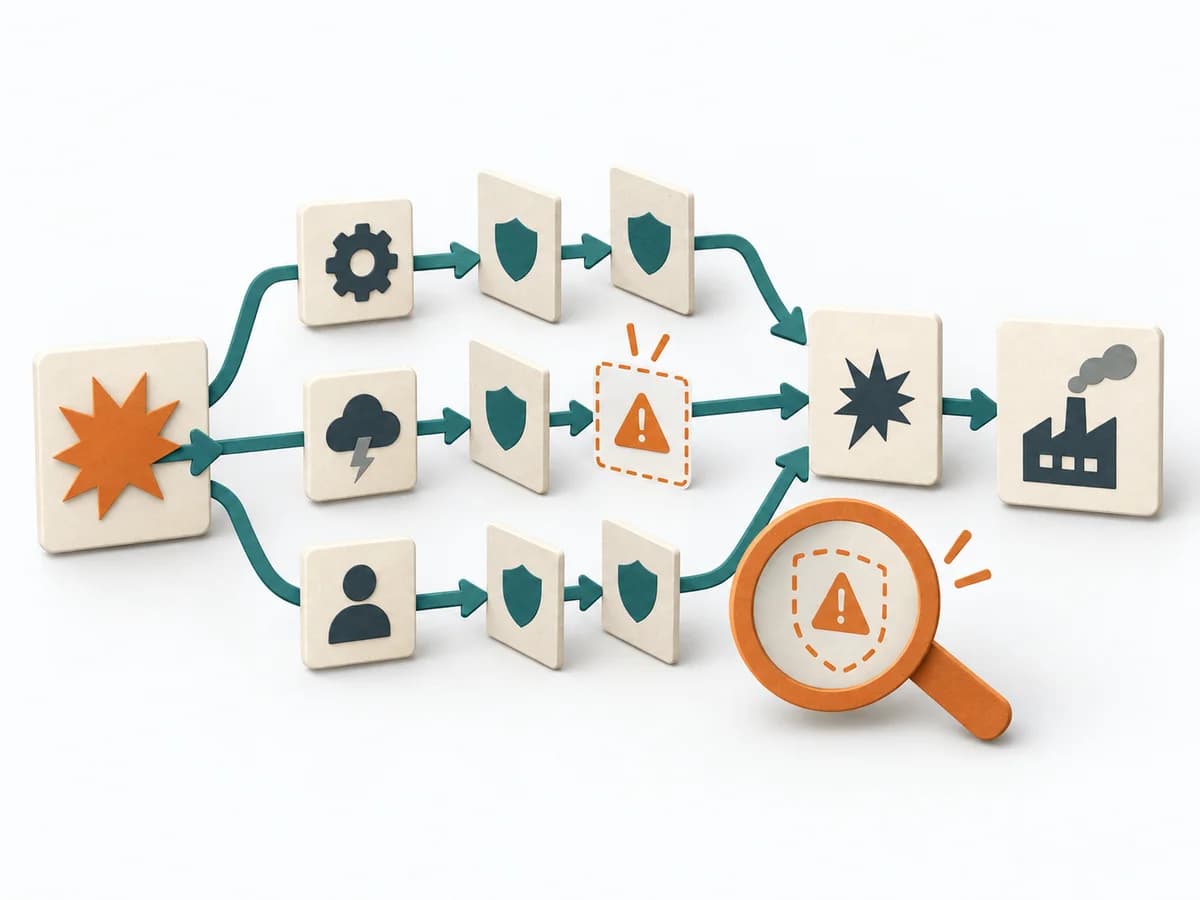 Engineering Failure Scenario Analysis | 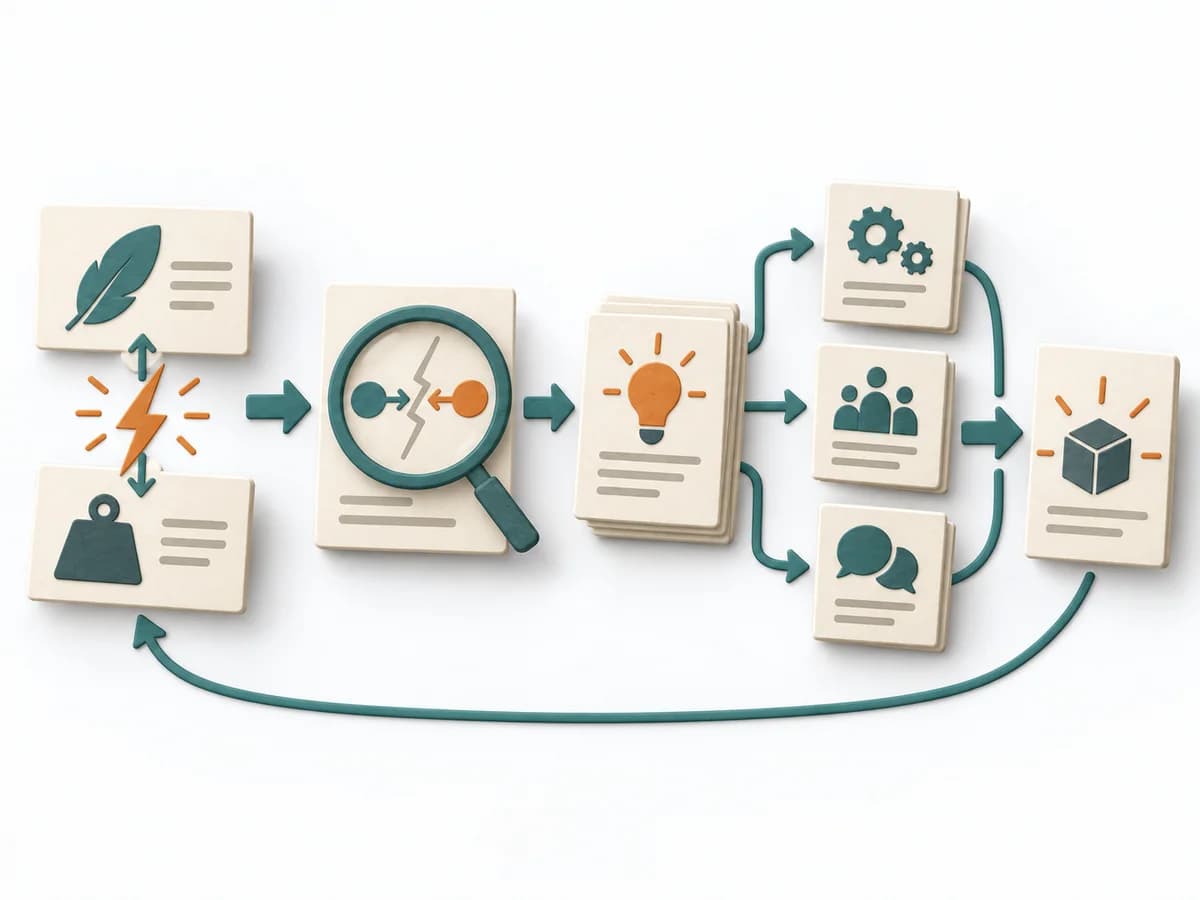 Innovation Contradiction Analysis |  Innovation Reverse Brainstorming |  Innovation Lotus Blossom |
|---|---|---|---|---|
Purposedifferent | In critical processes, it is not enough to plan only for the normal case. Failure Scenario Analysis looks at the path into failure and shows which failures, chains, and control gaps cause the most damage. | When a system should improve while another measure suffers as a result, the method makes the underlying conflict precisely formulable. It separates the desired effect from its side effect. This makes solutions possible that address the contradiction deliberately instead of half-heartedly. | For persistent errors or blockages, the method shifts the view to the opposite of the desired effect. It exposes the mechanics of failure and makes hidden causes easier to grasp. This makes improvement more concrete and the problem clearer. | When a central question feels too large, the method breaks it into neighboring topic fields with their own depth of ideation. It holds structure and openness at the same time, so adjacent perspectives don't get lost. This grows an idea space out of a core problem. |
Complexitydifferent | Medium | Medium | Low | Low |
Timedifferent | 1-3 h | 60-120 min | 30-60 min | 45-90 min |
Participantsdifferent | 3-8 | 2-8 | 3-12 | 3-10 |
Formatsame | Workshop | Workshop | Workshop | Workshop |
Outputdifferent | Failure Scenarios, Risk Notes, Control Gaps, Test and Response Actions | Contradiction Statement, Abstraction Notes, Solution Principles, Concept Ideas | Reverse Ideas, Risk Themes, Solution Ideas | Lotus Diagram, Idea Themes, Shortlist |
Tagsno overlap | FailureResilienceRisk | ContradictionsInnovationProblem solving | BrainstormingIdeationCreativityRisk | BrainstormingIdeationCreativityDivergenceWorkshop |