View methods side by side.
Choose up to four methods. Add them using the search and share the comparison by copying its link.
| Criterion | 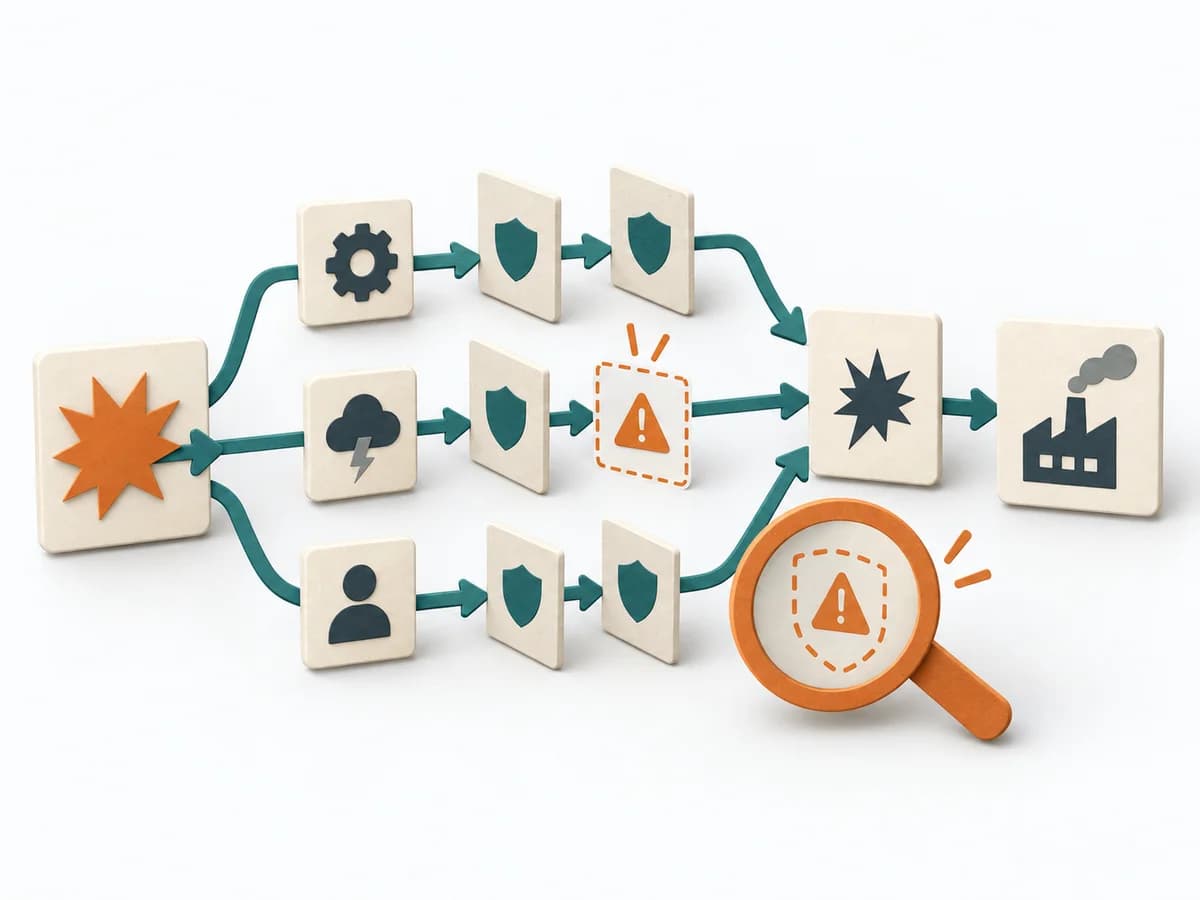 Engineering Failure Scenario Analysis |  DevOps Blameless Postmortem |  Systems Thinking Current Reality Tree |  Operations 5 Whys |
|---|---|---|---|---|
Purposedifferent | In critical processes, it is not enough to plan only for the normal case. Failure Scenario Analysis looks at the path into failure and shows which failures, chains, and control gaps cause the most damage. | After an incident with damage or a near miss, the method creates a sober field for learning without assigning blame. It directs attention to the course of events, conditions, and effective countermeasures. | A Current Reality Tree condenses many symptoms into a few causal chains. The method makes visible which core problems drive several negative effects at once. | For a single, hard-to-explain deviation, the method exposes the causal chain behind the visible symptom. It keeps the cause open until a controllable condition emerges instead of a mere description. |
Complexitydifferent | Medium | Medium | High | Low |
Timedifferent | 1-3 h | 30-90 min | 2-6 h | 15-30 min |
Participantsdifferent | 3-8 | 3-12 | 3-8 | 2-6 |
Formatdifferent | Workshop | Workshop + async | Workshop | Workshop |
Outputdifferent | Failure Scenarios, Risk Notes, Control Gaps, Test and Response Actions | Postmortem Doc, Action Items, Timeline | Current Reality Tree, Core Problems, Intervention Ideas | Root cause notes, Countermeasures |
Tagsno overlap | FailureResilienceRisk | Site Reliability EngineeringIncidentLearningReliability | Systems thinkingRoot causeConstraintsCausality | Root causeIncidentLeanProblem solving |