View methods side by side.
Choose up to four methods. Add them using the search and share the comparison by copying its link.
| Criterion | 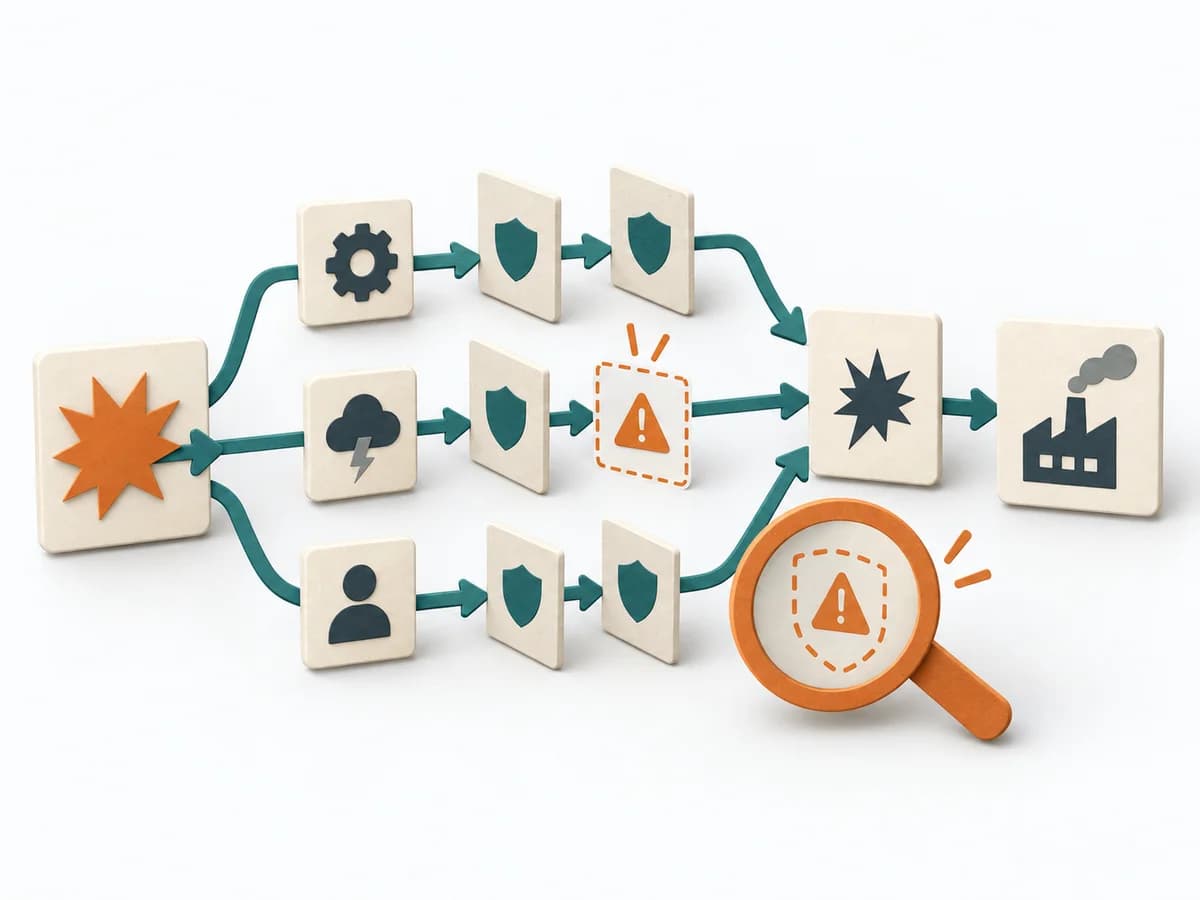 Engineering Failure Scenario Analysis |  Operations ALPEN Method |  Product Discovery Experiment Canvas |  Product Discovery Test Card |
|---|---|---|---|---|
Purposedifferent | In critical processes, it is not enough to plan only for the normal case. Failure Scenario Analysis looks at the path into failure and shows which failures, chains, and control gaps cause the most damage. | With an overloaded day full of too many tasks, a realistic picture of the day emerges. The method connects estimating, deciding, and buffer thinking so planning fits available energy and time. | When experiments become unreadable after the fact, it arranges hypothesis, signal, and learning goal on a single canvas. It separates problem, assumption, solution, and evidence. The result is captured as a Completed Experiment Canvas and a Success Metric. | The Test Card turns a critical assumption into a testable claim and specifies in advance which result counts as success. |
Complexitydifferent | Medium | Low | Low | Low |
Timedifferent | 1-3 h | 10-20 min daily | 30-60 min | 20-35 min |
Participantsdifferent | 3-8 | 1 | 1-5 | 1-5 |
Formatdifferent | Workshop | Async | Workshop + async | Workshop + async |
Outputdifferent | Failure Scenarios, Risk Notes, Control Gaps, Test and Response Actions | Daily Plan, Time Estimates, Review Notes | Completed Experiment Canvas, Success Metric | Test Card with a pre-set threshold |
Tagsno overlap | FailureResilienceRisk | PlanningTime managementProductivityOperations | ExperimentsValidationDiscoveryHypothesis | ExperimentsValidationDiscoveryHypothesis |