View methods side by side.
Choose up to four methods. Add them using the search and share the comparison by copying its link.
| Criterion | 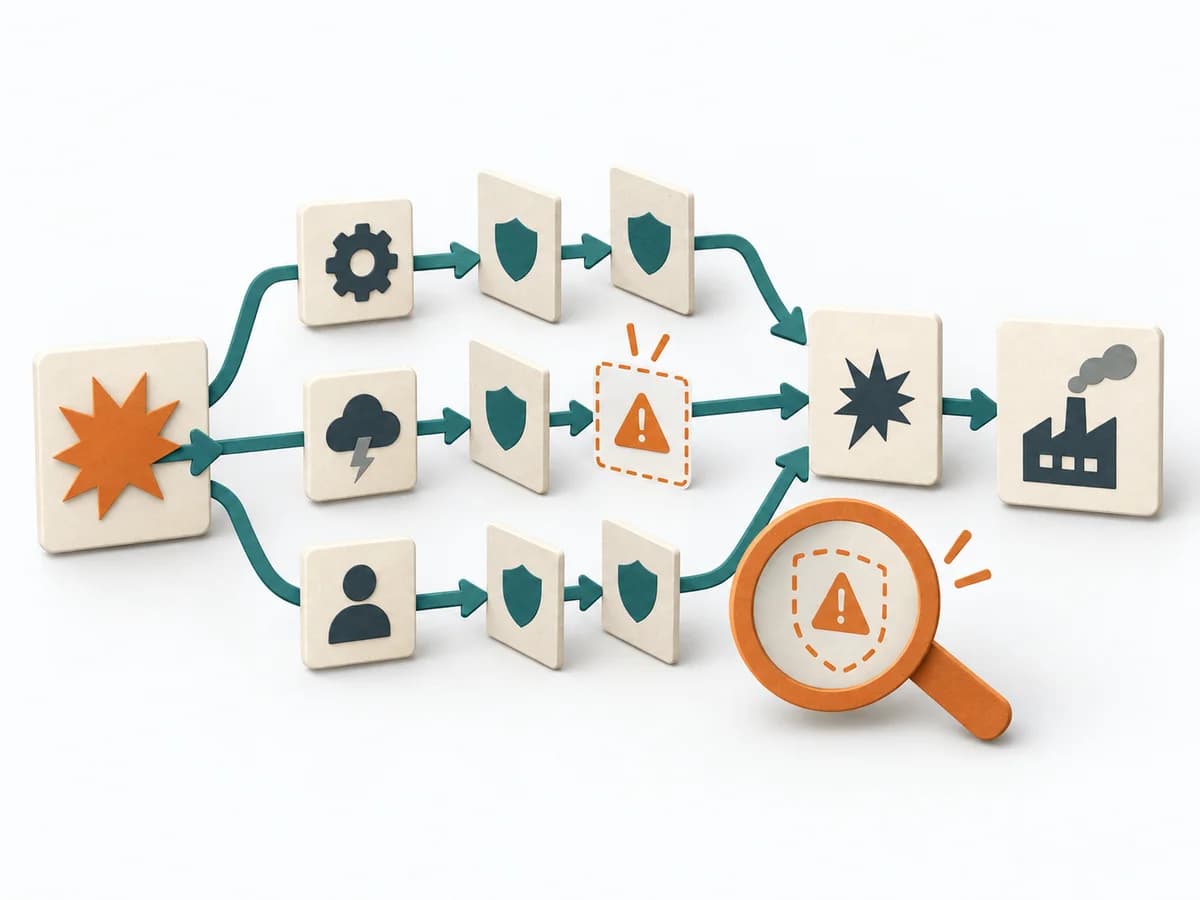 Engineering Failure Scenario Analysis |  Operations ALPEN Method |  Knowledge Modeling Concept Mapping |  Knowledge Modeling Knowledge Mapping |
|---|---|---|---|---|
Purposedifferent | In critical processes, it is not enough to plan only for the normal case. Failure Scenario Analysis looks at the path into failure and shows which failures, chains, and control gaps cause the most damage. | With an overloaded day full of too many tasks, a realistic picture of the day emerges. The method connects estimating, deciding, and buffer thinking so planning fits available energy and time. | Concept Mapping arranges terms and relationships in a network that makes subject-matter connections tangible. It fits when a topic needs to be understood structurally rather than linearly. | Knowledge Mapping makes knowledge, gaps, and transfer paths visible across a field. It fits when expertise should not just exist but also be findable and transferable. |
Complexitydifferent | Medium | Low | Medium | Medium |
Timedifferent | 1-3 h | 10-20 min daily | 1-2 h | 1-3 h |
Participantsdifferent | 3-8 | 1 | 1-8 | 3-12 |
Formatdifferent | Workshop | Async | Workshop + async | Workshop |
Outputdifferent | Failure Scenarios, Risk Notes, Control Gaps, Test and Response Actions | Daily Plan, Time Estimates, Review Notes | Concept Map, Relationship Labels, Knowledge Gaps | Knowledge Map, Critical Knowledge Areas, Transfer Plan |
Tagsno overlap | FailureResilienceRisk | PlanningTime managementProductivityOperations | KnowledgeConceptsMappingSensemaking | KnowledgeMappingRisk |