View methods side by side.
Choose up to four methods. Add them using the search and share the comparison by copying its link.
| Criterion |  Facilitation Expectation Mapping |  Facilitation Stakeholder Mapping |  Facilitation 1-2-4-All | 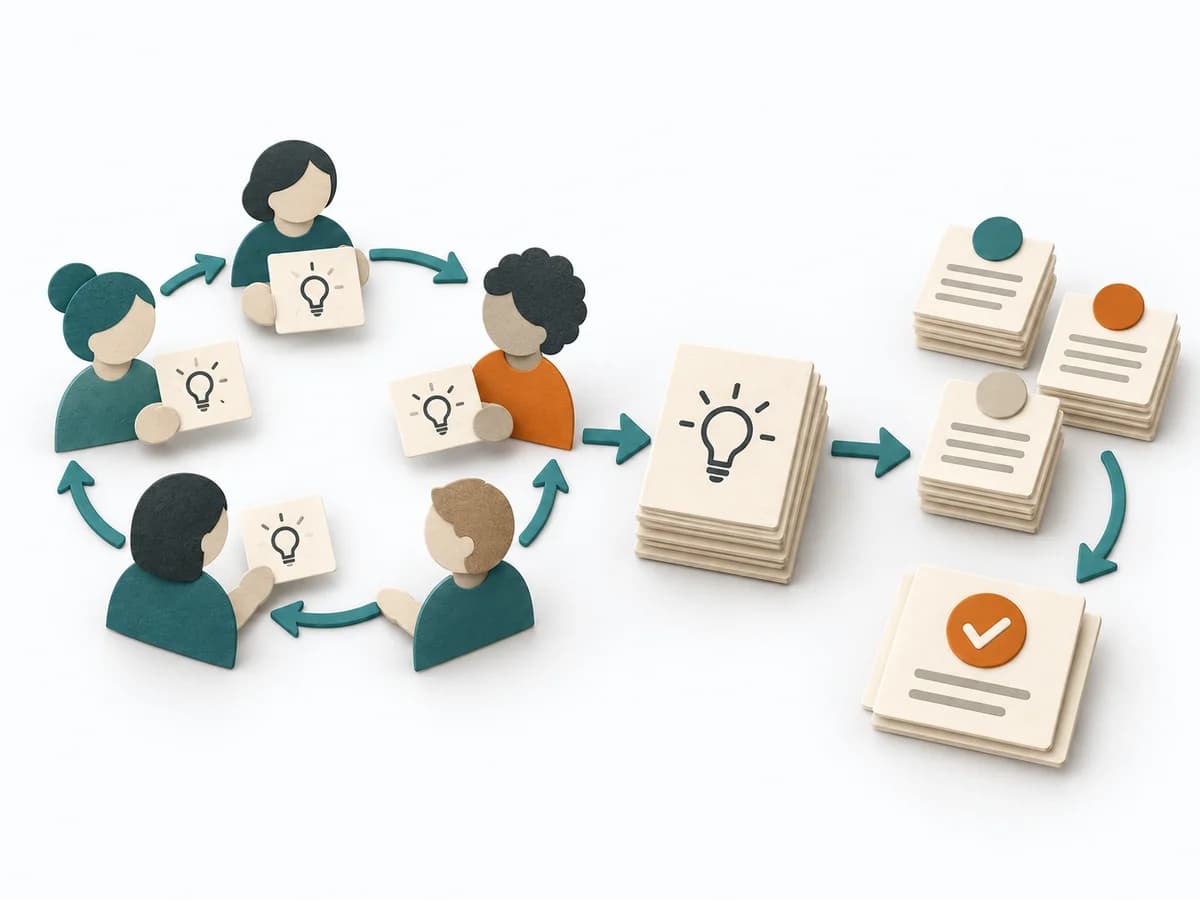 Innovation Round Robin Brainstorming |
|---|---|---|---|---|
Purposedifferent | When roles, interfaces, or projects fail because of differing expectations, Expectation Mapping surfaces these differences. It shows what each side takes for granted and where the pictures diverge. | When an initiative depends on many people, interests, and power dynamics, Stakeholder Mapping systematically orders the environment. It shows who influences, who is affected, and where relationship management or safeguarding matters first. | When many people in a group too rarely get to speak, 1-2-4-All distributes thinking time more fairly. The format builds participation step by step and makes quiet or still-unformed thoughts usable faster. | With unevenly distributed speaking time, the method brings every person into the contribution one after another. It prevents early voices from setting the direction while still producing a shared idea space. This makes participation plannable and the team's diversity visible. |
Complexitysame | Low | Low | Low | Low |
Timedifferent | 45-90 min | 60–90 min | 10-20 min | 20-45 min |
Participantsdifferent | 3-12 | 2-8 | 4-100+ | 4-10 |
Formatdifferent | Workshop | Workshop + async | Workshop | Workshop |
Outputdifferent | Expectation Map, Alignment Notes, Agreements | Stakeholder Map, Engagement Plan, Risk Notes | Idea List, Shared Insights, Emergent Themes | Idea List, Cluster, Shortlist |
Tagsno overlap | AlignmentStakeholdersTeam | StakeholdersAlignmentFacilitationChange | FacilitationInclusionIdeation | BrainstormingIdeationFacilitationInclusionCreativity |