View methods side by side.
Choose up to four methods. Add them using the search and share the comparison by copying its link.
| Criterion |  Facilitation Expectation Mapping | 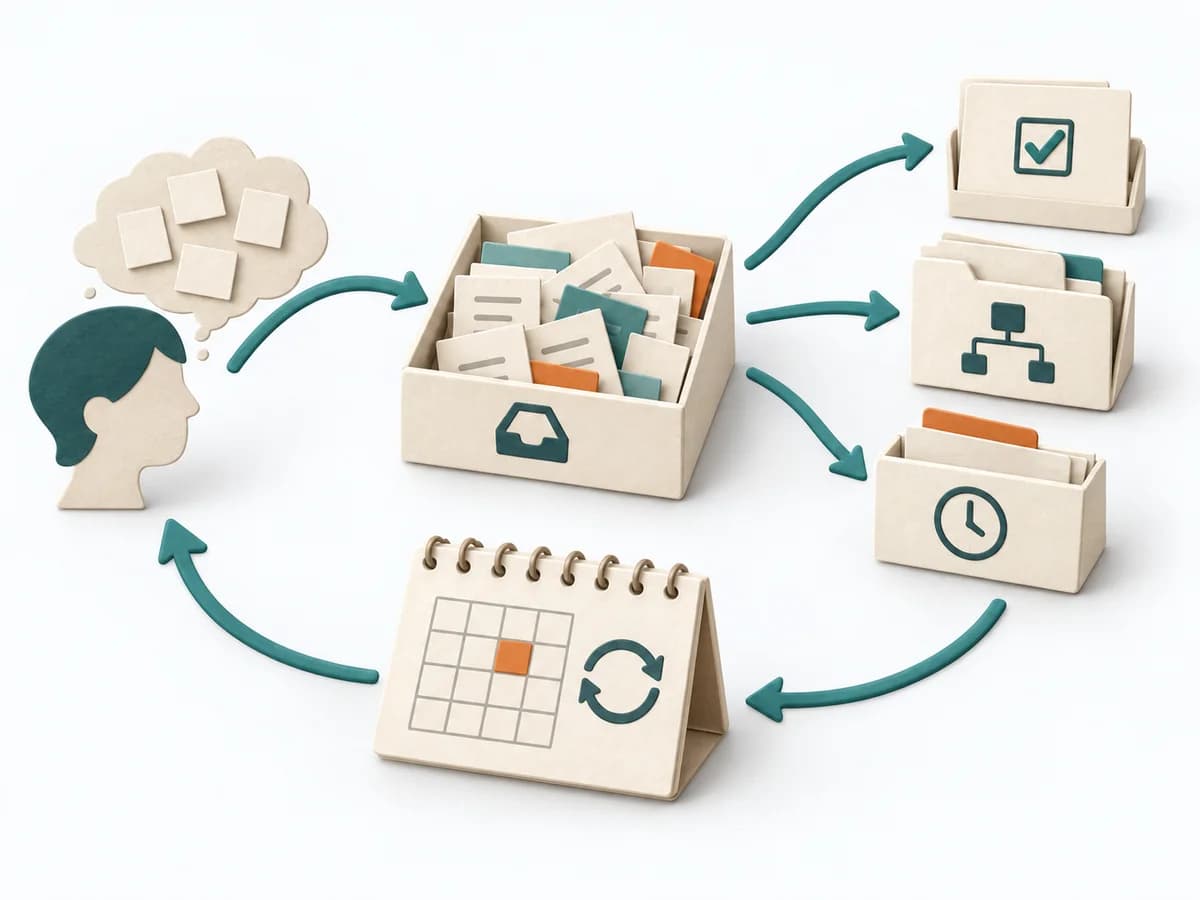 Operations Getting Things Done |  Operations Pomodoro Technique |  Facilitation Power Interest Grid |
|---|---|---|---|---|
Purposedifferent | When roles, interfaces, or projects fail because of differing expectations, Expectation Mapping surfaces these differences. It shows what each side takes for granted and where the pictures diverge. | With many open commitments and ideas in daily life, a reliable external storage system emerges. The method relieves the mind so priority and context don't have to compete in memory. | For easily distracted solo work, the method sets clear time boundaries for concentrated work. It protects attention when large tasks would otherwise fall apart into small avoidance moves. | When many stakeholders compete for attention at once, the Power Interest Grid sorts them by influence and stake. It turns individual contributions into a visible selection. The result is captured as a Power Interest Grid and a stakeholder-specific strategy. |
Complexitydifferent | Low | Medium | Low | Low |
Timedifferent | 45-90 min | 1-2 h Setup, laufend | 25 min Zyklen | 30-60 min |
Participantsdifferent | 3-12 | 1 | 1 | 2-8 |
Formatdifferent | Workshop | Async | Async | Workshop |
Outputdifferent | Expectation Map, Alignment Notes, Agreements | Action Lists, Project List, Review Routine | Focus Sessions, Task Progress, Interruption Notes | Power Interest Grid, Strategy per Stakeholder |
Tagsno overlap | AlignmentStakeholdersTeam | ProductivityPlanningTasksExecution | FocusTime managementProductivityExecution | StakeholdersFacilitationAlignmentPlanning |