View methods side by side.
Choose up to four methods. Add them using the search and share the comparison by copying its link.
| Criterion |  Domain Modeling EventStorming | 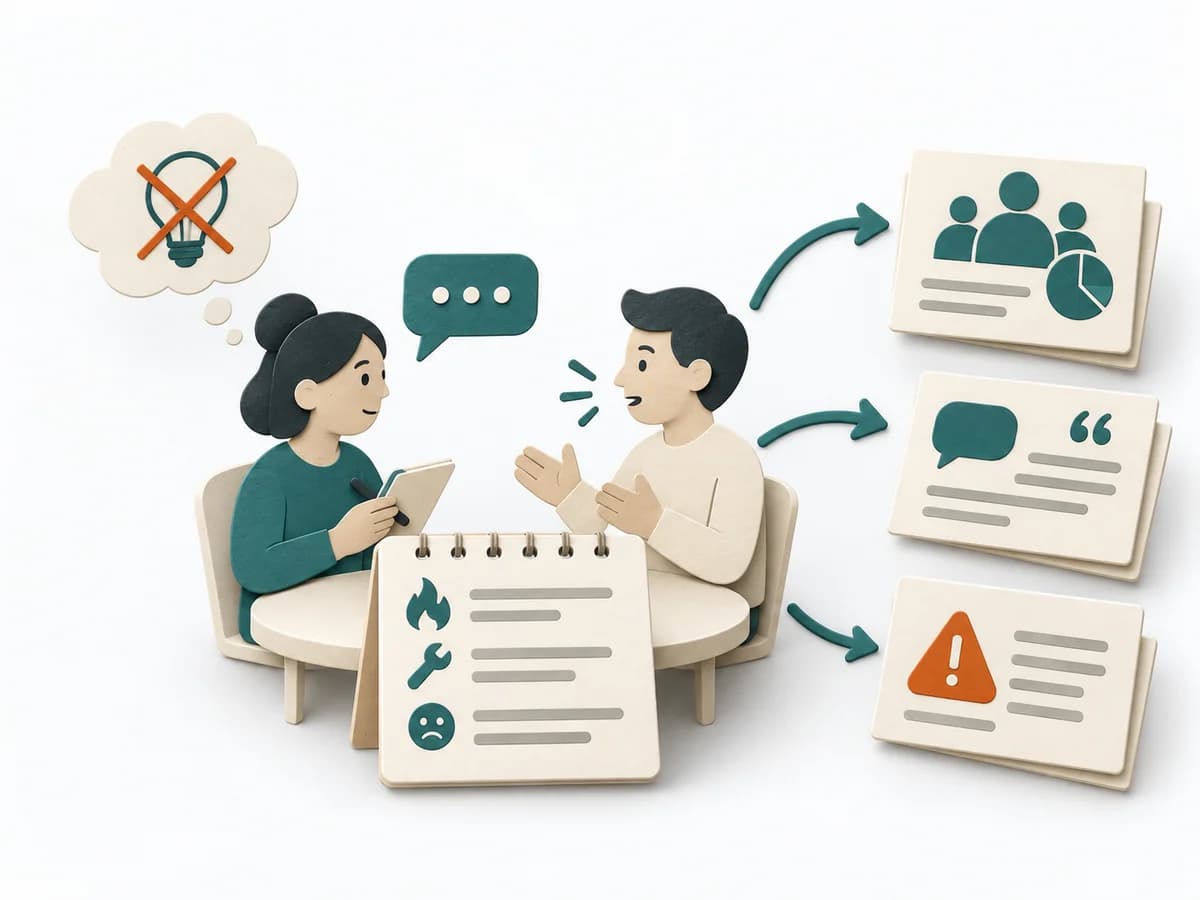 Product Discovery Problem Interview |  UX Research Affinity Diagramming | 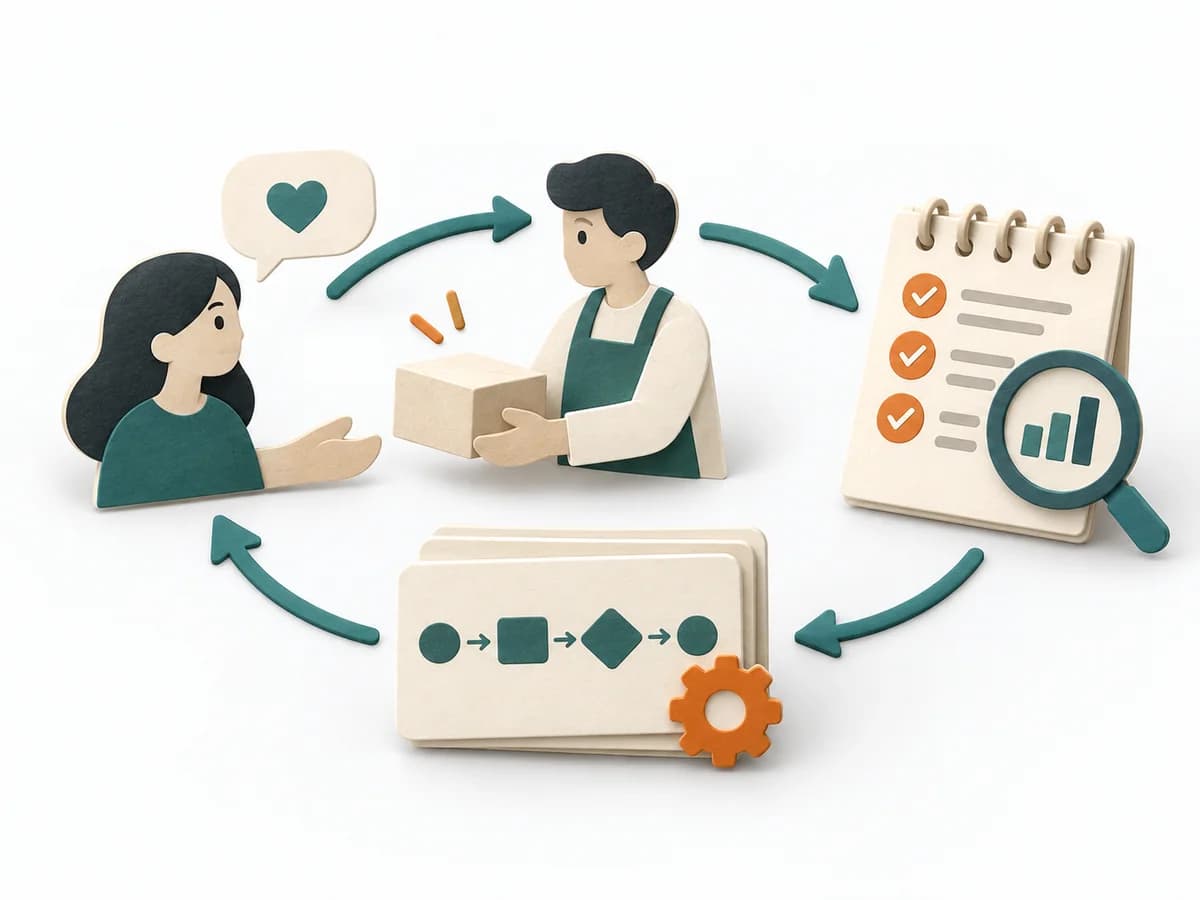 Product Discovery Concierge MVP |
|---|---|---|---|---|
Purposedifferent | When a domain consists of many events, rules, and states, it creates a shared modeling space for the team. It bundles language, flows, and boundaries before domain knowledge fragments into siloed views. | When the picture of the problem still needs to become solid, it asks about real situations and consequences. It separates genuine suffering from mere interest in a solution. | When research notes, feedback, or observations sit unconnected side by side, affinity diagramming sorts the raw material into solid themes. Many individual points turn into patterns that make decisions and opportunities clearer. | When an idea can first fail or grow through genuine hands-on support, it relies on manual work instead of automation. It shows whether user value holds up even under manual execution. |
Complexitydifferent | Medium | Medium | Low | Medium |
Timedifferent | 2-8 h | 30-60 min je Interview | 45–90 min | 1-4 Wochen |
Participantsdifferent | 5-12 | 5-12 Interviews | 3-10 | 3-10 Kunden |
Formatdifferent | Workshop | Workshop + async | Workshop | Workshop + async |
Outputdifferent | Event Timeline, Ubiquitous Language, Boundaries, Open Questions | Problem Evidence, Risk Notes, Customer Segments | Theme clusters, Insight statements, Opportunity areas | Concierge Learnings, Service Blueprint, MVP Risks |
Tagsno overlap | Domain-Driven DesignEventsDiscoveryWorkshop | DiscoveryInterviewsValidation | SynthesisQualitativeRoot cause | MVPValidationServiceDiscovery |