View methods side by side.
Choose up to four methods. Add them using the search and share the comparison by copying its link.
| Criterion |  Domain Modeling EventStorming |  Operations Pomodoro Technique | 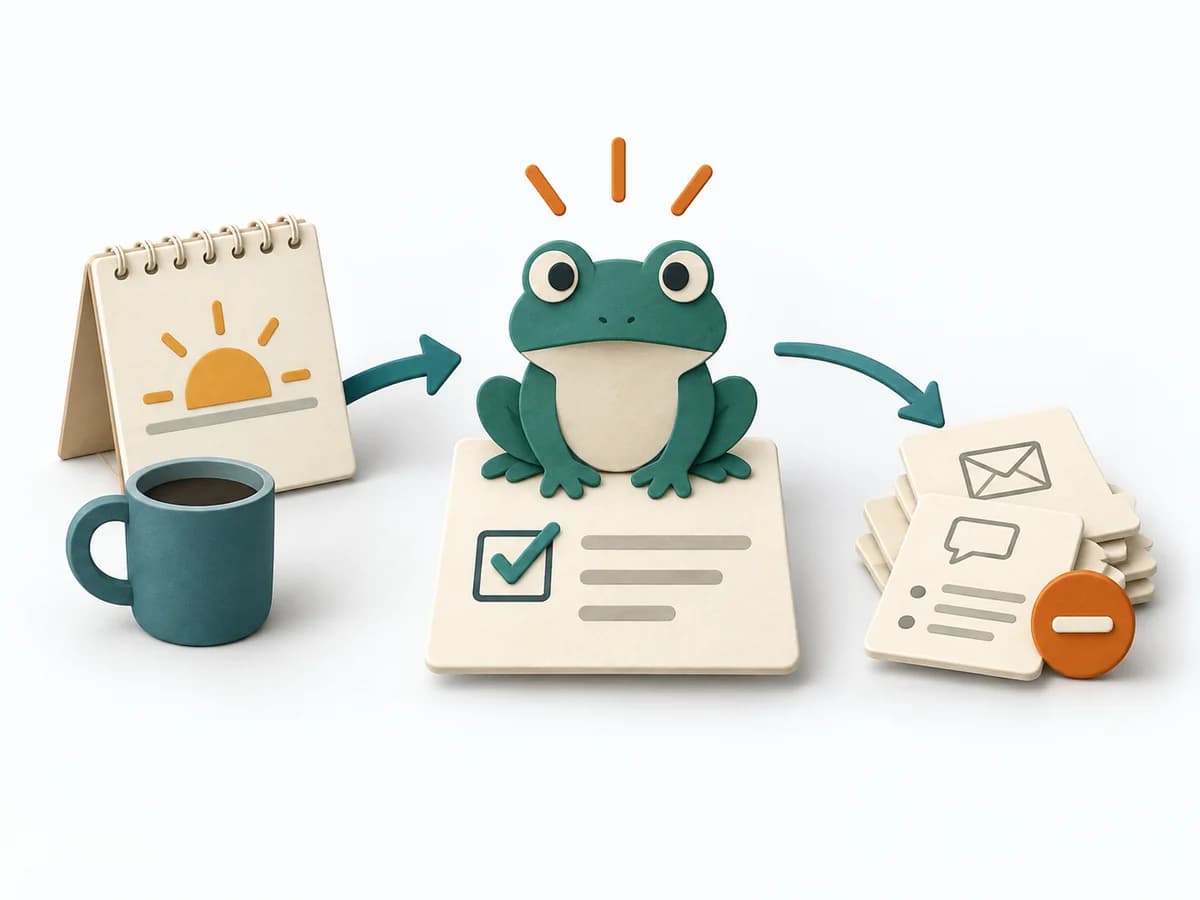 Operations Eat the Frog |  Operations Ivy Lee Method |
|---|---|---|---|---|
Purposedifferent | When a domain consists of many events, rules, and states, it creates a shared modeling space for the team. It bundles language, flows, and boundaries before domain knowledge fragments into siloed views. | For easily distracted solo work, the method sets clear time boundaries for concentrated work. It protects attention when large tasks would otherwise fall apart into small avoidance moves. | The method protects energy and attention for the task that creates the largest progress and is often postponed. | With a restless workday full of too many open items, the method creates radical simplicity. It directs attention to a short sequence instead of a broad, still-open field. |
Complexitydifferent | Medium | Low | Low | Low |
Timedifferent | 2-8 h | 25 min Zyklen | 15-90 min daily | 5-10 min daily |
Participantsdifferent | 5-12 | 1 | 1 | 1 |
Formatdifferent | Workshop | Async | Async | Async |
Outputdifferent | Event Timeline, Ubiquitous Language, Boundaries, Open Questions | Focus Sessions, Task Progress, Interruption Notes | Priority Task, Completion Note, Daily Focus | Daily Priority List, Completion Notes |
Tagsno overlap | Domain-Driven DesignEventsDiscoveryWorkshop | FocusTime managementProductivityExecution | PrioritizationProductivityFocusExecution | PrioritizationProductivityExecution |