View methods side by side.
Choose up to four methods. Add them using the search and share the comparison by copying its link.
| Criterion | 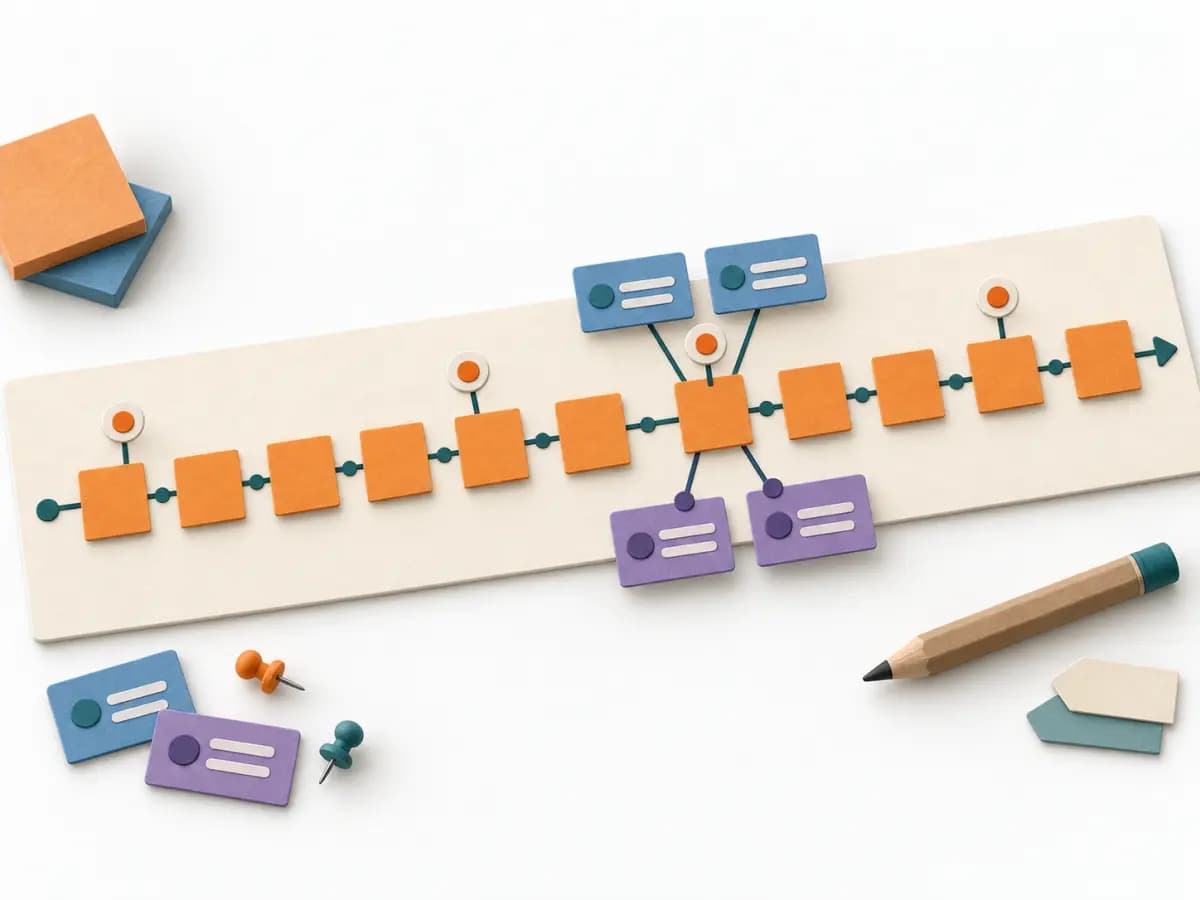 Domain Modeling EventStorming | 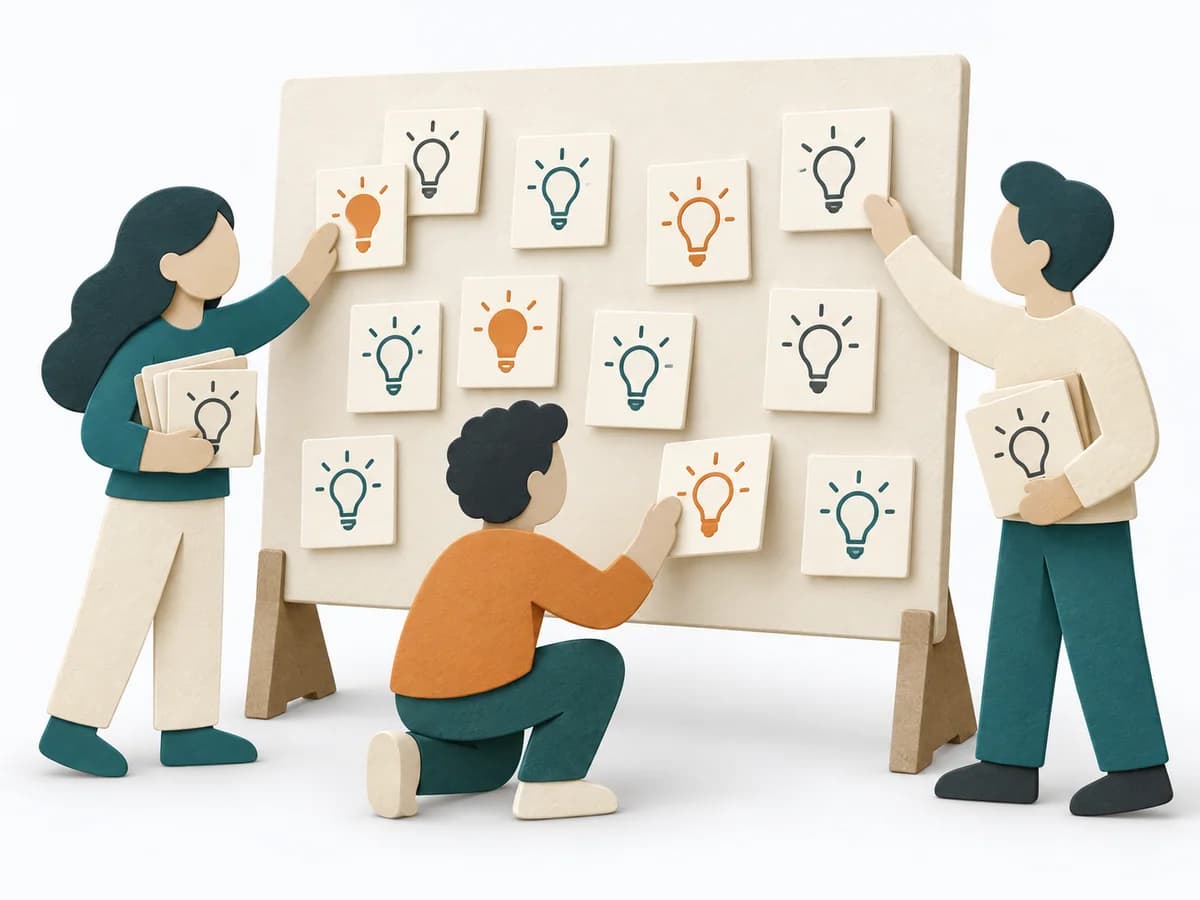 Innovation Brainstorming | 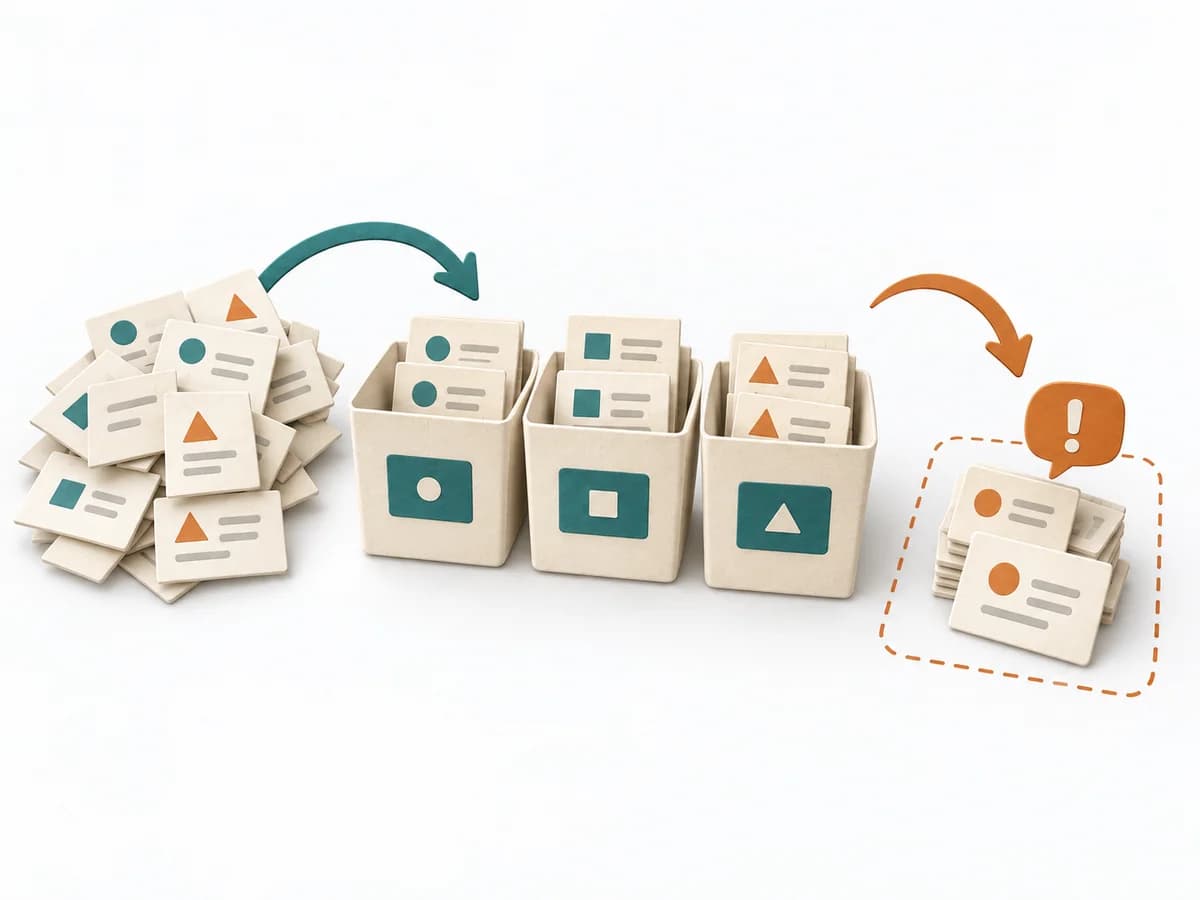 Agile Bucket System | 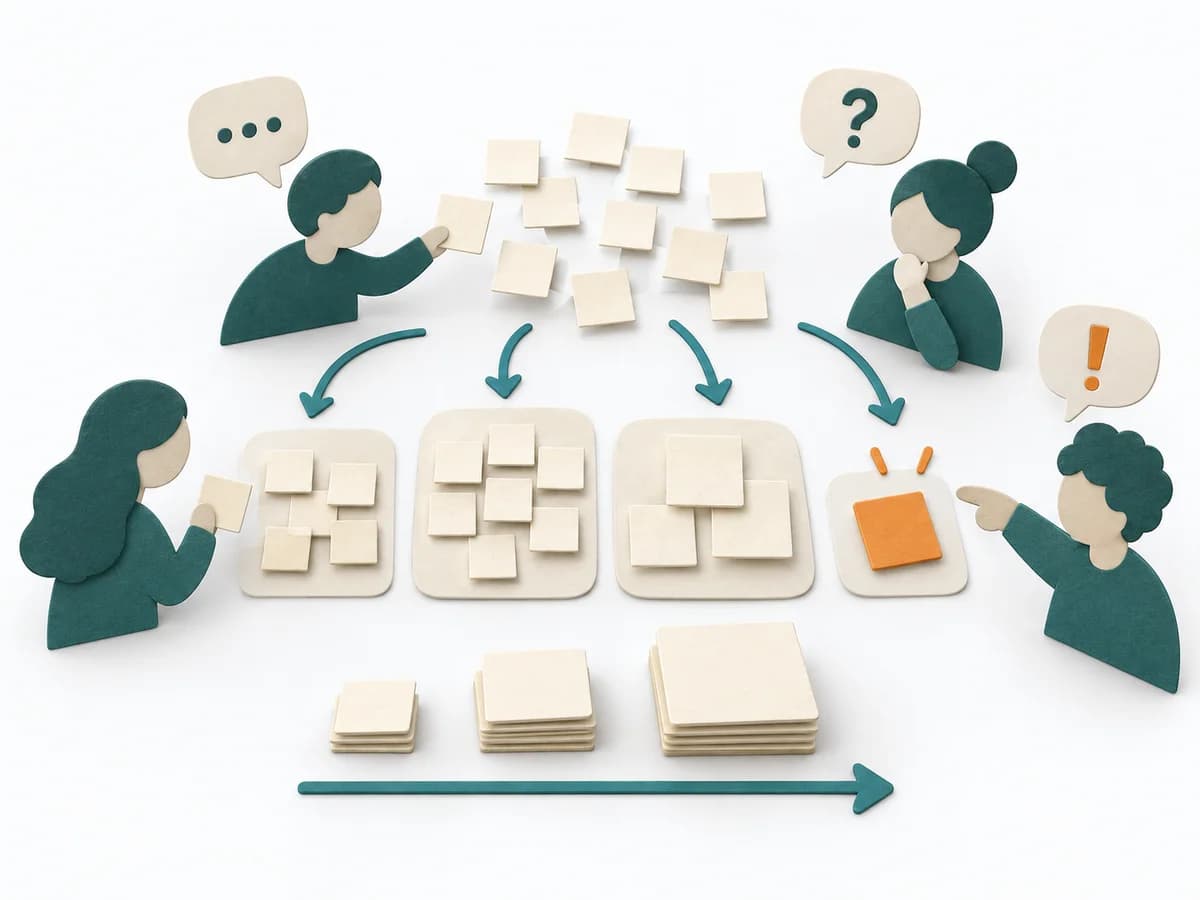 Agile Affinity Estimation |
|---|---|---|---|---|
Purposedifferent | When a domain consists of many events, rules, and states, it creates a shared modeling space for the team. It bundles language, flows, and boundaries before domain knowledge fragments into siloed views. | When a team faces an open question with many obvious directions, the method first creates breadth instead of premature commitment. It separates idea flow from evaluation and makes lines of thought visible, creating a pool for selection and further development. | When a large batch of work needs a fast, rough estimate, it sorts items into predefined size buckets. It sorts work by value, risk, and delivery ability. The result is captured as a Bucketed Backlog, Relative Estimates, and Split Candidates. | When many tasks need to be classified quickly, it sorts them by perceived effort and similarity. It reduces the effort of fine-grained estimation for large volumes. |
Complexitydifferent | Medium | Low | Medium | Medium |
Timedifferent | 2-8 h | 30-60 min | 30-90 min | 30-90 min |
Participantsdifferent | 5-12 | 4-12 | 3-12 | 3-12 |
Formatsame | Workshop | Workshop | Workshop | Workshop |
Outputdifferent | Event Timeline, Ubiquitous Language, Boundaries, Open Questions | Idea pool, Theme clusters, Shortlist | Bucketed Backlog, Relative Estimates, Split Candidates | Affinity Size Map, Grouped Estimates, Unclear Items |
Tagsno overlap | Domain-Driven DesignEventsDiscoveryWorkshop | BrainstormingIdeationCreativityWorkshopDivergence | EstimationBacklogRelative sizing | EstimationBacklogRelative sizing |