View methods side by side.
Choose up to four methods. Add them using the search and share the comparison by copying its link.
| Criterion | 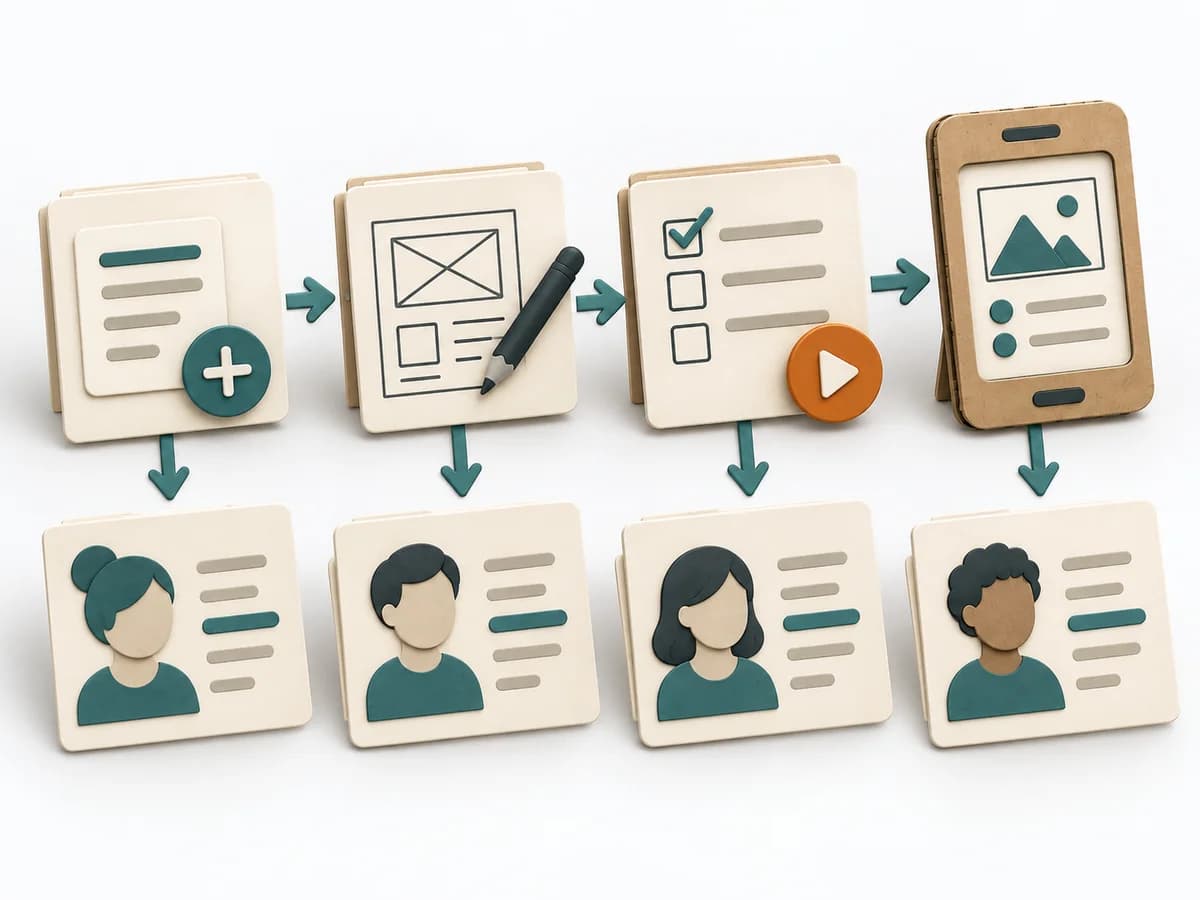 Knowledge Modeling Event Modeling | 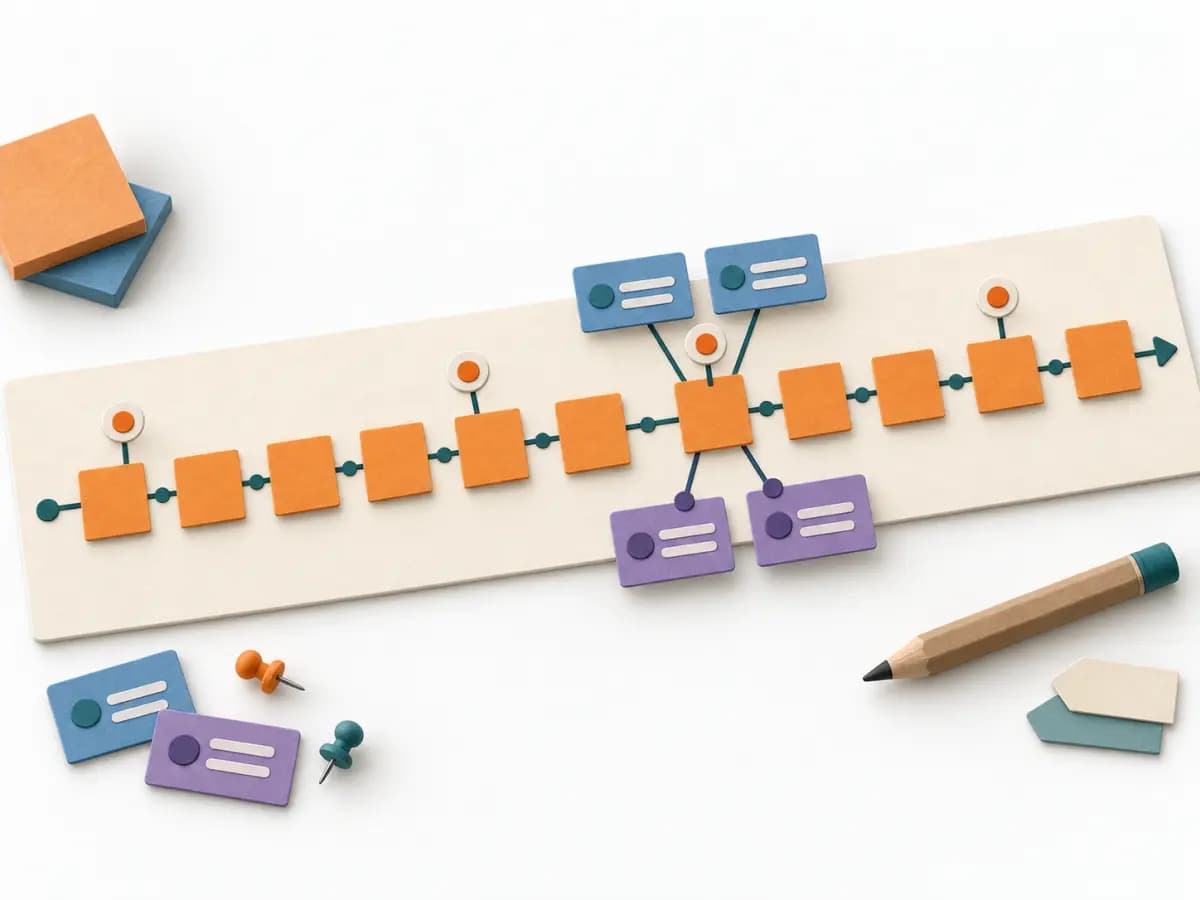 Domain Modeling EventStorming | 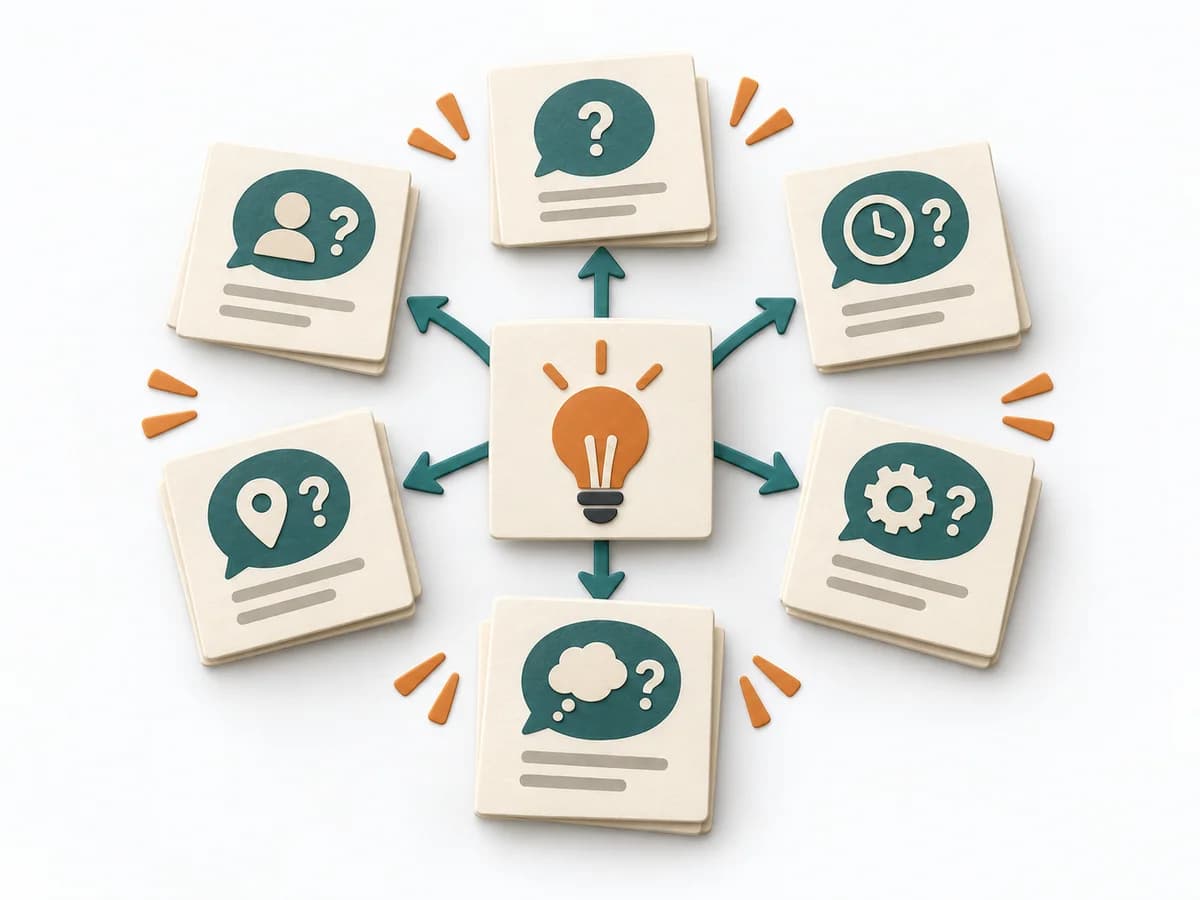 Innovation Starbursting | 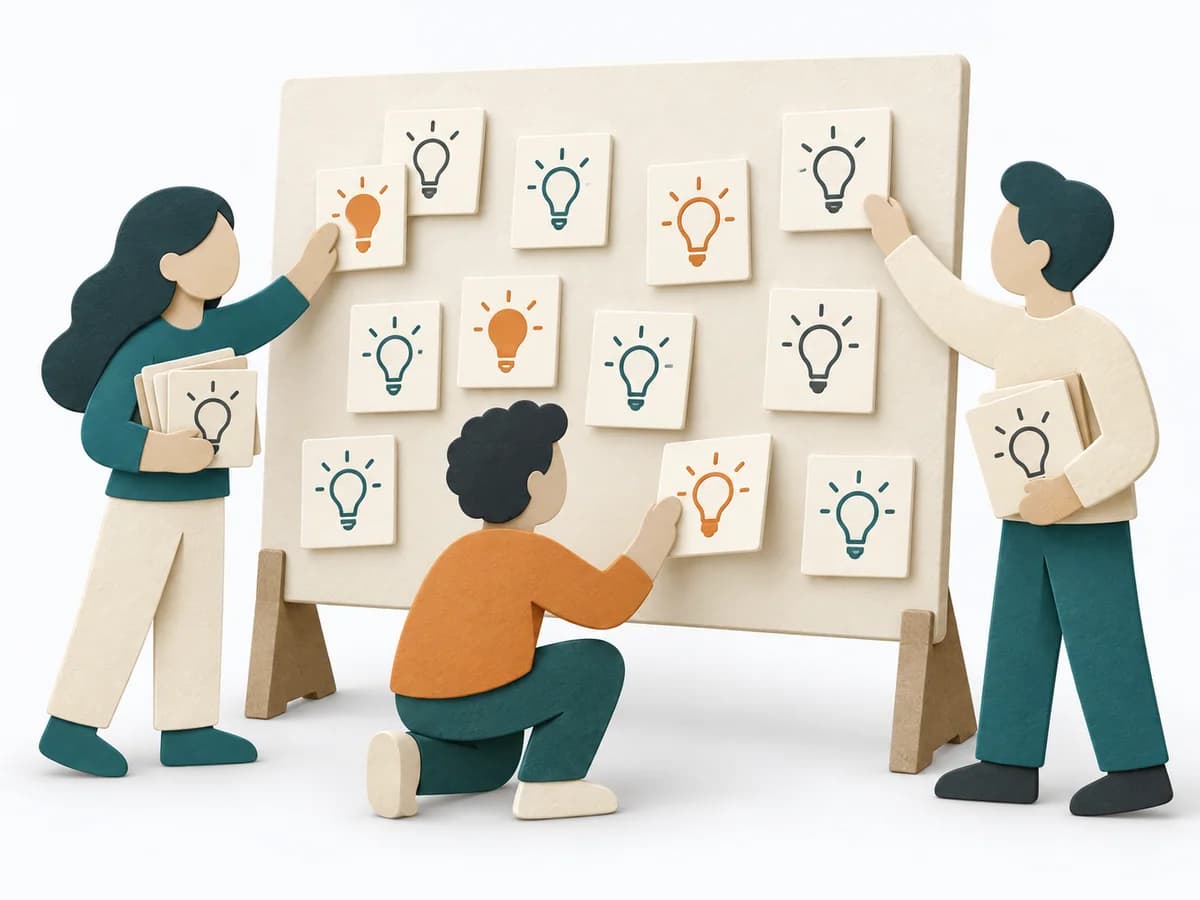 Innovation Brainstorming |
|---|---|---|---|---|
Purposedifferent | Event Modeling connects business workflows with commands, events, and views into one coherent mental model. It helps design behavior, UI, and technical slices from the same underlying logic. | When a domain consists of many events, rules, and states, it creates a shared modeling space for the team. It bundles language, flows, and boundaries before domain knowledge fragments into siloed views. | Helps clarify ideas, open questions, and testable next steps in concrete terms. It opens the thinking space, collects ideas, and leads to testable options. The result is captured as a star-shaped question map, question list, and assumption list. | When a team faces an open question with many obvious directions, the method first creates breadth instead of premature commitment. It separates idea flow from evaluation and makes lines of thought visible, creating a pool for selection and further development. |
Complexitydifferent | Medium | Medium | Low | Low |
Timedifferent | 2-6 h | 2-8 h | 30-60 min | 30-60 min |
Participantsdifferent | 2-8 | 5-12 | 3-10 | 4-12 |
Formatdifferent | Workshop + async | Workshop | Workshop + async | Workshop |
Outputdifferent | Event Model, UI Flow, Commands, Read Models | Event Timeline, Ubiquitous Language, Boundaries, Open Questions | Star-Shaped Question Map, Question List, Assumption List | Idea pool, Theme clusters, Shortlist |
Tagsno overlap | EventsBlueprintDomain-Driven DesignBehavior | Domain-Driven DesignEventsDiscoveryWorkshop | BrainstormingIdeationWorkshopDiscovery | BrainstormingIdeationCreativityWorkshopDivergence |