View methods side by side.
Choose up to four methods. Add them using the search and share the comparison by copying its link.
| Criterion | 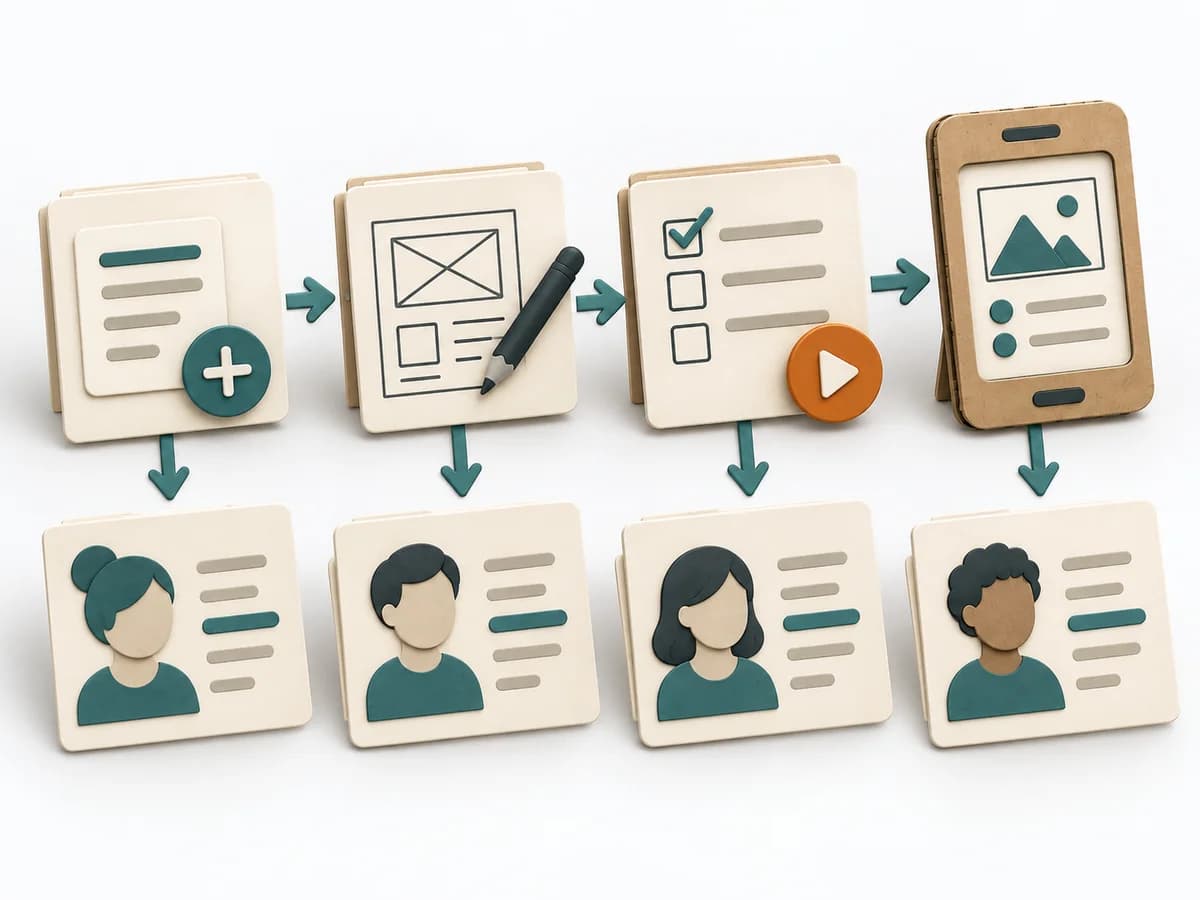 Knowledge Modeling Event Modeling | 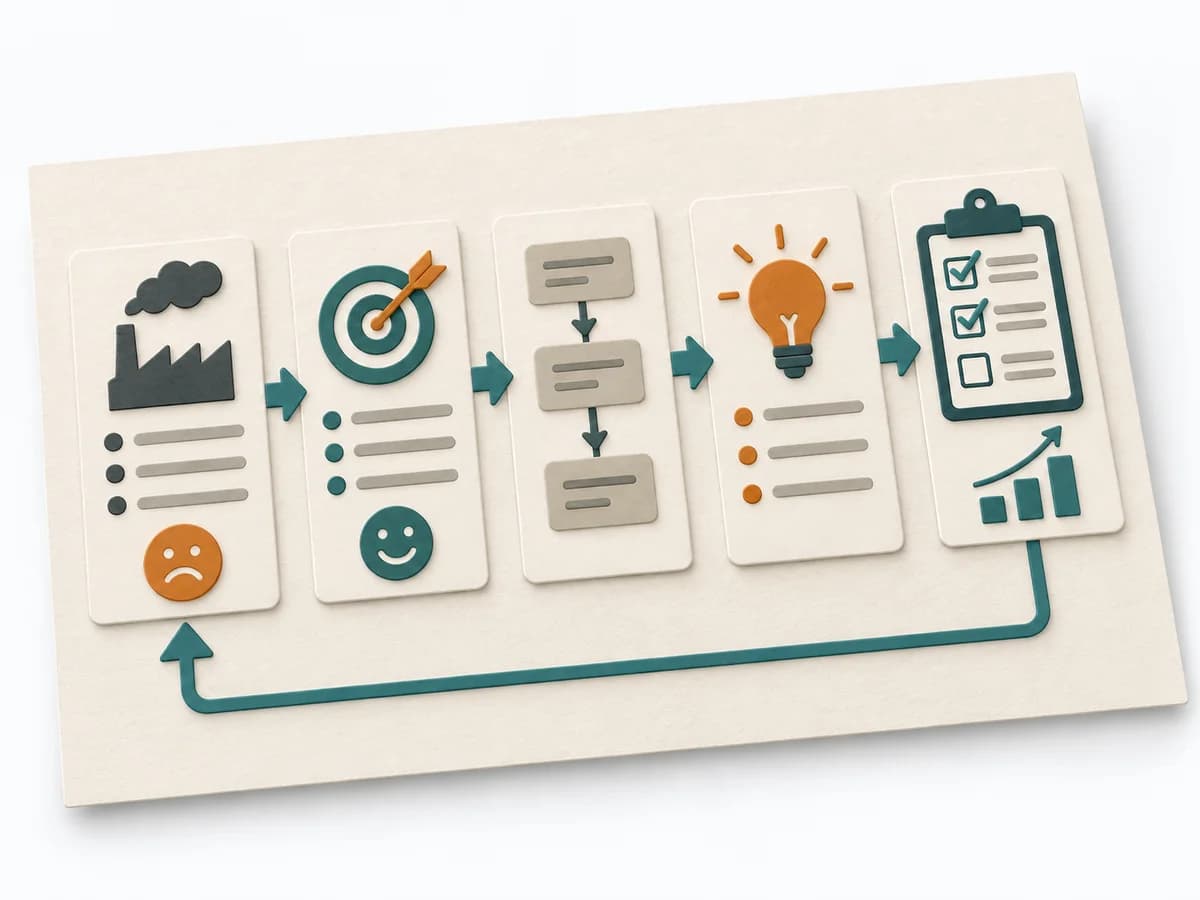 Operations A3 Problem Solving | 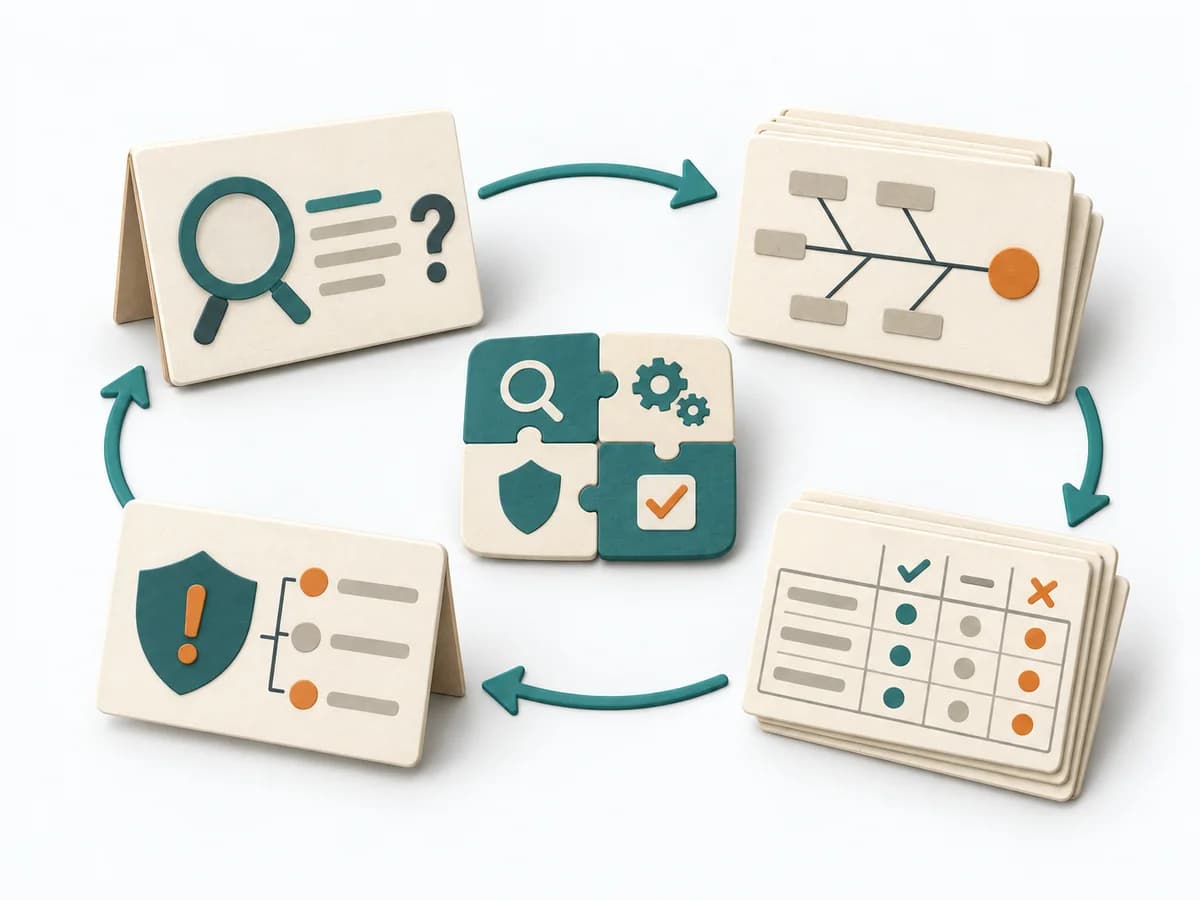 Operations Kepner-Tregoe | 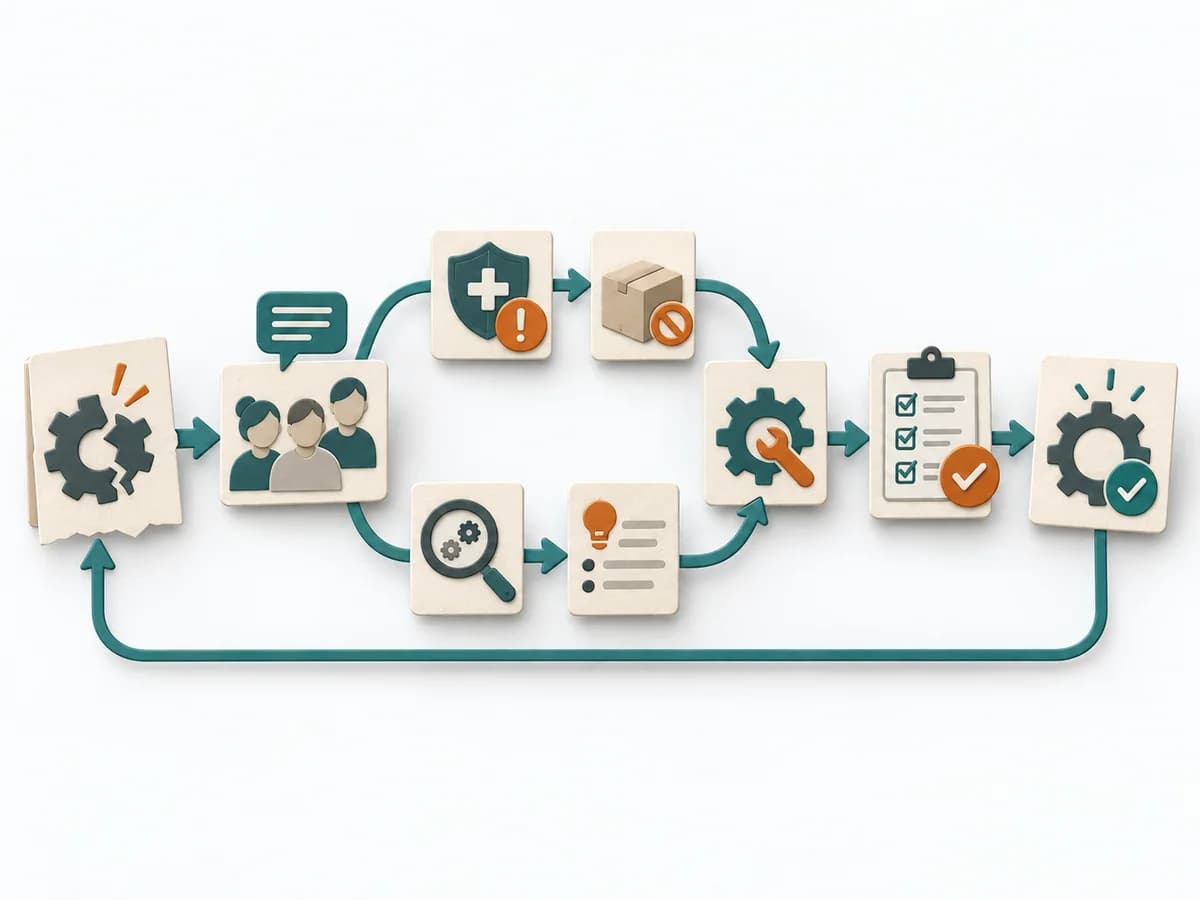 Operations 8D Problem Solving |
|---|---|---|---|---|
Purposedifferent | Event Modeling connects business workflows with commands, events, and views into one coherent mental model. It helps design behavior, UI, and technical slices from the same underlying logic. | For a complex deviation with several people involved, the method bundles problem, analysis, and decision onto one page. It creates a shared working space where causes, countermeasures, and follow-up fit together. | For a disturbance that's hard to pin down, the method cleanly separates problem, cause, and decision. It reduces mixing when symptoms allow several interpretations. | For an acute quality or delivery problem, the method structures immediate protection and root cause work together. It keeps the situation stable while the actual cause is investigated cleanly. |
Complexitydifferent | Medium | Medium | High | High |
Timedifferent | 2-6 h | 45-90 min | 2-8 h | 1-6 Wochen |
Participantsdifferent | 2-8 | 2-5 | 2-8 | 4-10 |
Formatsame | Workshop + async | Workshop + async | Workshop + async | Workshop + async |
Outputdifferent | Event Model, UI Flow, Commands, Read Models | A3 Report, Action Plan, Root Cause Analysis | Problem Analysis, Decision Analysis, Risk Plan | 8D Report, Containment Plan, Root Cause Evidence, Corrective Action Plan |
Tagsno overlap | EventsBlueprintDomain-Driven DesignBehavior | LeanProblem solvingCoachingOperations | Problem solvingRoot causeDecisionOperations | QualityProblem solvingRoot cause |