View methods side by side.
Choose up to four methods. Add them using the search and share the comparison by copying its link.
| Criterion |  Knowledge Modeling Event Modeling | 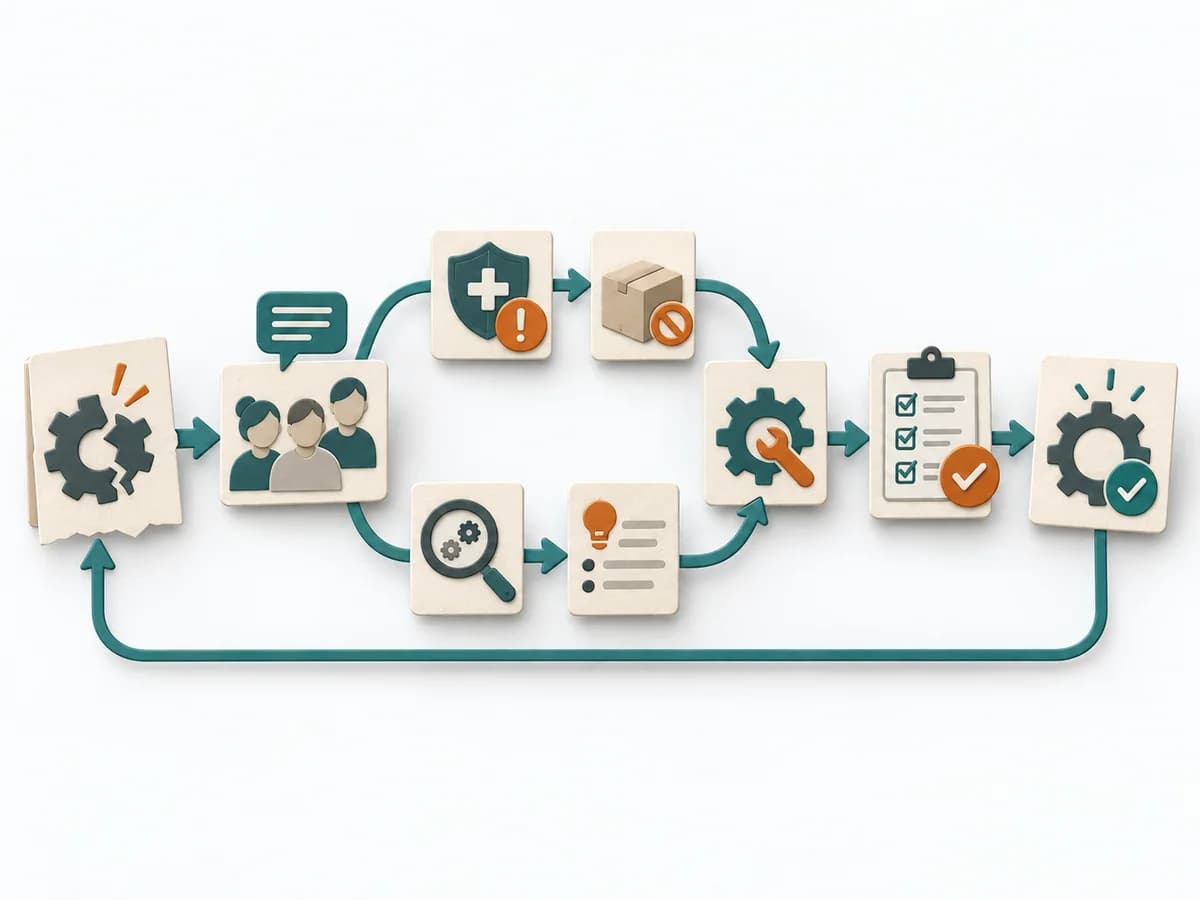 Operations 8D Problem Solving | 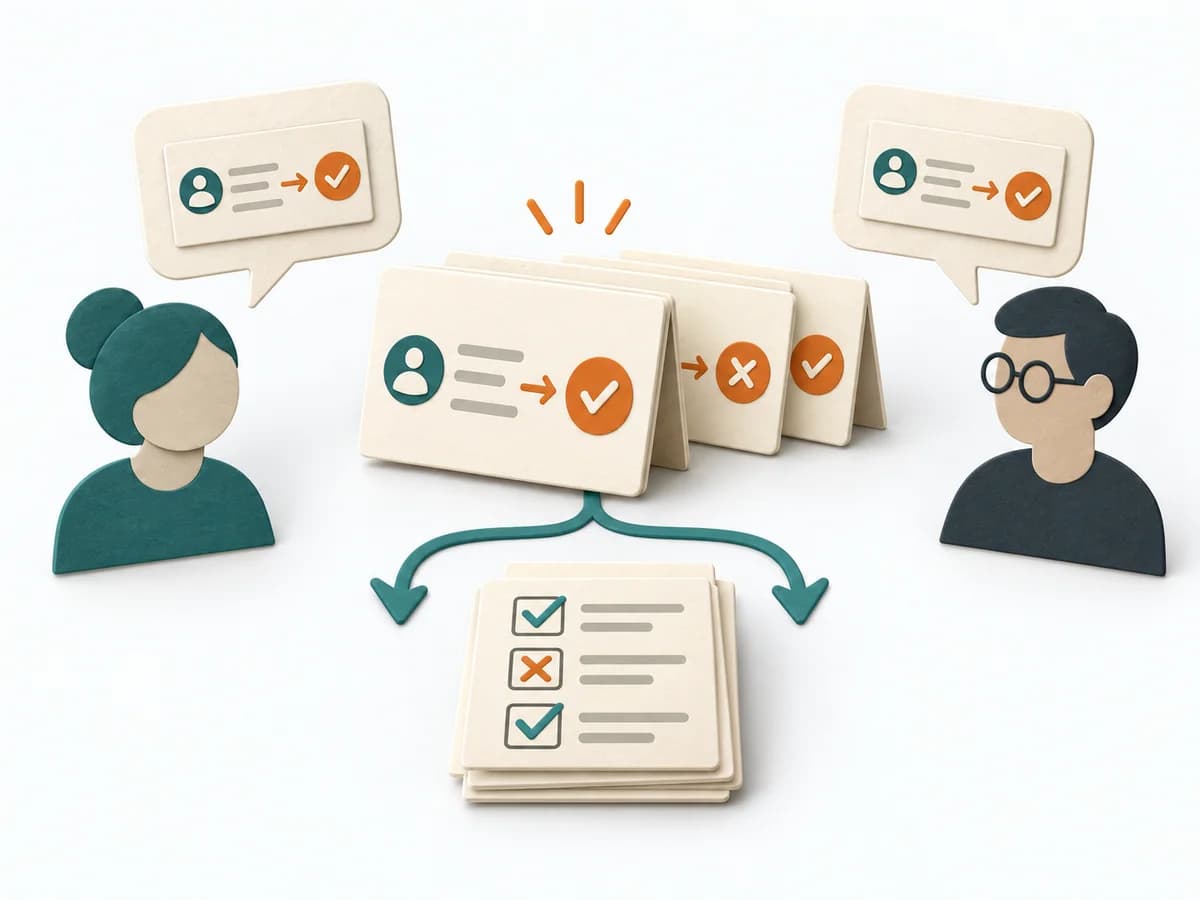 Agile Specification by Example | 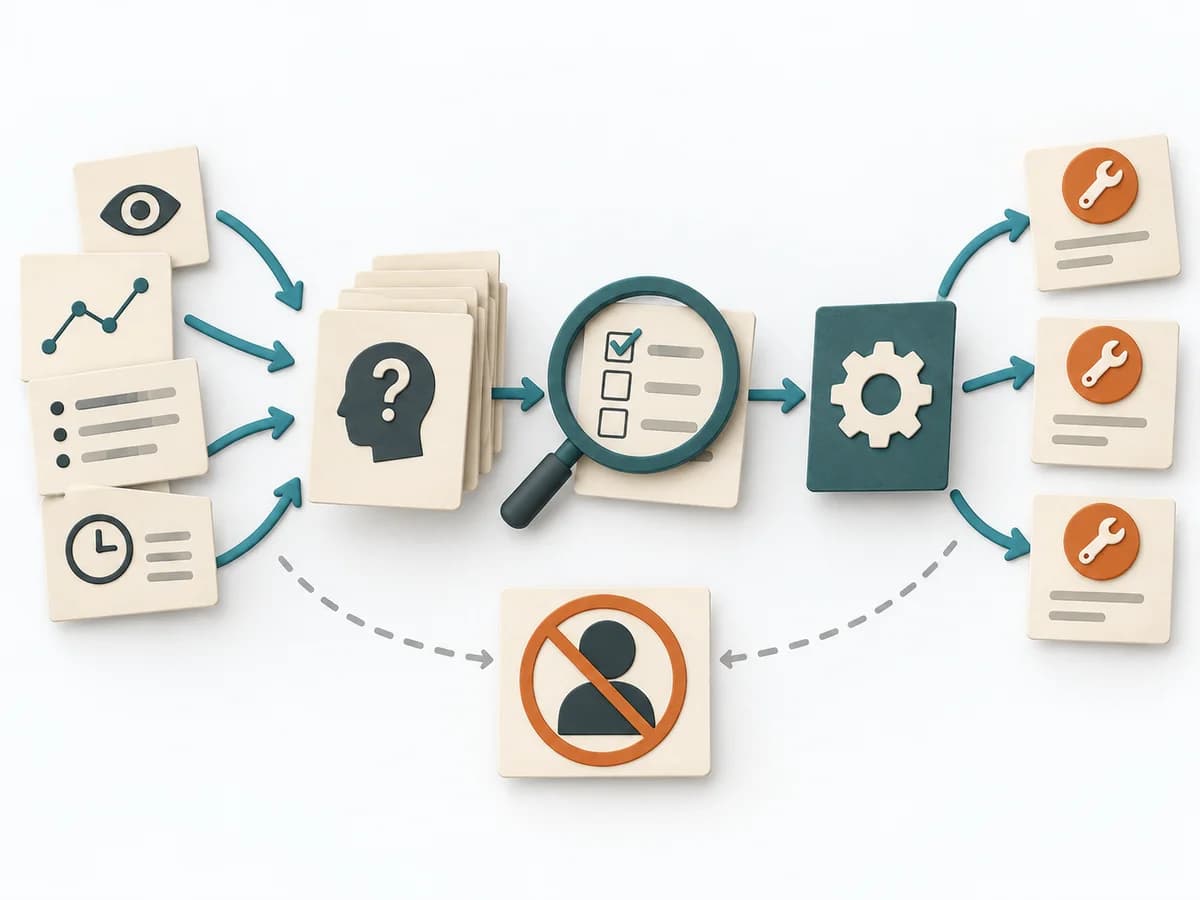 Operations Root Cause Analysis |
|---|---|---|---|---|
Purposedifferent | Event Modeling connects business workflows with commands, events, and views into one coherent mental model. It helps design behavior, UI, and technical slices from the same underlying logic. | For an acute quality or delivery problem, the method structures immediate protection and root cause work together. It keeps the situation stable while the actual cause is investigated cleanly. | When business rules need to become precise, it ties language, example, and test together. It sorts work by value, risk, and delivery ability. The result is captured as an Example Table and Acceptance Tests. | When a problem keeps recurring and the cause stays unclear, the method exposes the underlying mechanism. It separates symptom, guess, and robust explanation from one another. |
Complexitydifferent | Medium | High | Medium | Medium |
Timedifferent | 2-6 h | 1-6 Wochen | 60-90 min pro Feature | 1-4 h |
Participantsdifferent | 2-8 | 4-10 | 3-6 | 3-8 |
Formatdifferent | Workshop + async | Workshop + async | Workshop | Workshop + async |
Outputdifferent | Event Model, UI Flow, Commands, Read Models | 8D Report, Containment Plan, Root Cause Evidence, Corrective Action Plan | Example Table, Acceptance Tests | Problem Statement, Cause Hypotheses, Confirmed Causes, Action Plan |
Tagsno overlap | EventsBlueprintDomain-Driven DesignBehavior | QualityProblem solvingRoot cause | AgileRequirementsExamplesBehavior-Driven Development | Root causeProblem solvingQualityIncident |