View methods side by side.
Choose up to four methods. Add them using the search and share the comparison by copying its link.
| Criterion |  UX Research Empathy Mapping | 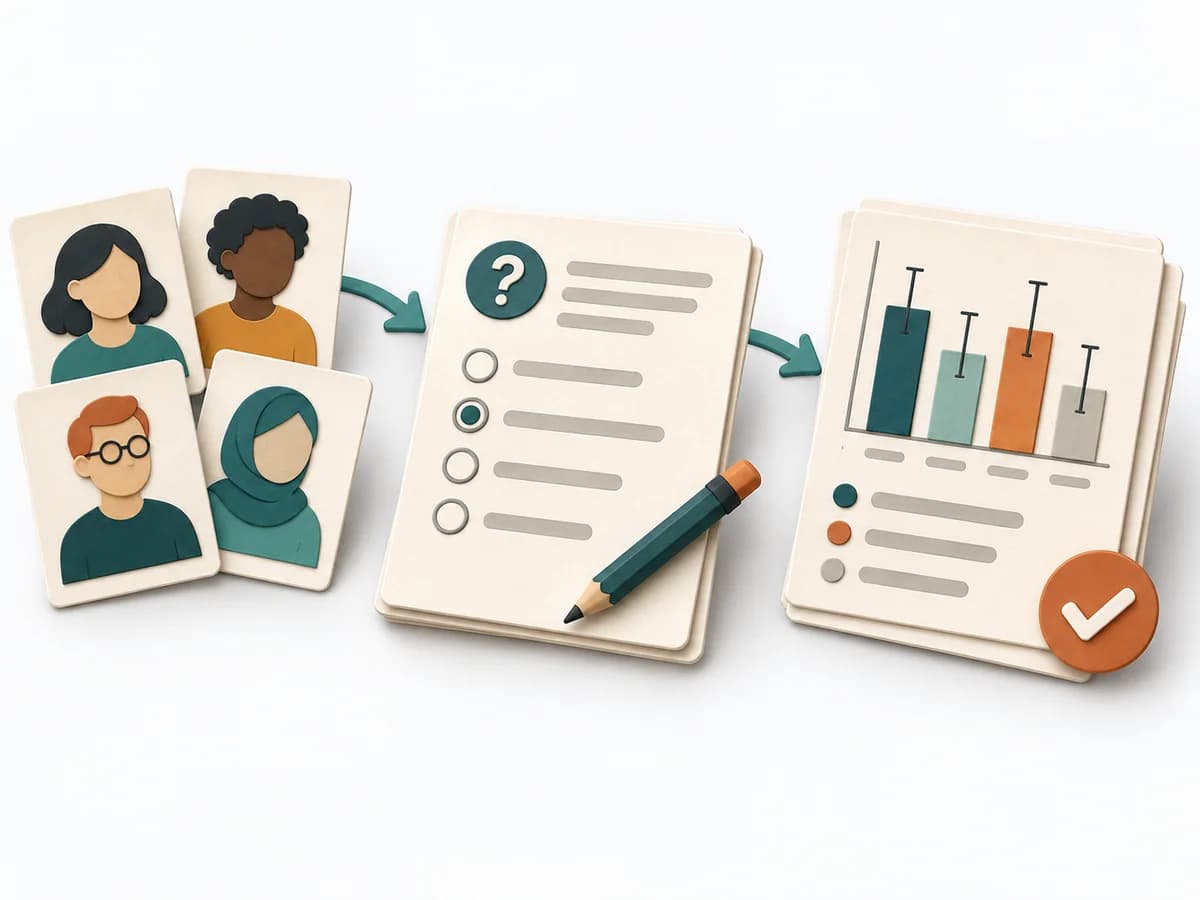 UX Research Surveys |  UX Research Personas |  Product Discovery Outcome-Driven Innovation |
|---|---|---|---|---|
Purposedifferent | When a lot is assumed about a target group but little is seen jointly, empathy mapping makes knowledge and gaps directly comparable. The picture also shows which assumptions hold up and where evidence is missing. | When a topic needs to be validated broadly and many people can answer the same question, surveys gather structured feedback in a scalable form. Answers become comparable and segmentable instead of remaining merely anecdotal. | When target groups stay too vague and teams talk about the same people differently, personas create a shared, solid picture of usage. Condensed profiles make needs, contexts, and differences tangible enough for decisions. | Outcome-Driven Innovation clarifies customer problems, solution opportunities, and evidence. It separates jobs, desired outcomes, importance, satisfaction, and opportunity, and captures results as desired outcome statements, an opportunity landscape, and segments by underserved needs. |
Complexitydifferent | Low | Medium | Medium | High |
Timedifferent | 30–60 min | 3-14 Tage | 1-3 Tage | Mehrere Wochen |
Participantsdifferent | 4-8 | 50+ | Internes Team | 2-6 researchers plus sample |
Formatdifferent | Workshop | Async | Workshop + async | Workshop + async |
Outputdifferent | Empathy Map, Assumptions List, Research Gaps | Survey Results, Charts, Segment Insights | Persona Profiles, Needs Summary, Scenario Notes | Desired outcome statements, Opportunity landscape, Segmentation by underserved needs, Innovation hypotheses |
Tagsno overlap | SynthesisQualitativeWorkshop | QuantitativeResearchValidation | ResearchCustomerSynthesis | OutcomesInnovationResearchQuantitative |