View methods side by side.
Choose up to four methods. Add them using the search and share the comparison by copying its link.
| Criterion |  UX Research Empathy Mapping |  Facilitation Six Thinking Hats |  Facilitation Alignment Mapping | 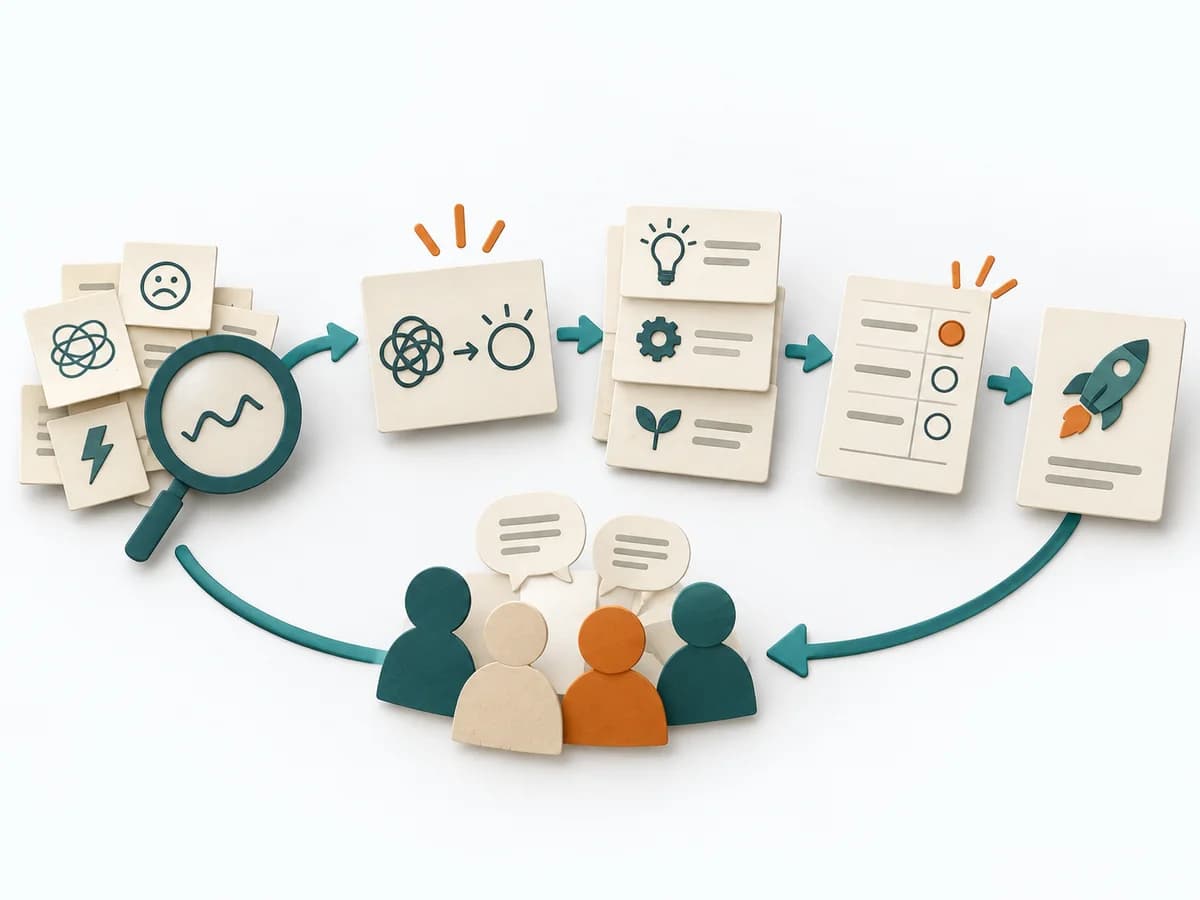 Facilitation Decision Jam |
|---|---|---|---|---|
Purposedifferent | When a lot is assumed about a target group but little is seen jointly, empathy mapping makes knowledge and gaps directly comparable. The picture also shows which assumptions hold up and where evidence is missing. | When a topic gets stuck too quickly in the same thinking mode, Six Thinking Hats deliberately separates the perspectives. This means facts, risks, creativity, and emotional signals get worked through one after another instead of mixed together. | When several people work toward one goal but hold different mental maps, Alignment Mapping makes the discrepancies visible. It arranges goals, assumptions, and priorities so shared direction becomes verifiable. | When a decision is stuck, Decision Jam loosens the knot through structured separation of problem, idea, and selection. The format creates movement without jumping prematurely at the first seemingly elegant answer. |
Complexitydifferent | Low | Medium | Medium | Low |
Timedifferent | 30–60 min | 45-90 min | 1-2 h | 60-90 min |
Participantsdifferent | 4-8 | 4-12 | 4-12 | 4-10 |
Formatsame | Workshop | Workshop | Workshop | Workshop |
Outputdifferent | Empathy Map, Assumptions List, Research Gaps | Perspective Notes, Decision Inputs, Action Items | Alignment Map, Open Issues, Decision Questions | Problem Cluster, Prioritized Challenge, Experiment |
Tagsno overlap | SynthesisQualitativeWorkshop | FacilitationOptionsDecision | AlignmentStakeholdersStrategyFacilitation | FacilitationDecisionProblem solvingWorkshop |